You have a kitten. You have a balcony. You need to fix the balcony before the kitten does it for you. This post is short and specific: what kittens need that adult cats don’t, what mesh size is non-negotiable, and what to order.
Why Kittens Are a Different Problem
Adult cat balcony safety advice doesn’t fully apply to kittens. BODY SIZE: a kitten at 8–12 weeks weighs 0.8–1.5 kg. Their head — the widest part they need to push through a gap — is significantly smaller than an adult cat’s. Standard 5×5 cm mesh, which is safe for adult cats, is not safe for a kitten under approximately 4 months. A young kitten can push their head through a 5cm gap. If they can get their head through, their body follows. The safe mesh size for kittens: 2.5×2.5 cm. No larger.
RISK BEHAVIOUR: kittens have the prey drive and curiosity of adult cats in a body that hasn’t yet developed the spatial judgment to match. They will jump at things they can’t land on, pursue movement over edges they haven’t registered as dangerous, and fit through gaps their brain hasn’t flagged as a problem. The combination of small size, high activity, and undeveloped spatial calibration makes kittens the highest-risk category of cat on a balcony. SPEED OF DEVELOPMENT: a kitten who is safe in a 5cm mesh at 5 months was not safe in the same mesh at 3 months. If you’re setting up balcony access for a young kitten, use fine mesh from the start.
What to Check Before You Buy Anything
Before you order a product, check these three things about your current balcony setup. 1. MESH SIZE: does any existing railing, netting, or panel have gaps larger than 2.5cm? Standard balcony railings have 10–15cm gaps. Standard pet nets have 5cm mesh. Neither is adequate for a young kitten. 2. TOP COVERAGE: is the balcony enclosed at the top? Kittens climb. Any enclosure open at the top will be exited via climbing within days by even a moderately athletic kitten. Roof panel required. 3. GROUND-LEVEL GAPS: at floor level, where the containment meets the balcony floor — is there a gap? Kittens are low to the ground and will find floor-level gaps faster than adult cats.
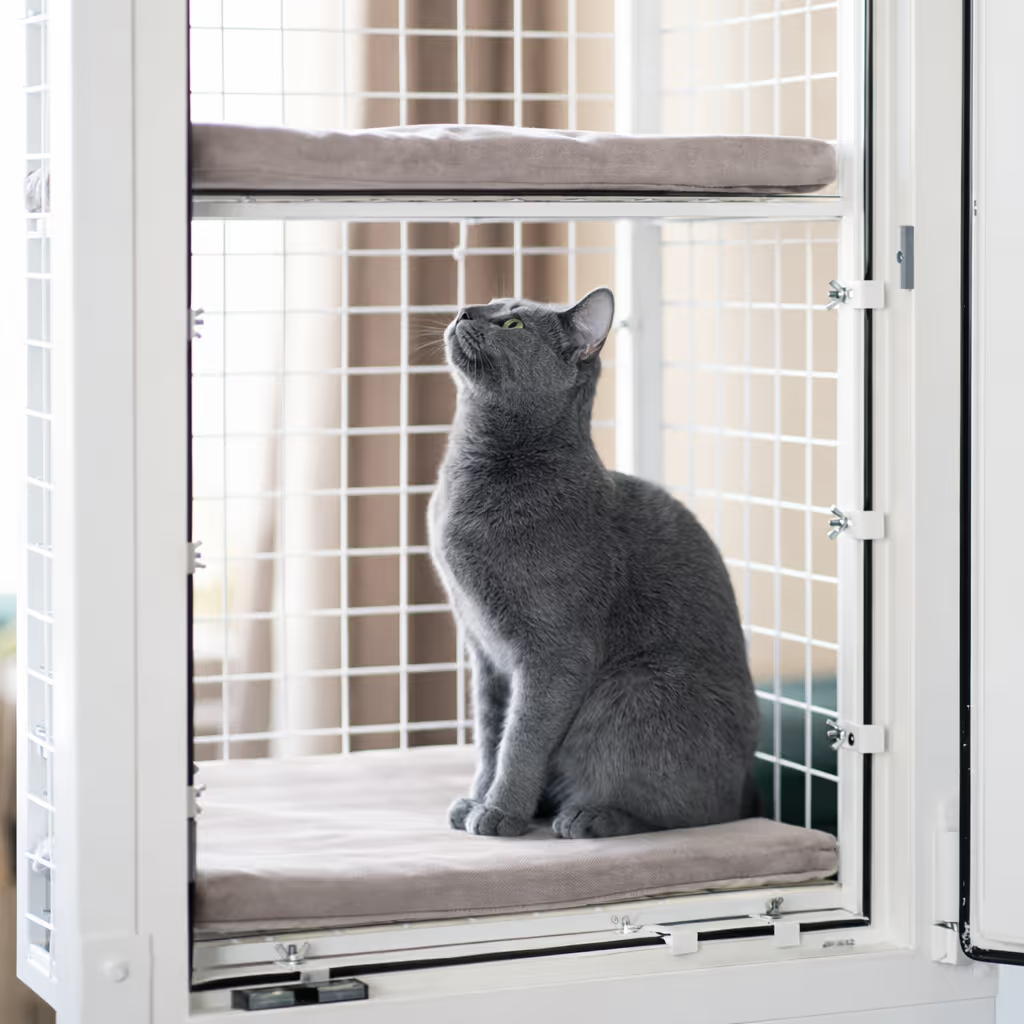
Whatever your situation, the safest starting point is a custom steel window enclosure sized to your exact window.
What to Buy
Option 1: Fine Mesh Modular Panel System with Roof (120€–300€)
What you’re looking for: panels with 2.5cm or smaller mesh, rigid metal (not plastic) framing, roof panel included, railing-clip attachment (no drilling). What to check before ordering: confirm the mesh size in the product specification. Many systems sold as “cat-safe” use 5cm mesh which is not kitten-safe. Contact the seller and ask for the exact mesh dimension before purchasing. Limitations: standard modular limitations apply — corner sealing requires care, connector joints are the long-term weakness.
Option 2: Custom Steel Window Enclosure with Fine Mesh (from 899€)
BalconyCat offers the 2.5×2.5 cm mesh option on request. The enclosure is built to your exact window measurements, welded steel, bracket-mounted without drilling. For kitten owners specifically, the custom steel enclosure is the answer to the mesh-size problem that most off-the-shelf products don’t solve cleanly. You specify fine mesh. We build it into the structure. It is welded in — not a secondary net applied over a larger mesh. The fine mesh is the enclosure. This is also the option that grows with your kitten. The enclosure doesn’t need to change when your kitten becomes an adult cat. The fine mesh remains safe for life. The structure remains sound for 15+ years.
Option 3: Stop Balcony Access Entirely Until Kitten Is 4+ Months
If your kitten is under 4 months and you cannot immediately install proper fine-mesh containment, keep the balcony door closed. This is the correct interim measure. Fresh air through a screened window is the right compromise for young kittens before safe containment is in place.
The Most Important Thing to Know
Most balcony cat protection products are designed for adult cats. If you have a kitten, you must verify mesh size before purchasing anything. Do not assume “cat safe” means “kitten safe.” It usually doesn’t. The 2.5cm mesh requirement is non-negotiable for kittens under 4 months. For kittens aged 4–6 months, measure their head — if it’s wider than 5cm in every direction, standard mesh is fine. If not, use fine mesh for another month and recheck.
Tell us about your kitten, your window, and your floor. We’ll include the 2.5×2.5 cm fine mesh option in the specification and confirm the price before production starts.
get BalconyCat →