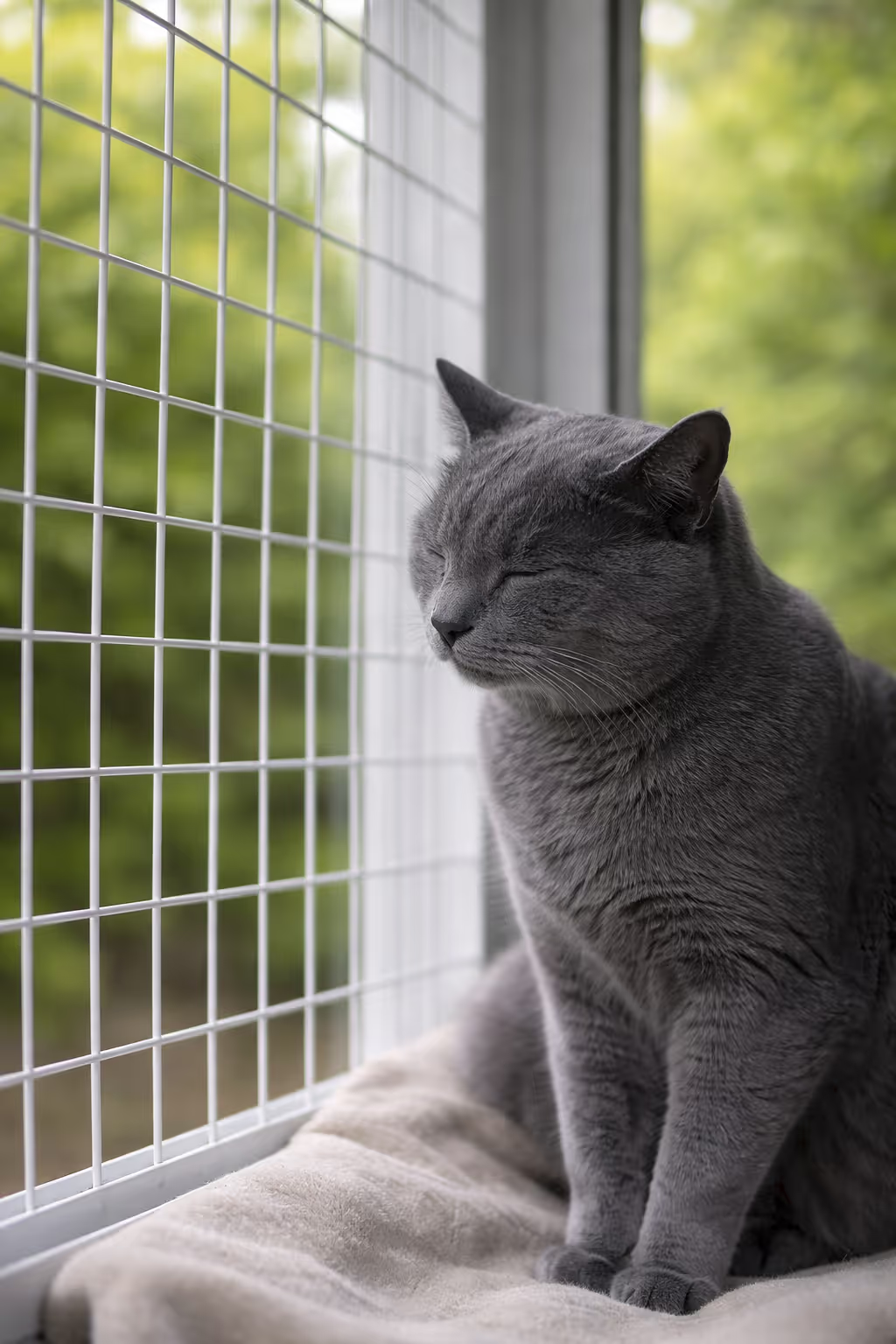
Frameless balcony glazing turns a balcony into a sheltered room, and many cat owners assume that makes it safe. It does — until someone slides a panel open on a warm afternoon. Here is where glazed balconies really leave gaps, what your options are, and how to keep your cat safe while still opening the glass.
Why a Glazed Balcony Feels Safe — and Why It Often Isn’t
If you live in Finland, Sweden, Estonia, Latvia, Lithuania or much of Eastern Europe, there is a good chance your balcony has frameless glazing: a row of glass panels that slide along a track and fold open to one side. In winter it turns the balcony into a sheltered extra room. For a cat, it looks like the perfect indoor-outdoor space.
And when every panel is closed and locked, it largely is. The problem is that glazed balconies are rarely closed all the time. The glass exists to be opened — on the first warm day in spring, for barbecues, for drying laundry, for airing the flat. The moment one panel moves, your enclosed room becomes an ordinary balcony with a railing and an open drop.
The short version: glass protects against weather, not against falls. If you want to open your glazing freely, the opening itself needs a barrier — which is why we make a steel Protective Mesh for balcony openings, cut to size and fixed without drilling. More on that below.
Where Glazed Balconies Leave Gaps
The partly opened panel
The most common risk is a single panel pushed a little to one side for air. To you, it is a narrow gap. To a cat, anything wide enough for the head is usually wide enough for the body. Cats test gaps by feel, and they are quick. A panel left open by a hand’s width can be enough.
The gap above the railing
On most systems the glass stands on top of the balcony railing or parapet and runs up to the ceiling or the balcony above. When the panels are folded away, what is left is the railing on its own — with the full height of the opening above it. A cat that could never climb the glass can jump onto the railing in one move.
Top and side gaps with the glass closed
Even closed glazing is not always sealed. Some installations have a ventilation gap along the top profile, at the ends where the glass meets the wall, or between panels. Check every edge of yours with a tape measure, especially if you have a kitten.
Paws and tails in the sliding track
The panels run in a track at the bottom and top. When you slide or fold a panel, a curious paw in the track or a tail near the pivot point can get caught. It is not a fall risk, but it is a real injury risk. Get into the habit of checking where the cat is before you move the glass.
The greenhouse effect
A fully closed glazed balcony facing south or west can get very hot on a sunny day, even when the air outside is mild. Cats are good at finding shade, but on a small glazed balcony there may be none. Closing the glass to keep the cat safe and then leaving it in a heat trap solves one problem by creating another.
Your Options for a Cat-Safe Glazed Balcony
There is no single answer, because glazed balconies differ a lot. But most solutions fall into one of four approaches, and many households combine two of them.
1. House rules: glass closed when the cat is out
The free option. The cat only goes onto the balcony when every panel is shut and locked, and whoever opens the glass brings the cat inside first. This works well for disciplined households with one or two adults. It works badly with children, guests, several people coming and going, or anyone who opens a panel ‘just for a minute’. Rules fail on the one day someone forgets — and you cannot open the glass for fresh air while the cat is out.
2. A soft net behind the glazing
Some owners fit a cat net across the opening on the inside of the glass, so the panels can be opened while the net stays in place. It is cheap and nearly invisible. The weak points are the ones nets always have: fixings that pull loose, material that sags or wears over time, and claws. On a glazed balcony there is an extra issue — you often cannot fix the net to the glazing profiles without drilling, which many housing companies and landlords do not allow.
3. A steel mesh panel across the railing opening
A rigid option is a welded steel mesh panel, such as our Protective Mesh, that closes the opening above the railing, on the inside of the glazing line. With the mesh in place, you can slide and fold the glass as much as you like: the cat still has fresh air and a view, but no way onto the railing or through the gap.
Every glazed balcony is built differently, so there is no standard size. We cut the mesh to the opening you measure and ask for a photo on WhatsApp first, so we can confirm how the panel will sit and where the clips will grip.
4. A window enclosure instead of the balcony
If your cat mainly wants a lookout and some air, and the flat also has ordinary casement windows, a window enclosure is another route. Our Cat Balcony, from 899€, mounts onto a casement window and gives the cat its own outdoor box, with no balcony involved. It does not protect the glazed balcony itself, but it gives the cat a safe outdoor spot when the balcony is off limits.
How the Protective Mesh Fits a Glazed Balcony
The Protective Mesh starts from 279€. It is welded galvanised steel with a powder-coated finish, available in any RAL colour, so you can match the railing, the glazing profiles or the facade.
The standard grid is 5×5 cm. For kittens, which can squeeze through surprisingly small openings, we make a 2.5×2.5 cm grid. We cut the panel to the exact opening — a single window, a French balcony door, or a full balcony railing run — and fix it with steel clips and brackets that grip the railing or the frame. No drilling, nothing glued to the facade, and it comes off again when you move out.
It ships flat-packed with a video installation guide. Delivery is free within the EU, and we ship worldwide on quote. Every panel is handmade in Poland.
Measuring a Glazed Balcony Opening
Measure with the glass fully folded away, so you see the real opening the cat would have. Then note down:
Width: the full length of the railing run you want to close, measured at the top of the railing and again higher up. Walls and balcony slabs are not always straight, so if the numbers differ, write down both.
Height: from the top of the railing to the underside of the glazing top profile, or to the ceiling or balcony above — whichever is the real upper edge of the gap.
Railing profile: the shape and thickness of the top rail or parapet, because that is what the clips will grip. A photo from the side helps more than any description.
The glazing line: where the glass panels sit in relation to the railing — on top of it, in front of it, or behind it. This decides whether the mesh sits on the inner side of the rail and how much clearance the panels need to keep sliding freely.
Send these with a few photos — straight on, from the side, and of the corners where the glazing meets the wall — and we will confirm the fit before we build.
Housing Company and Landlord Permission
In the Nordic countries and the Baltics, many flats are in buildings run by a housing company or cooperative, and balcony glazing itself usually needed their approval when it was installed. Housing companies often regulate anything that changes the facade or touches the building structure: drilling into balcony slabs, fixing things to the outer railing, or altering the glazing.
Rules differ from building to building, so always check your own house rules or ask the property manager before installing anything. In general, a solution that needs no drilling, is fitted on the inside of the glazing line, and can be removed without a trace is much easier to get accepted than one that is screwed into concrete. A colour that matches the existing profiles helps too.
If you rent, the same logic applies to your landlord. Removable, clip-on protection is usually the least controversial thing you can ask for — and you can take it with you when you move.
Ventilation and Heat: Using the Glass the Right Way
Once the opening is protected by mesh, the glass becomes a tool for comfort rather than a safety barrier. That changes how you can use the balcony:
In summer, fold the panels open on warm days so air moves freely and the balcony does not overheat. The mesh does the safety work, not the glass.
In winter, close the glazing for shelter, but still check the temperature. A glazed balcony is warmer than outside, not warm. Make sure the cat can always get back into the flat.
Whatever the season, give the cat shade, a water bowl, and a way back inside. And keep an eye on the tracks when you move the panels — the mesh stops falls, not pinched paws.
The Bottom Line
Balcony glazing is a great feature for cat owners, but it is a weather barrier, not a cat barrier. It keeps your cat safe only while every panel stays closed — and a balcony you can never open is not much fun in July. Protect the opening itself, and the glass goes back to doing what it does best: keeping out the wind while you and your cat enjoy the fresh air.
If you are not sure what your balcony needs, send us a photo and your measurements on WhatsApp. We will tell you honestly whether a mesh panel will fit and how it would sit on your railing.
Open the glass, keep the cat. Protect the opening, not just the view.
get BalconyCat →