Cats on High-Floor Balconies: A Floor-by-Floor Risk Guide for Apartment Owners

Most cat owners think about balcony risk in simple terms: higher floor, more dangerous. Broadly, that is not wrong. But the relationship between floor height and cat safety is more complicated than a straight line from safe to dangerous — and some of the nuances matter in ways that change how you should think about your specific situation.
First, the Baseline: Why Any Balcony Is a Risk
A balcony without physical containment is a risk regardless of height. A cat falling from a first-floor balcony onto concrete can sustain serious injuries. A cat falling from the same height onto grass may be fine. A cat falling from the fifteenth floor onto a soft surface has a different outcome than the same fall onto pavement. Height is one variable. Surface, trajectory, body position, and the specific cat’s size and age are others.
The floor-by-floor breakdown below describes risk patterns and injury profiles observed across documented cases. It is not a guide to which floors are “safe enough not to bother.” No floor is safe enough for an unsecured balcony if your cat has access to it.
Ground Floor and First Floor (0–3 metres)
At ground level and one floor up, a fall is unlikely to be fatal for a healthy adult cat, but it is absolutely capable of causing serious injury — fractured limbs, jaw injuries, and soft tissue damage are all documented outcomes of low falls. The specific risk at very low heights is a consequence of physics: the righting reflex takes a finite amount of time to complete. At falls under approximately one metre, the cat may not have enough airtime to complete the rotation before hitting the ground. Low falls can produce worse landing positions than moderate falls.
Additional risk at this height: escape. A cat that falls from or climbs down from a ground or first-floor balcony faces road traffic, confrontation with other animals, and disorientation in an unfamiliar environment. Containment is equally important at low heights — just for different reasons than at high floors.
Second and Third Floor (3–10 metres)
This is the range where falls are consistently most dangerous in terms of injury severity combined with limited time to correct body position. The cat has more airtime than at ground level, so the righting reflex can activate. But it does not have enough time to fully spread body weight and reduce impact force — the physics that help cats at higher floors do not yet apply. The cat arrives feet-first, which is better than head-first, but the impact force at this height is significant.
Veterinary data on urban cat falls consistently shows mid-range heights as a high-severity injury band. Chest injuries, bilateral limb fractures, and jaw trauma are common presentations. Survival rates are good with prompt veterinary treatment — but “survivable with surgery” is not the outcome any owner is hoping for. This is also the most common height range for apartment balconies across European cities.

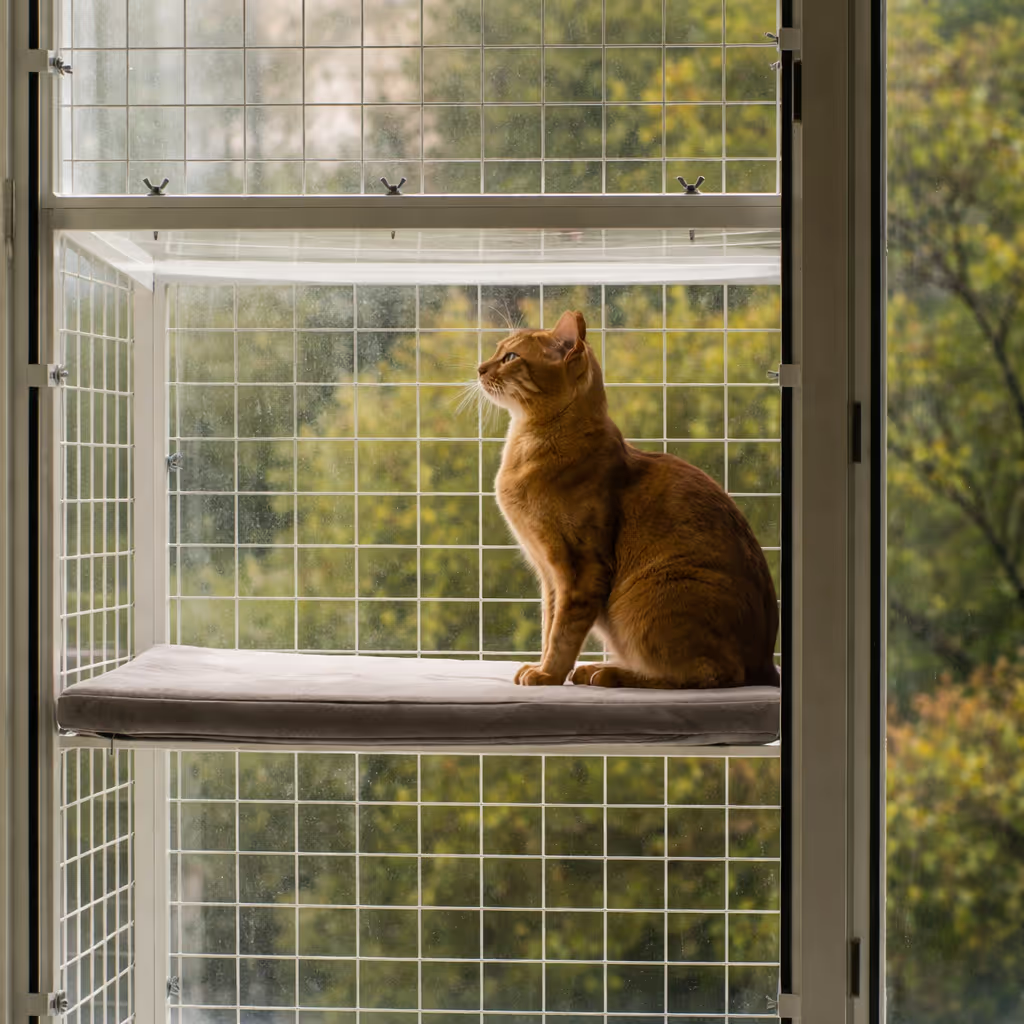
Fourth to Sixth Floor (10–18 metres)
By the fourth floor, the cat has meaningful airtime before impact. The righting reflex has time to complete fully. The cat arrives feet-first with a reasonably prepared body position. This does not mean falls from this height are safe. Impact force at this range is still considerable. Chest injuries remain the most common serious outcome, as the lungs and diaphragm absorb significant force even in a well-positioned landing.
What changes at this height range: the distribution of injury severity becomes slightly more variable. Some cats fall from four, five, or six floors and sustain only minor injuries. Others sustain severe or fatal trauma. The difference is partly body size and age, partly surface, partly trajectory, and partly factors that are not predictable in advance. The righting reflex is doing what it can, but the fall is still dangerous enough to be a veterinary emergency in the majority of cases.
Seventh Floor and Above (18+ metres)
This is where the research findings that sometimes get misreported actually apply. The 1987 Whitney and Mehlhaff study analysed 132 cases of cats falling from buildings in New York, finding that cats falling from above the seventh floor showed a plateau in injury severity, and in some cases better outcomes than cats falling from the fourth to sixth floor range. The proposed mechanism: above a certain height, a falling cat reaches terminal velocity, at which point it appears to relax and adopt a spread posture, distributing impact force across a larger surface area.
This finding has been discussed, challenged, and qualified considerably since 1987. Later analyses noted selection bias in the original study, questioned the terminal velocity calculation, and produced data showing more linear injury-to-height relationships. The current, honest position: there may be some plateau effect at very high floors for some cats under some conditions. It is not reliable, not consistent, and not a reason to treat a high-floor balcony as lower risk than a mid-floor one. A fall from any floor above the third is a potential veterinary emergency.
What Height Actually Tells You — and What It Does Not
Floor height tells you roughly what category of injury to expect if a fall occurs. It does not tell you the probability of a fall occurring. That probability is determined by different factors: whether the balcony is physically secured, your cat’s temperament and climbing behaviour, whether your cat is an experienced outdoor animal or an indoor cat encountering an unfamiliar environment, and whether there is a specific stimulus — a bird, a noise, a smell — present at the moment your cat is near the edge.
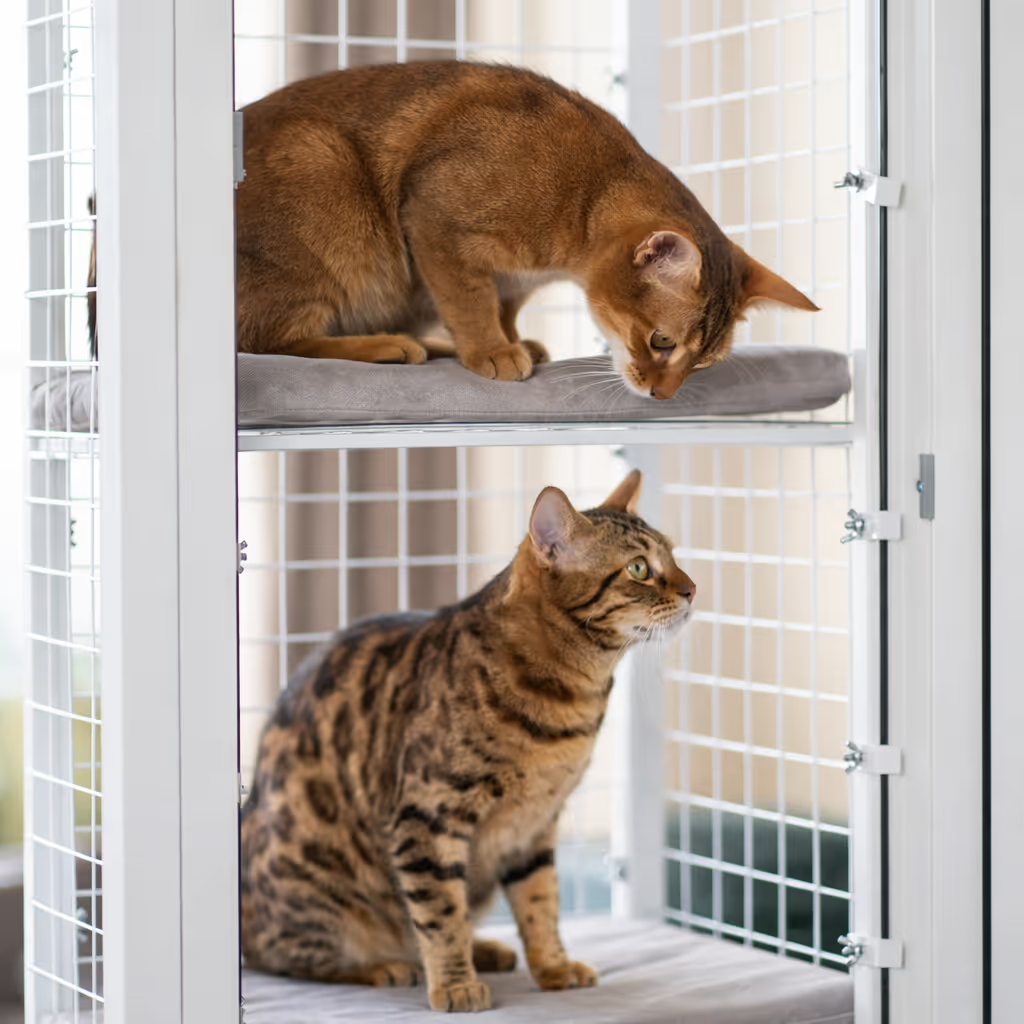
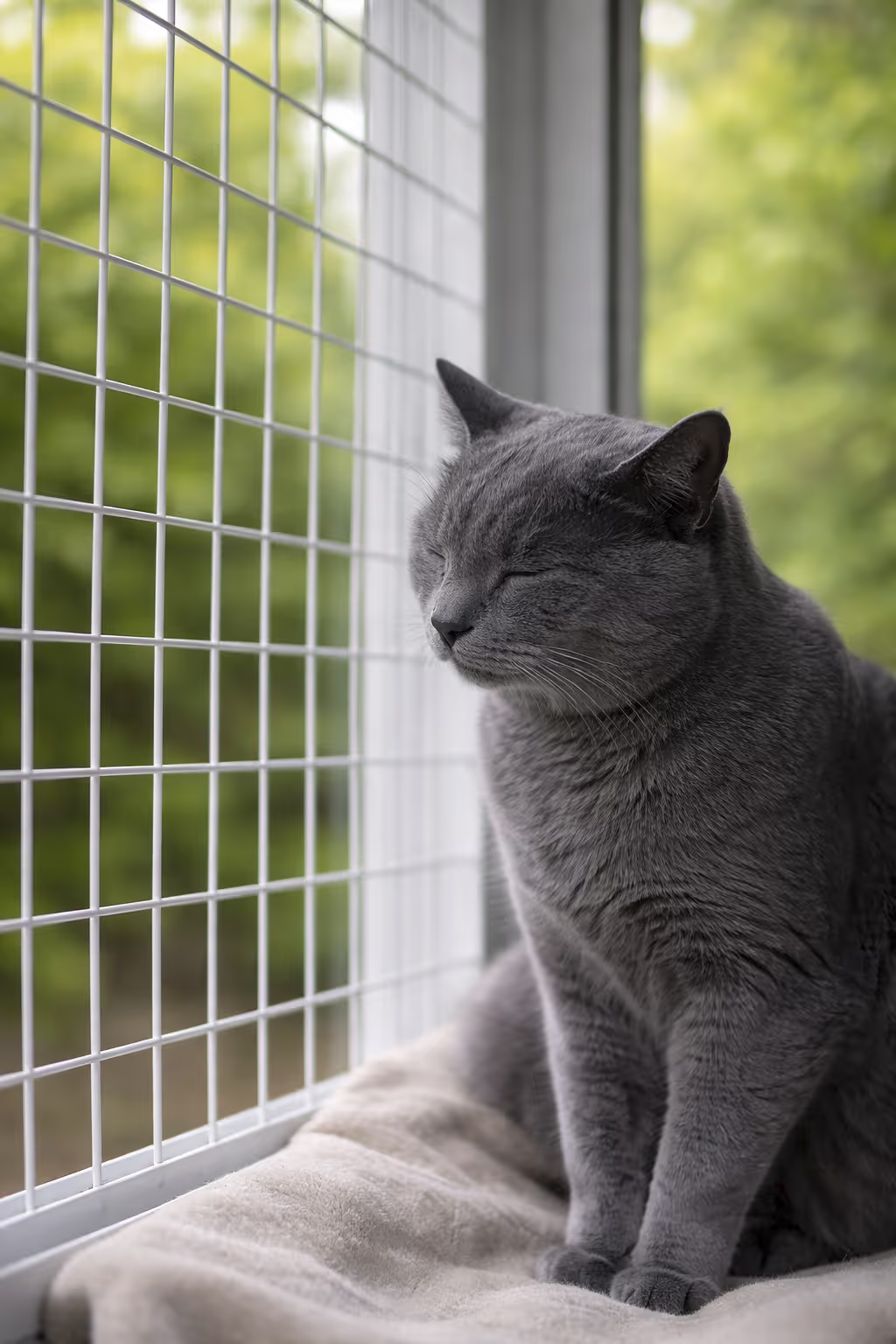
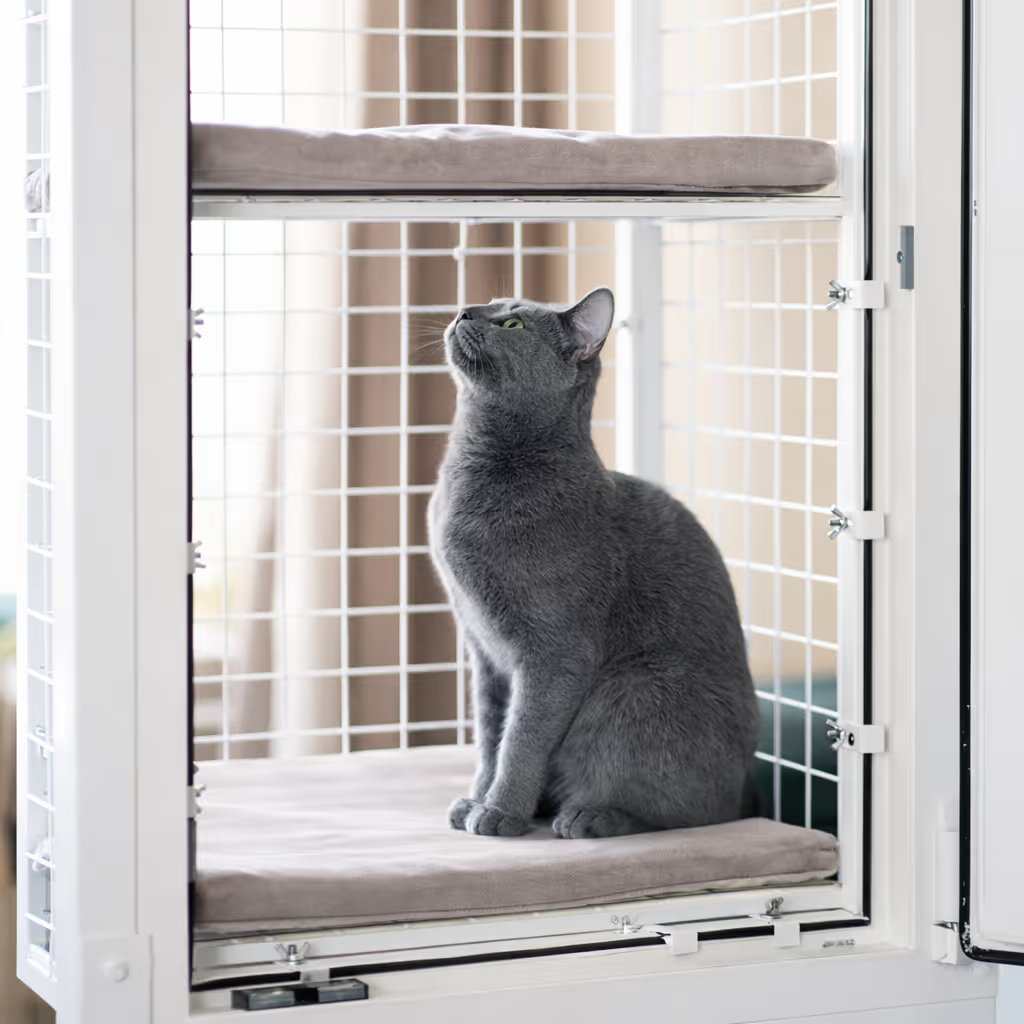
A fifteenth-floor balcony with a properly installed welded steel enclosure is safer for your cat than a second-floor balcony with only a net that has been in direct sun for two years. The floor matters less than the containment.
The Practical Conclusion
Low Floor (1–3 Storeys)
The primary risk is injury from impact combined with escape risk. Containment is as important here as at any other height, and the escape dimension — traffic, predators, disorientation — may actually make a low-floor incident more dangerous in total consequence than a pure fall risk.
Mid Floor (4–8 Storeys)
You are in the highest-severity fall zone by the data. This is the range where a fall most consistently produces serious, surgery-requiring injuries. Physical containment here is not optional.
High Floor (9 Storeys and Above)
A fall is likely a life-threatening emergency. The physics of very high falls may work in your cat’s favour in some circumstances — they may not in others. The only reliable protection is preventing the fall.
At every height, the answer is the same: a properly built, load-tested, securely attached enclosure that your cat cannot breach. The height changes the consequences of a failure. It does not change what the solution is.
Looking for the right enclosure for your window or balcony — whatever floor you’re on? We’re happy to help.