You've decided you want to turn your balcony into a safe outdoor space for your cat. The decision is made. Now you need to know which method is right for your balcony, your cat, and your budget. This post covers every real method — what each involves, what it costs, and what you get.
What "Turning a Balcony Into a Catio" Actually Means
A catio is an enclosed outdoor space for a cat. To turn a balcony into one, you need to seal all open edges so that the cat cannot exit the space but can still access fresh air and outdoor views. For most platform balconies, that means sealing the open front face, sealing any open side faces, and in some cases adding a roof panel if the balcony is top-open. You don't need to enclose sides that are solid wall — only the open gaps.
Method 1: Full Netting System
What it involves: nylon or polyethylene safety netting stretched across all open faces and fixed to the railing and ceiling/overhang using hooks, cable ties, or adhesive clips. Cost: 40€–200€. Time: 2–5 hours. Requires drilling: usually not. Lifespan: 1–3 years before UV degradation and attachment fatigue require replacement. Best for: lower floors (ground through third), calm adult cats, budget-conscious owners, short-term situations. Limitation: not load-bearing, attachment points can fail. On any floor above the third, this is not adequate as the sole containment.
Method 2: Modular Panel Enclosure
What it involves: pre-fabricated wire or mesh panels in aluminium or steel frames, clipped or tied together to enclose the open faces. Panels attach to the railing and are topped with a roof panel if needed. Cost: 100€–400€. Time: 3–6 hours. Requires drilling: depends on system. Lifespan: 4–8 years. Best for: mid-floor apartments (second through fifth), cats of any temperament, owners who want more confidence than a net. Limitation: standard panel sizes don't perfectly fit every balcony, corners and non-standard configurations require improvisation that can leave small gaps.
Method 3: DIY Build (Timber Frame + Welded Mesh)
What it involves: building a custom frame from treated timber and attaching welded wire mesh panels, designed to your exact balcony dimensions. Cost: 80€–300€ in materials. Time: 8–20 hours (including measuring, cutting, assembling). Requires drilling: usually yes. Lifespan: 5–10 years if built well with treated timber. Best for: owner-occupied properties, owners with carpentry skills and tools, larger balconies where cost-per-square-metre matters. Limitation: requires actual carpentry competence. Most DIY cat enclosure attempts underestimate the joinery requirements and produce something that deteriorates. Not suitable for renters.
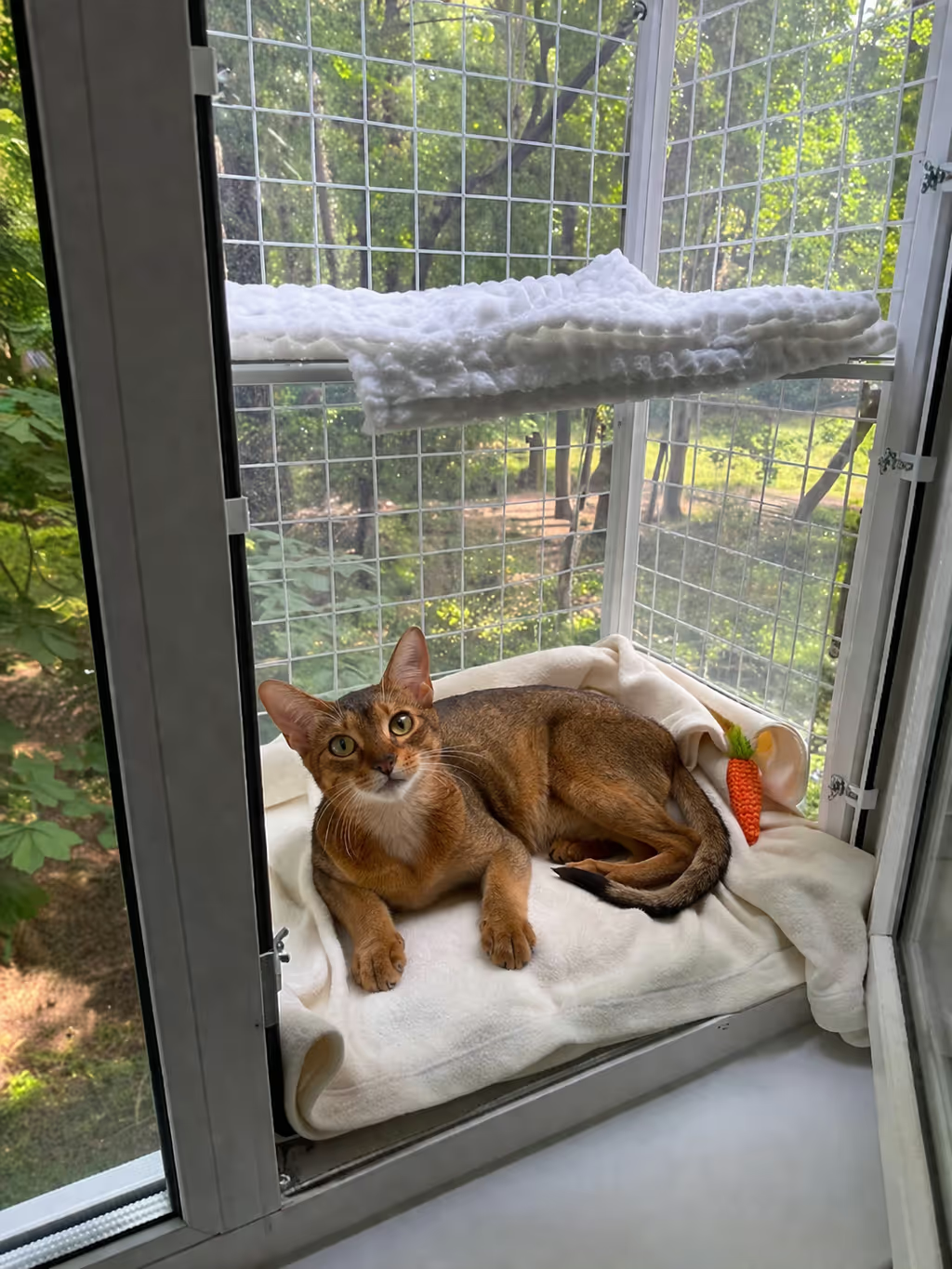
The most reliable way to give your cat that outdoor space is a custom steel window enclosure that fits your window exactly — no drilling, and no gaps to slip through.
Method 4: Skip the Balcony — Use a Window Enclosure Instead
This is the option most people don't consider when thinking about turning their balcony into a catio — and for many urban apartments, it's the better answer. A window enclosure mounts onto an adjacent casement window, extending outward by 40–60cm. Your cat accesses it from inside through the open window. The balcony remains as human space. Cost: from 899€ for a custom steel enclosure (BalconyCat). Time: 2 hours (two people). Requires drilling: no. Bracket-mounted to the window frame. Lifespan: 15+ years.
This works particularly well when: your balcony is small and you don't want to surrender human use of it; you're on a high floor and want structural containment, not net containment; you rent and need a fully removable solution; or you have a casement window adjacent to the balcony door. The cat gets everything they actually want from outdoor access: fresh air, birds, outdoor views, the feeling of being outside. The balcony stays yours.
Method 5: Professional Full Balcony Enclosure
What it involves: a purpose-built, professionally designed enclosure for the full balcony — custom-made steel or aluminium framing with welded mesh, professionally installed. Cost: 600€–2,000€+ depending on balcony size and specification. Time: professional installation, typically half to full day. Requires drilling: yes, typically. Lifespan: 15–20+ years. Best for: owner-occupied properties, large balconies, multi-cat households, owners who want the definitive solution. Limitation: cost and drilling requirement exclude most renters. Lead time is typically longer than DIY or off-the-shelf options.
The Decision Framework
Answer these two questions. 1. Do you want to keep the balcony as human space? YES → Window enclosure (Method 4). Skip the balcony conversion entirely. NO → Continue to question 2.
2. What floor are you on and how athletic is your cat? Ground–third floor, calm cat → Net system (Method 1) or modular panels (Method 2). Fourth floor+, or any athletic/young cat → Modular panels (Method 2) minimum; professional enclosure (Method 5) if budget allows. High floor, renting, need no-drill → Window enclosure (Method 4) is back on the table — it's the no-drill, structural option.
A Note on Renters
Methods 3 and 5 almost always require drilling. If you rent, this eliminates both. Method 1 (netting) and Method 2 (modular panels) are the balcony-level options for renters. Method 4 (window enclosure) is the no-drill structural option — and it moves with you when you leave.
We build Method 4 — custom steel window enclosures — and we're happy to tell you whether it suits your setup before you commit.
get BalconyCat →