Moving home with a cat is one of the highest-risk periods for a balcony incident. Your cat is in a state of heightened anxiety in a new environment, doors and windows are being opened repeatedly, and the balcony — an entirely unfamiliar outdoor space — is acutely interesting to a cat trying to orient itself in a new place.
Before You Move: What to Assess at the Viewing Stage
The viewing stage is the best time to assess a balcony’s cat safety situation — before you have committed to the property and while you can still factor it into your decision or negotiation.
RAILING TYPE AND GAP SIZE: Standard apartment balcony railings have vertical bars with gaps between them. Measure or estimate the gap width. Standard residential railing spacing in the EU is typically 10–12cm — fine for adult cats of average or larger size, but potentially problematic for kittens or smaller breeds. Also look at the railing height. Standard is 90–110cm. Lower railings on older buildings may not provide adequate containment even for adult cats.
BALCONY FLOOR PLAN AND ATTACHMENT OPTIONS: Look at the window frames on the balcony-facing wall. Are they standard casement windows that a bracket-based enclosure can attach to? Are they inward or outward opening? Are there fixed windows that do not open? This tells you in advance what type of enclosure solution is practical. Also look at the balcony floor space and whether there is a ceiling overhead or an open roofless terrace.
BUILDING RULES AND TENANCY RESTRICTIONS: At the viewing or shortly after, ask whether the building has any rules about balcony modifications or visible additions. Many managed apartment buildings have aesthetic rules that apply to what is visible from outside. Ask early — approval processes can take weeks, and you do not want to be two months into the tenancy before you can install a solution.
On Moving Day: The Three Rules
RULE 1: THE BALCONY STAYS CLOSED. From the moment you arrive at the new flat until a proper containment solution is installed and tested, the balcony door stays closed. Your cat on an unsecured balcony in a new environment — while the flat is chaotic with boxes, unfamiliar smells, open doors, and people moving in and out — is the highest-risk scenario you will face. Instruct everyone involved in the move: balcony door stays closed. Not mostly closed. Closed and latched.
RULE 2: SETTLE YOUR CAT IN ONE ROOM FIRST. Keep your cat in one quiet room with their familiar items — bed, litter tray, food, water — while the move takes place around them. The room should not be the room with balcony access. Once the immediate chaos is over, you can begin the gradual introduction to the rest of the flat.
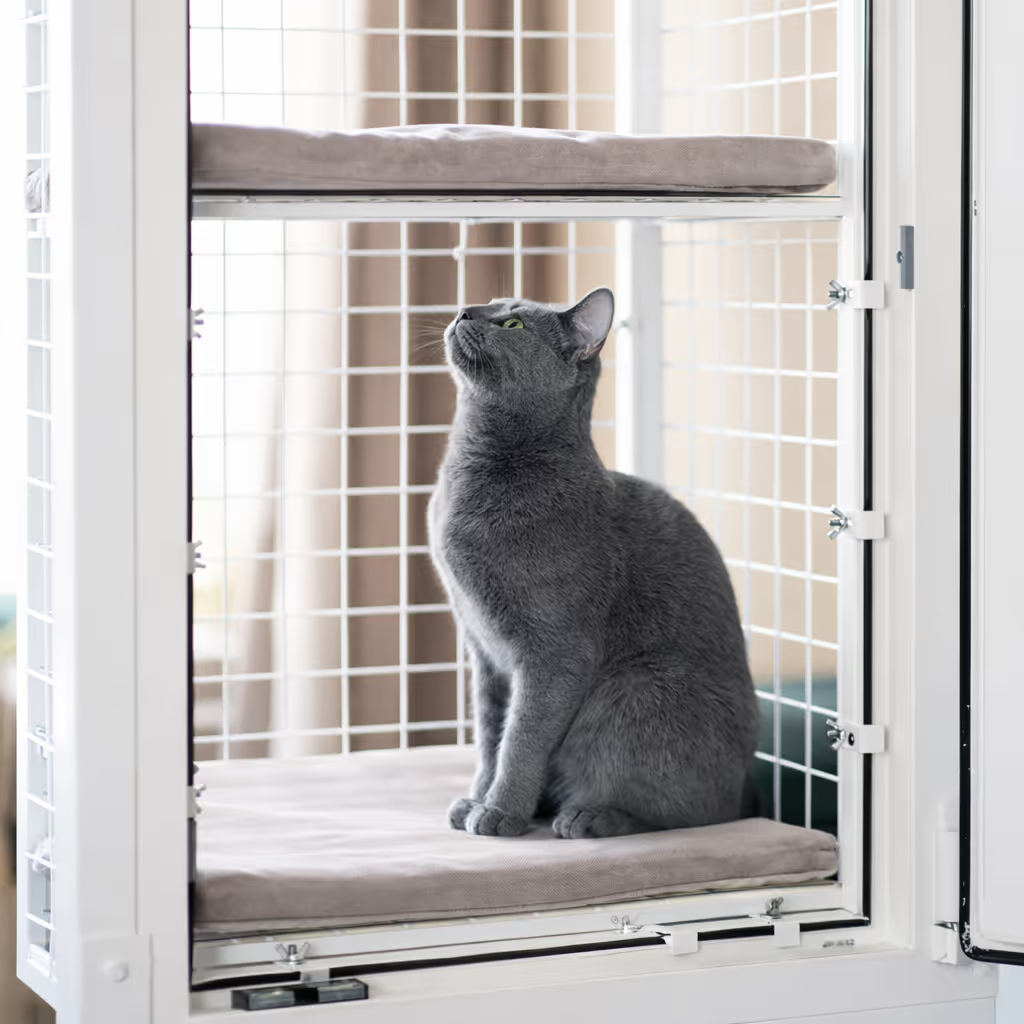
For renters and movers who can't drill, a removable no-drill steel enclosure gives real safety and comes with you to the next flat.
RULE 3: DO NOT CONFUSE QUICK EXPLORATION WITH SETTLED COMFORT. Some cats move into a new flat and appear confident and curious immediately. Do not mistake this for the cat being settled. A cat exploring a new environment is in a heightened arousal state — alert, reactive, and more likely to make rapid movements toward anything that catches its attention. A cat in this state near an unsecured balcony is a significantly higher risk than the same cat after two weeks of familiarisation with the new home.
The First Week: Getting the Assessment Right
Use the first week to assess the balcony properly and arrange your containment solution.
ASSESS THE WINDOW TYPE: Open each window on the balcony side and understand how it operates: inward opening, outward opening, tilt-and-turn, or sash. Take measurements: internal frame width, opening height, the distance from the outer window frame face to the outer facade (the depth clearance for a window-mounted enclosure). Take photos from outside or from the balcony looking at the window frames. Send these with measurements to your enclosure supplier so they can confirm compatibility before you order.
ASSESS THE BALCONY PERIMETER: Walk the balcony with fresh eyes. Look at the railing closely: any gaps wider than standard? Any sections where the railing attaches to the wall that have play or movement? Any floor-to-railing gaps at the base? Note everything. Look up: is there a ceiling? This determines whether a net system is viable and affects which enclosure approach is most appropriate.
CONTACT YOUR SUPPLIER AND ORDER: The sooner you order, the sooner the solution arrives. Custom-made enclosures take time to produce. If you are ordering a BalconyCat window enclosure, lead time is typically three to four weeks. Order in the first week of the tenancy so you are not a month in with the balcony still unsecured.
The First Two Weeks: Safe Management Until the Enclosure Arrives
Until your enclosure is installed, the balcony stays closed to the cat. Full stop. This is the simplest and most reliable interim safety approach.
If you want to give the cat some familiarity with the space during this period, you can open the door and sit with them in the doorway, with you blocking the exit. Let them smell the air and observe the new outdoor environment from the safety of the threshold. Do not let them step onto the balcony. This brief daily threshold exposure speeds up the adjustment process without creating any risk during the period before the enclosure is in place.
During this period, use the two weeks to observe which windows your cat is most interested in. The window they most frequently sit at or press toward is the best location for the enclosure — they are already motivated to access that position, which means they will use the enclosure confidently once it is in place.
After Installation: The Introduction Process
Once the enclosure is installed and tested, follow the standard introduction process (see our introduction guide for the full step-by-step). One note specific to cats that have recently moved: they are still in the familiarisation phase with the new home when the enclosure goes up. Do not rush the outdoor introduction on top of an already significant environmental adjustment.
Give your cat at least two full weeks of settled indoor life in the new flat before beginning balcony access. By that point, the flat is familiar, the cat is calm, and the balcony becomes an addition to a known home rather than another unfamiliar space in an already overwhelming new environment. Patience here pays off in a cat that uses the balcony confidently and calmly, rather than one that remains anxious because the introduction was rushed during a stressful period.
If you are planning a move and want to order an enclosure in advance — so it is ready to install shortly after you arrive — we can work with approximate measurements initially and confirm exact specifications once you have access to the new flat.
get BalconyCat →