Most cat owners who think their balcony is safe are wrong. Not careless — wrong. The window is cracked open a few centimetres. There’s a net along the railing. It looks fine. It held last summer. But the things that actually fail are the things you don’t notice until they already have.
The False Sense of Security Most Owners Have
There are three things cat owners typically rely on for balcony safety, and all three have a version that works and a version that doesn’t — and the difference isn’t always visible until it’s too late.
The cracked window. The balcony net. The “she never goes near the edge” assumption. Each one has sent cats to the vet. None of them are reliable by themselves. This article walks through each one and explains what actually works instead.
Mistake #1 — The Cracked Window
Opening a window a few centimetres feels safe. And for many cats, it is — most of the time. The problem is that “most of the time” is not the same as safe.
A cat that spots a bird, hears a sudden noise, or simply decides to explore will push against that gap with surprising force. Standard window screens — the kind fitted on most European and American windows — are not designed to hold a cat. They are designed to keep insects out. The frame clips that hold them in place are plastic, pressure-fit, and rated for zero lateral load.
A screen that looked fine in March can fail in July after a season of sun warping the frame. A cat that has never pushed on it before pushes on it once — and that’s the day it fails. If you open windows at home, the only reliable solution is an enclosure that physically prevents exit regardless of what the cat does.
Mistake #2 — Balcony Netting Installed Incorrectly
Balcony netting can work. The problem is that most of it is installed in a way that doesn’t.
The failure points are almost never the net itself — it’s the attachment system. Adhesive anchors on rendered or painted walls. Plastic clip rails on PVC window profiles. Tension cord tied to a railing that flexes. Each of these attachment methods degrades independently of the netting material. You can have a perfectly intact net attached to a hook that’s been slowly pulling free for six months.
The second failure mode is gaps. A net that covers 95% of a balcony opening and leaves a 15 cm gap at one corner is not a safe net. Cats are precise, patient, and motivated. A gap that looks too small will be tested.
If you use netting, the installation matters as much as the product. Every anchor point needs to be load-tested after installation. Every edge needs to be sealed. And it needs to be inspected every season — because UV and weather work on it constantly, even when nothing appears to have changed.
Mistake #3 — “She Never Goes Near the Edge”
This is the most dangerous assumption of all, because it’s based on observed behaviour under normal conditions. Cats that have never shown interest in the balcony edge can startle, chase, or fall in seconds. A pigeon landing on the railing. A sudden sound from below. Another cat spotted from across the street.
If your own check shows the current setup isn't enough, the structural fix is a welded steel window enclosure that removes every gap a cat could push through.
The relevant question is not what your cat normally does. It is what your cat would do in the worst-case scenario — startled, moving fast, not looking where it’s going — and whether your balcony can handle that. Behaviour-based safety assumptions fail precisely at the moment they’re most needed.
What Actually Works
The only reliable balcony safety solution for a cat is a physical barrier that makes exit structurally impossible regardless of the cat’s behaviour, the weather conditions, or the age of the installation.
That means: no gaps a cat can fit through, no attachment points that rely on adhesive or plastic clips at height, no materials that degrade in UV or rain, and no dependence on the cat “not going near it.”
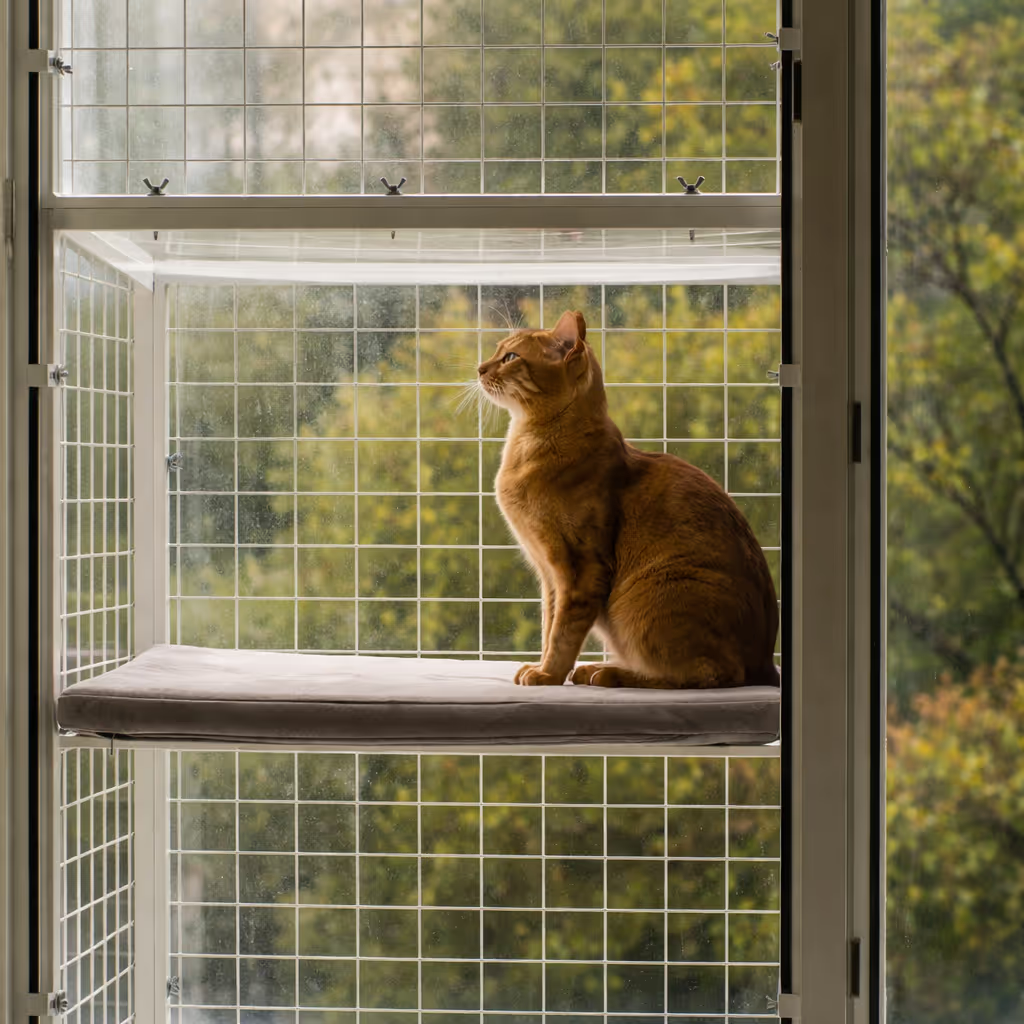
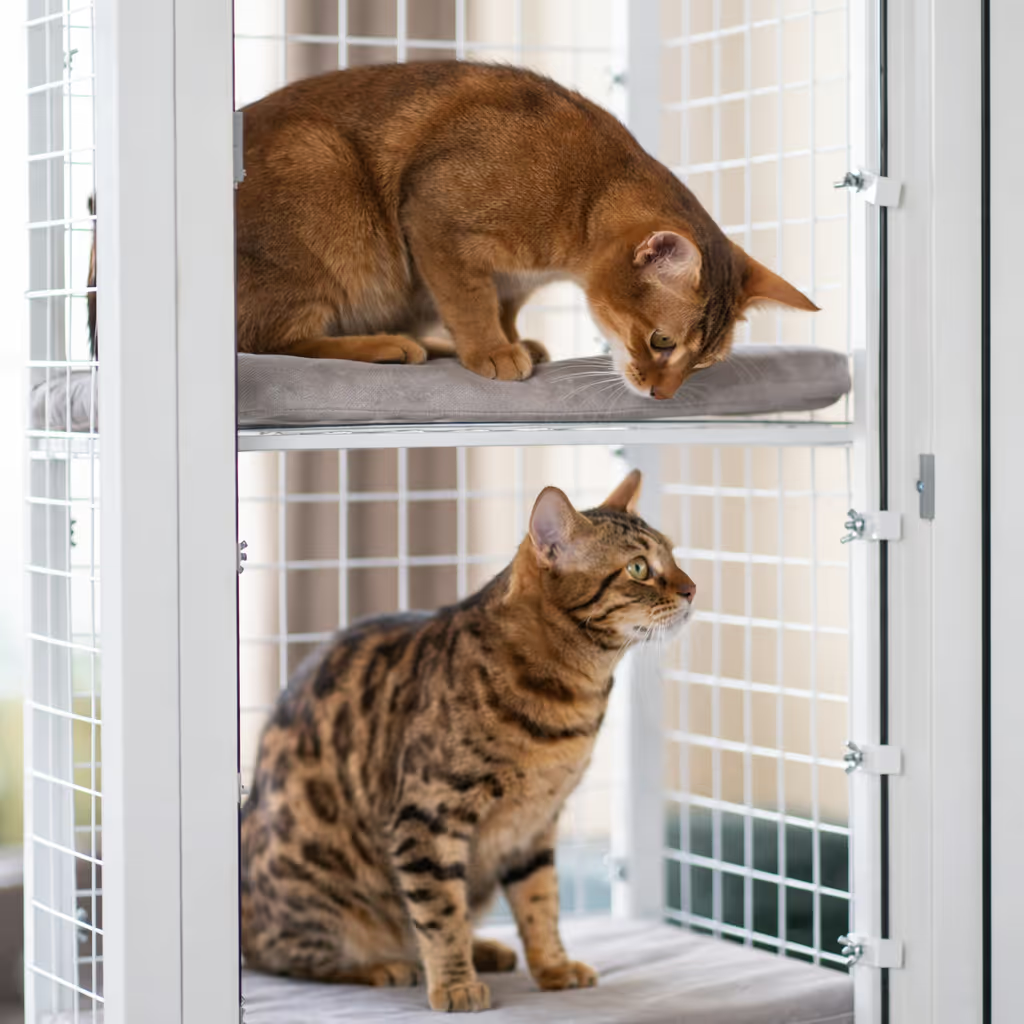
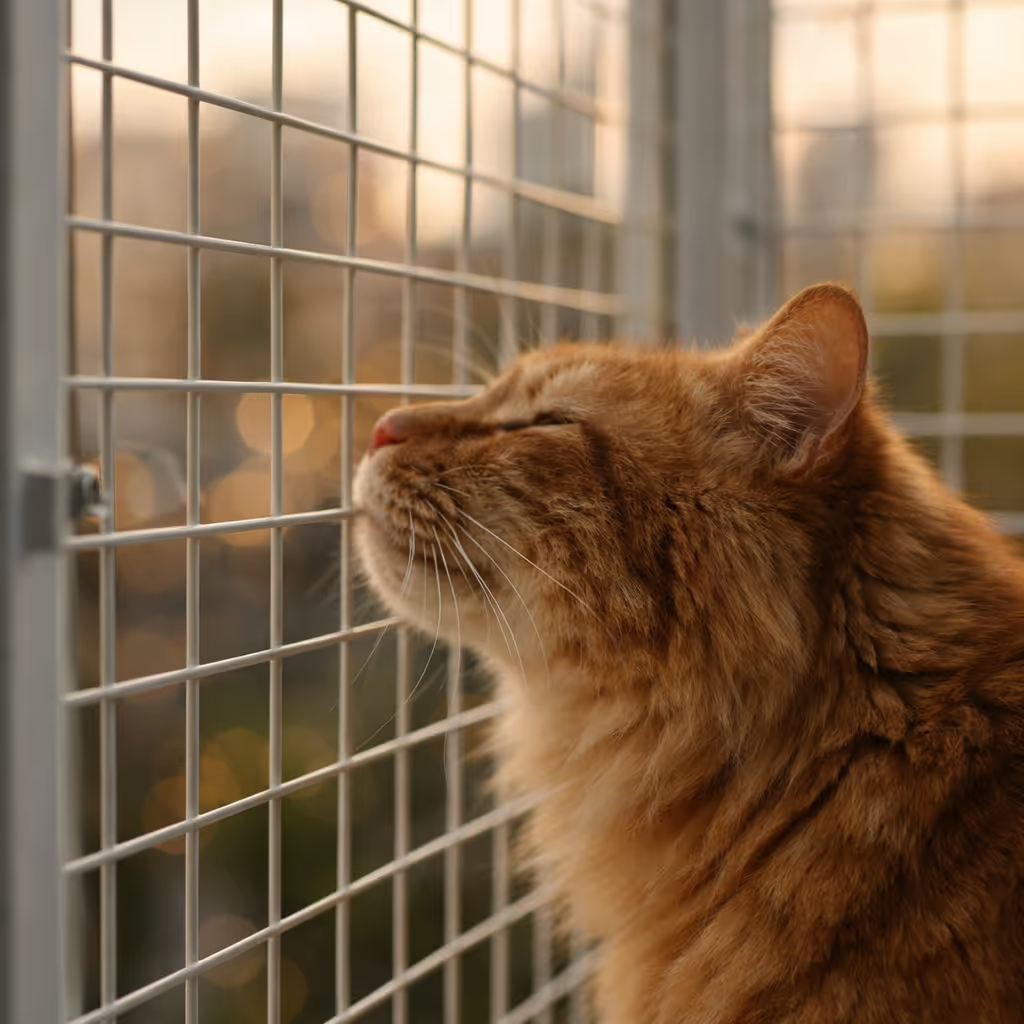
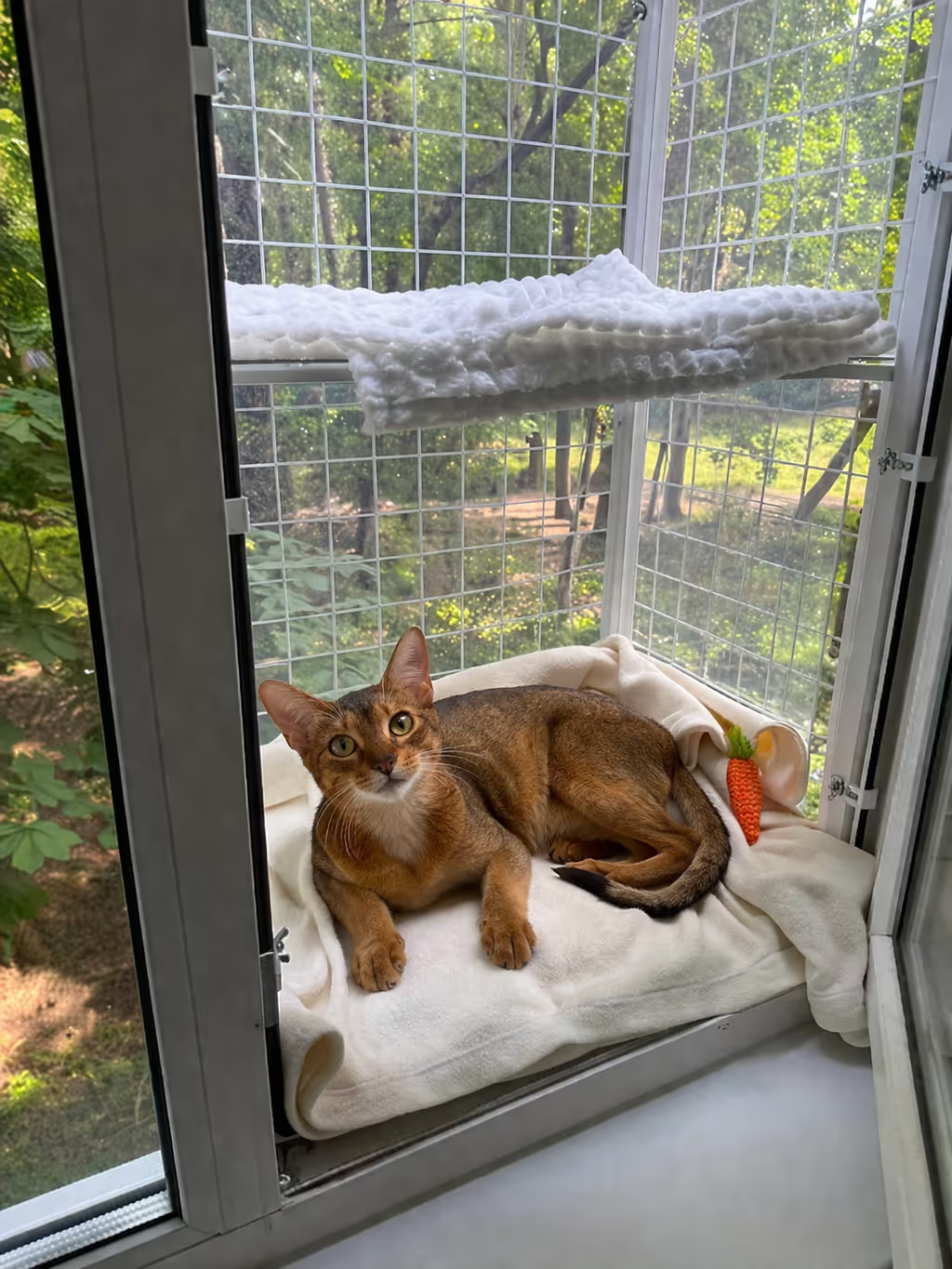
A welded steel grid enclosure fitted to the window frame meets all of these criteria. The grid spacing — 5×5 cm for cats over 4 months — physically prevents exit. The steel bracket attachment system is load-rated and tested. The galvanised steel and powder-coat finish means the structure is identical in year one and year ten. After installation you can test it yourself: push on it, pull it, put your full weight on it. It won’t flinch. That’s the point.
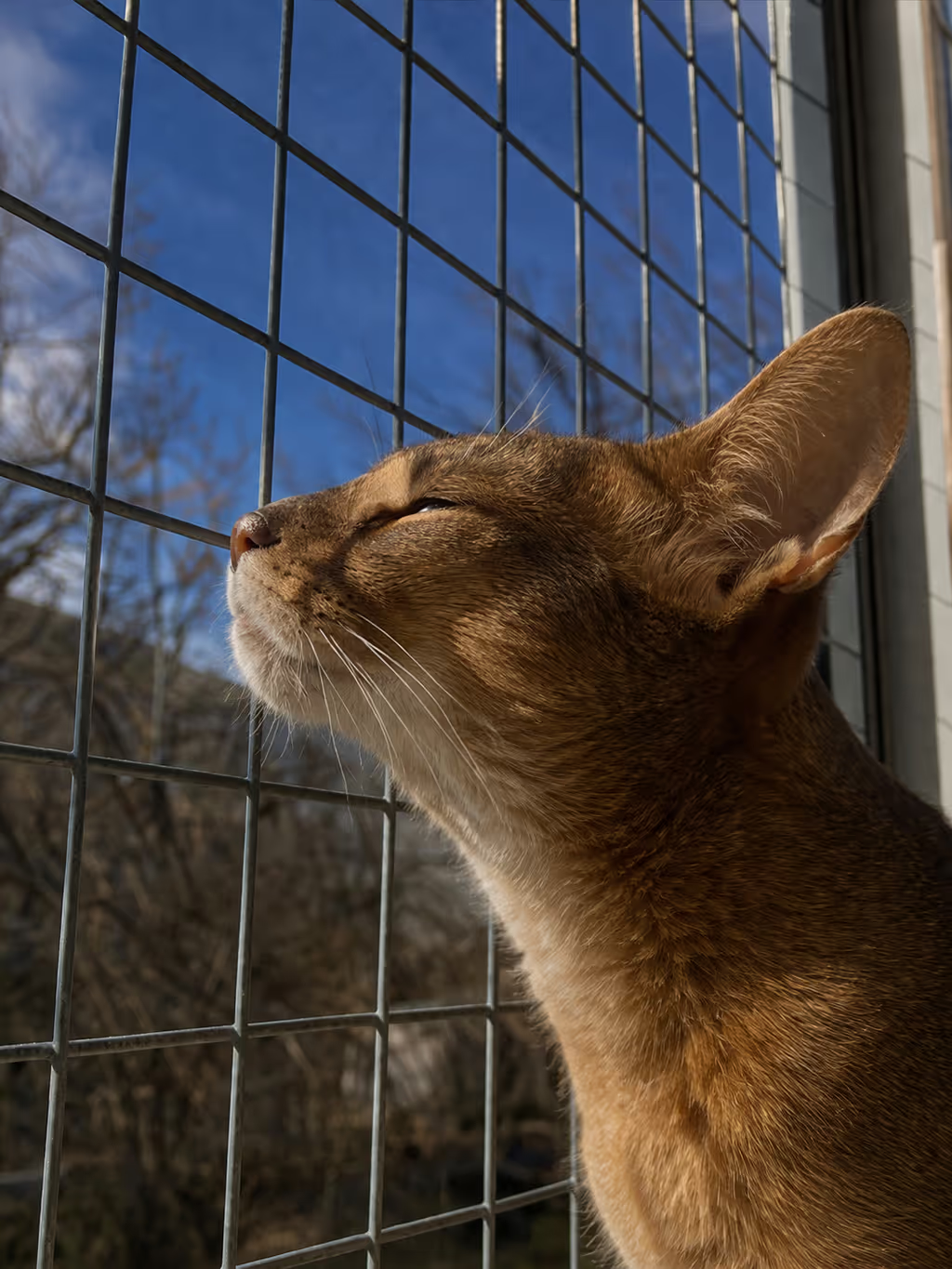
A Quick Self-Audit — Is Your Balcony Actually Safe?
Can your cat access any window or door that opens onto a balcony or exterior drop? If the answer is yes and there is no fixed enclosure, the answer is no, it’s not safe.
Is your balcony netting attached using adhesive, plastic clips, or tension cord alone? If yes — inspect every attachment point now, not next season.
When did you last test your netting by applying lateral force to it? If you haven’t, do it today.
Have you verified there are no gaps at corners, joins, or along the bottom edge of your netting? Gaps that appear small often aren’t.
Does your safety setup rely on your cat’s behaviour rather than a physical barrier? If yes, it is not a safety setup — it is a risk assumption.
Frequently Asked Questions
Is a cracked window safe for cats?
A cracked window is not reliably safe. Standard window screens are not load-rated for cats and can fail under lateral pressure. The only safe open window is one fitted with a custom steel enclosure that prevents exit regardless of cat behaviour.
How do I know if my balcony netting is still safe?
Inspect every attachment point for movement or looseness. Check the netting material for brittleness, fraying, or UV discolouration. Test each anchor under load by pulling it firmly. If anything gives, replace the system before relying on it again.
My cat has never tried to jump — do I still need protection?
Yes. Balcony safety is not about what your cat normally does. It is about what your cat could do when startled, chasing, or moving fast. Past behaviour under calm conditions does not predict behaviour in a sudden-stimulus scenario.
What is the safest cat balcony solution?
A window-mounted steel enclosure with welded grid construction and bracket attachment is the safest option available. It requires no drilling, leaves no marks, and can be tested immediately after installation with full bodyweight.
Can I cat-proof a balcony in a rented flat?
Yes. A window-mounted steel enclosure using bracket grips requires no drilling and leaves no marks on walls or window frames. It is fully removable and renter-safe.
Don’t wait for a close call to find out what your setup can’t handle. One enclosure, built to last.
See the BalconyCat steel enclosure →