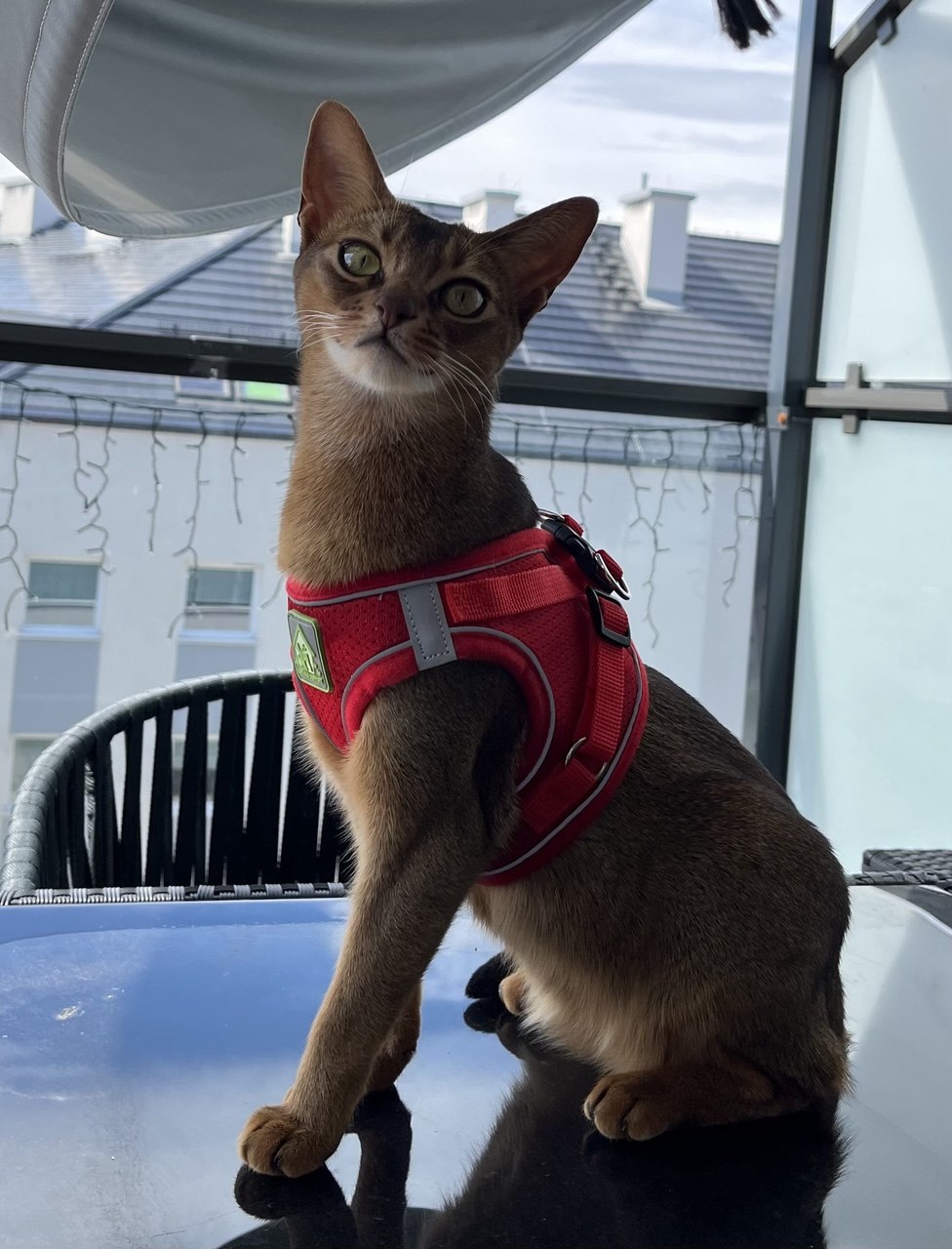
Here is something that surprises most cat owners when they first hear it: indoor cats are at higher risk on a high-floor balcony than outdoor cats are. Not lower. Higher. The instinct runs the other way — but understanding why it works this way is the most important thing a flat-dwelling cat owner can take from this article.
Why Indoor Cats Are More Vulnerable, Not Less
Outdoor cats develop spatial awareness through experience. A cat that goes outside regularly has jumped from walls, misjudged distances and corrected, experienced heights and understood what they mean. It has calibrated its sense of scale through repeated real-world exposure.
An indoor cat has not. Its entire physical world is the flat: rooms, furniture, the height of a sofa, the top of the wardrobe. When an indoor cat is brought onto a high-floor balcony for the first time, it does not look over the railing and think: that is a long way down, I should be careful. It looks down and has no meaningful way to process what it is seeing. The distance is not felt as danger the way it would be for a cat that has grown up navigating outdoor spaces.
Add to this: a balcony is typically a novel, stimulating environment for an indoor cat. New smells, new sounds, wind, birds, movement from below. A cat that is overstimulated or focused on something in the environment below is not paying attention to the ledge it is standing on. The excitement of the environment actively diverts attention away from the physical risk.
The Floor Height Factor
Falls from very low heights (one to two storeys) are often more dangerous in terms of injury type because cats do not have enough airtime to complete the righting reflex. Falls from mid-range heights — roughly three to six storeys — carry the highest risk of serious or fatal injury. Falls from very high floors (above seven storeys) involve the cat reaching terminal velocity, at which point some cats adopt a spread-body posture that reduces impact force. This is the basis of the “high-rise syndrome” research that sometimes gets misinterpreted as “cats are safe from high buildings.” They are not safe.
The practical takeaway: there is no floor at which a balcony fall becomes acceptable. The risk profile changes with height; the risk does not disappear.
How Indoor Cats Behave on Balconies
First Access
The first time an indoor cat accesses a balcony, they will almost always be cautious and exploratory. They will sniff, move slowly, potentially retreat indoors and come back. This initial caution gives owners a false sense of security. A careful first visit does not predict careful subsequent visits.
For renters and movers who can't drill, a removable no-drill steel enclosure gives real safety and comes with you to the next flat.
Repeat Visits
As the cat becomes comfortable, it becomes less cautious. Familiarity breeds confidence — and confidence on a high-floor balcony, without genuine spatial awareness, is the precise condition that leads to accidents.
Prey Response
If a bird flies past, a pigeon lands nearby, or movement from below catches the cat’s eye, everything else is gone. A cat in prey focus is not thinking about the ledge it is standing on. This is not a personality flaw — it is deeply wired behaviour. It is also the most common trigger for balcony incidents.
Sleeping
Cats sleep in the sun. A cat that has been sleeping on the balcony for an hour may be groggy when it wakes and moves, with reduced coordination during the transition. Sun-warmed concrete near a railing is an appealing sleeping spot for reasons your cat does not connect to any risk.
The Specific Setup Indoor Cat Owners Should Have
Physical Containment That Is Not Optional
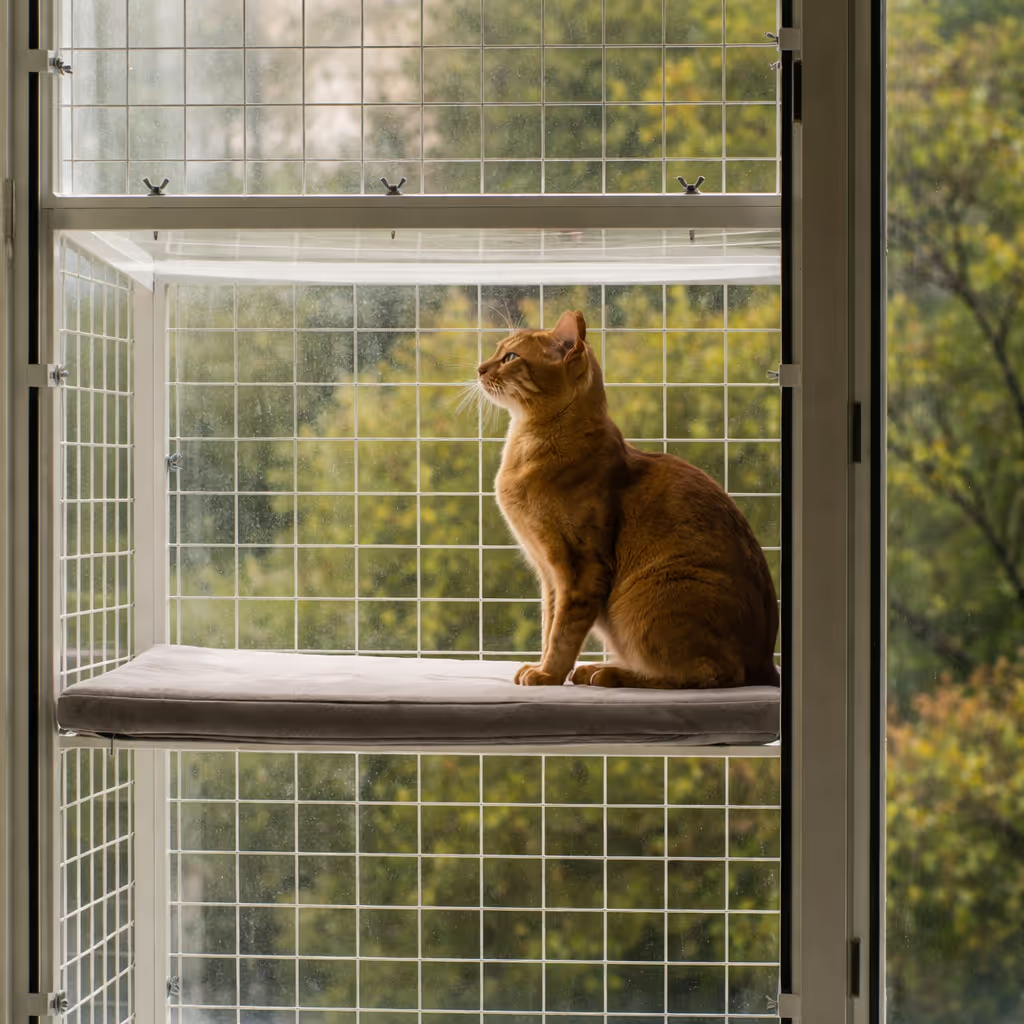
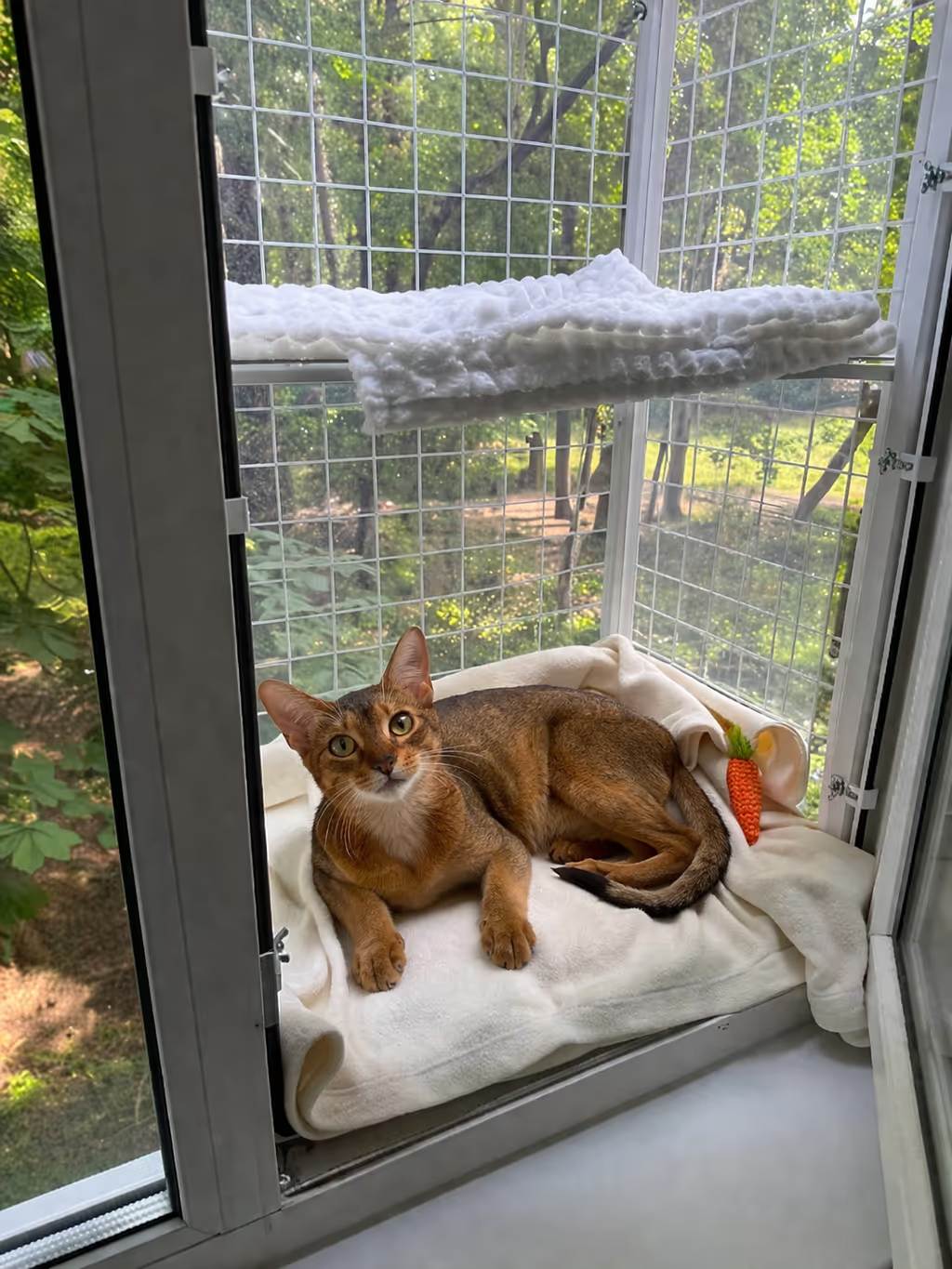
A net, a mesh panel system, or a purpose-built enclosure that physically prevents your cat from going over, through, or around the balcony perimeter. Not a deterrent. Not something that works until a determined cat figures it out. A structure that is load-tested, properly attached to a fixed surface, and that you have physically tested yourself before your cat goes near it. For indoor cats specifically: the containment needs to be more robust, not less, compared to a seasoned outdoor cat.
Mesh Sizing
Standard 5x5cm welded mesh is appropriate for adult cats. The mesh should be rigid under pressure — woven or chicken-wire style mesh deforms when a cat presses against it. The frame it is attached to should not flex or pull away from its fixing points.
Supervised Introduction Period
Before trusting any setup with an indoor cat alone, observe them on the balcony for several sessions. Watch for: focused attention on something below, approaches to the railing, jumping onto furniture near the perimeter. The supervised period tells you what your specific cat is likely to do — and whether your enclosure needs any reinforcement before you consider it safe for unsupervised use.
Do Not Assume Calm Behaviour Continues
A cat that has used the balcony fifty times without incident is not a cat that has become safe on the balcony. It is a cat that has had fifty safe visits. The conditions that cause an incident — a startling bird, an unexpected stimulus — do not follow a timetable. This is not a reason to keep your cat off the balcony. It is a reason to ensure the physical containment never becomes an afterthought.
What to Do If You Have No Enclosure Yet
If you have an indoor cat in a high-floor flat with a balcony, and you do not yet have a proper containment solution — keep the balcony closed until you do. An open balcony with no containment and an indoor cat that has not been tested in that environment is an accident waiting for a trigger.
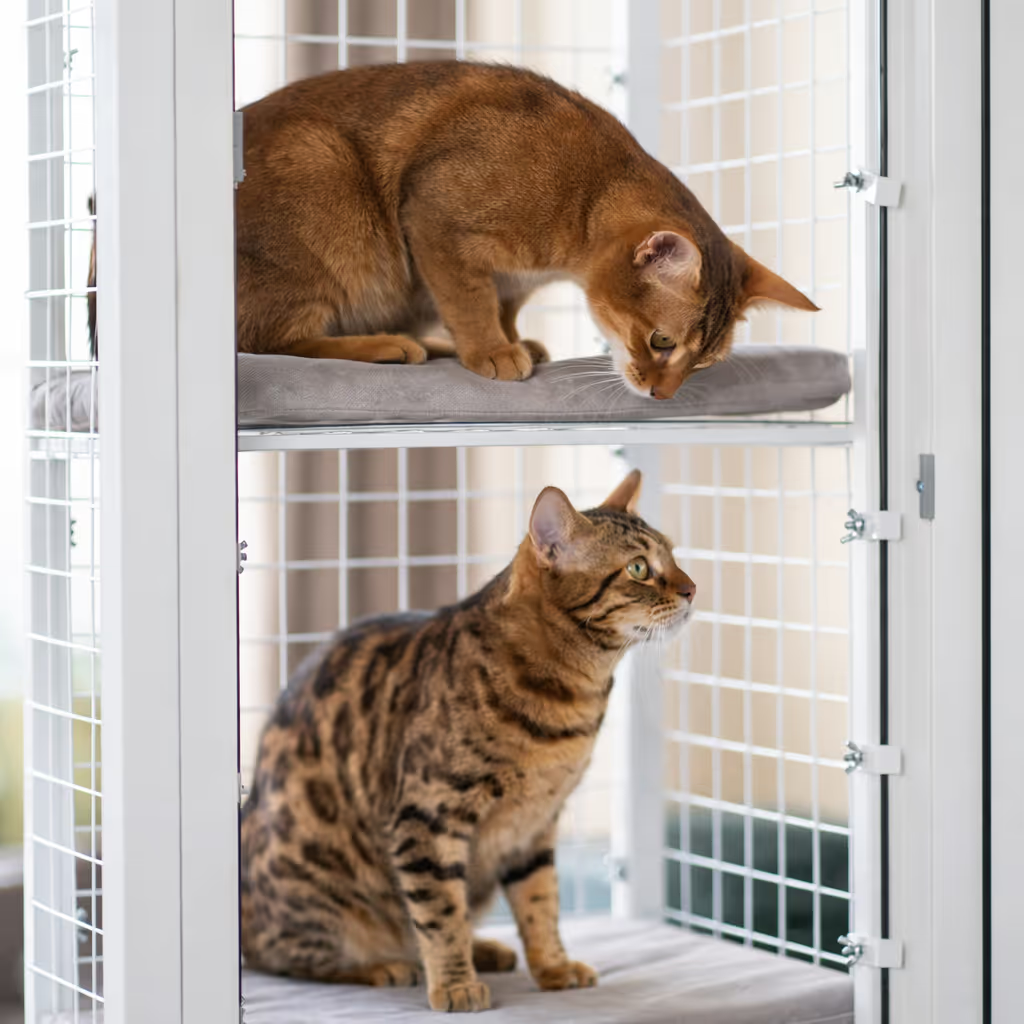
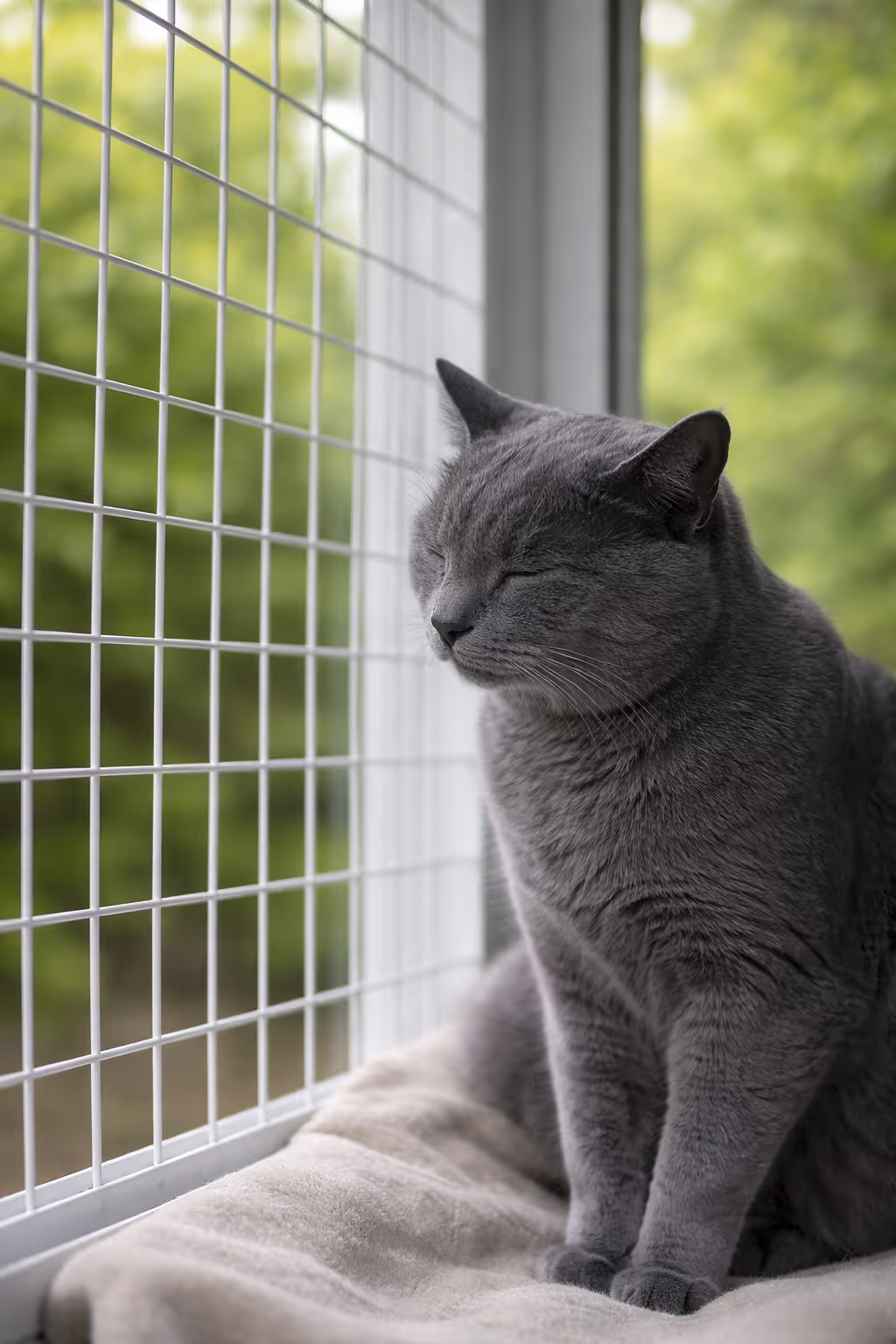
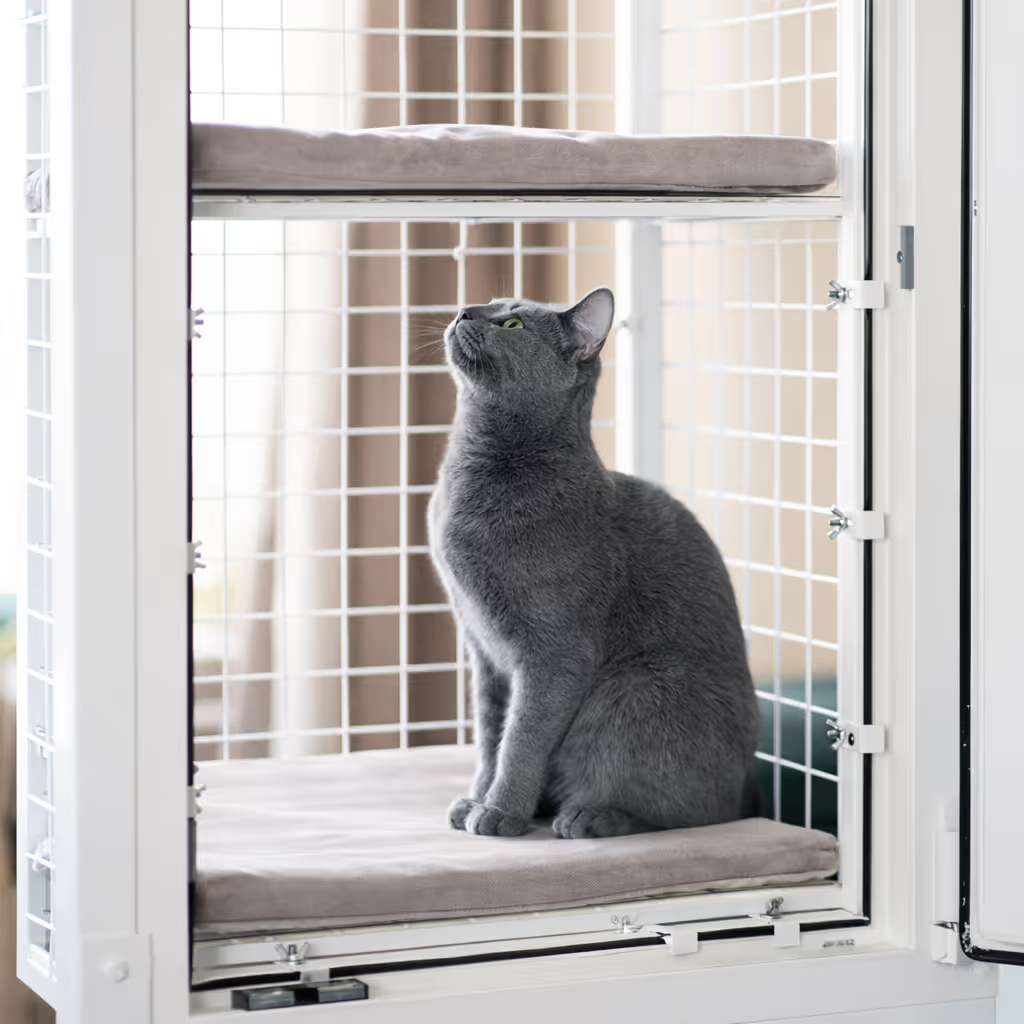
A window enclosure is often the fastest and most straightforward path to safe outdoor access for an indoor cat: custom-built to your window, no drilling required, installed in a couple of hours. Your cat gets fresh air, outdoor sensory experience, and a safe space to watch the world — and you get the peace of mind that nothing can go wrong while you are in another room.
Want to talk through your specific situation — window type, floor level, cat temperament? We’re happy to help.
See the BalconyCat steel enclosure →