Every rental contract says the same thing: no permanent modifications. For cat owners, that sentence has historically meant no safe outdoor access for their cat. But the no-drill catio is real, it works, and this guide covers exactly how to do it without touching a wall, losing your deposit, or compromising on safety.
Why Renters Struggle With Balcony Cat Safety
The standard options for cat-proofing a balcony almost all require drilling. Cage enclosures need wall anchors. Most netting systems recommend drilled fixings for anything above ground floor. Even some “no-drill” products on the market use adhesive pads that leave marks on painted or rendered walls — which in most rental agreements counts as damage.
This leaves renters with three bad options: leave the window closed, use a solution that isn’t actually safe, or risk the deposit. None of these are acceptable. There is a fourth option — but most people don’t know it exists.
What “No-Drill” Actually Means
True no-drill means: no holes in any wall, floor, ceiling, or fixed surface. No adhesive that leaves residue or pulls paint on removal. No permanent mark of any kind. The solution must be fully removable and leave the flat in exactly the condition it was found.
This rules out most adhesive-based products on the market. It also rules out tension rod systems that rely on friction against walls — these work until they don’t, and a cat leaning against one at height is exactly the situation they fail in. True no-drill, for a cat safety application, means mechanical grip on a surface that is already designed to be gripped and released — like a window frame.
Option 1 — Adhesive Balcony Netting
Most “no-drill” balcony nets use adhesive hooks or sticky pads to fix attachment points to walls or window surrounds. What works: easy to install, low cost, looks clean from a distance. What fails as a renter solution: adhesive residue on painted walls is the most common cause of deposit disputes after netting removal. On textured render, painted brick, or older plaster, the surface frequently comes away with the adhesive. Even products marketed as removable can leave marks. Safety note: adhesive attachment points are not structurally rated for cat weight plus dynamic load. At height, this matters. Verdict: the cheapest option but not genuinely renter-safe and not the safest cat containment method.
Option 2 — Tension-Based Enclosures
Some cage-style enclosures use spring tension or compression between walls to hold in place without drilling. What works: no adhesive, technically removable. What fails: tension systems rely on friction against wall surfaces. This friction can be overcome — by a cat throwing its weight against the enclosure, by the frame settling over time, or by vibration. They are also sized to approximate room dimensions, not exact balcony openings — meaning gaps are common. Verdict: better than adhesive netting for deposit safety. Still not structurally reliable for active cats at height.
Option 3 — Window-Mounted Steel Enclosure with Bracket Grips
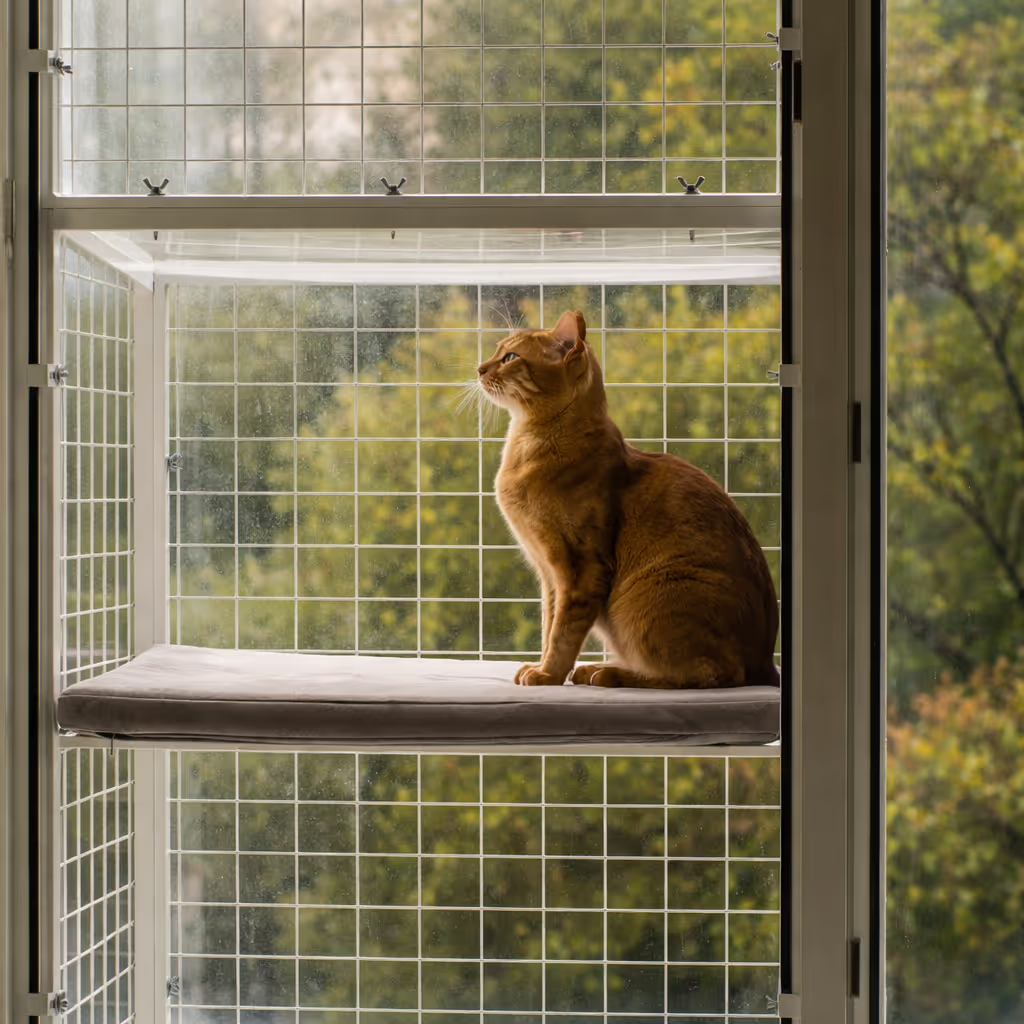
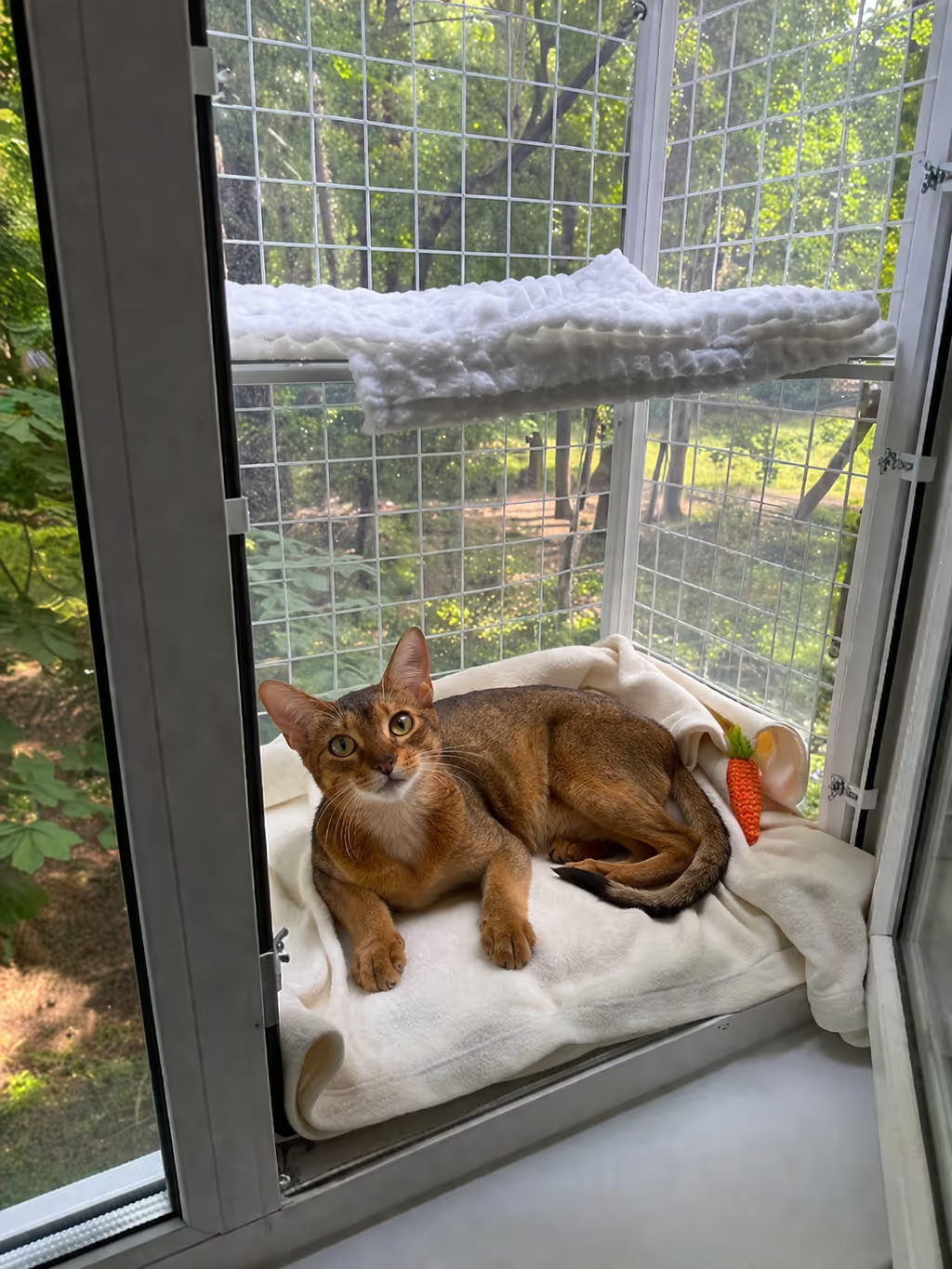
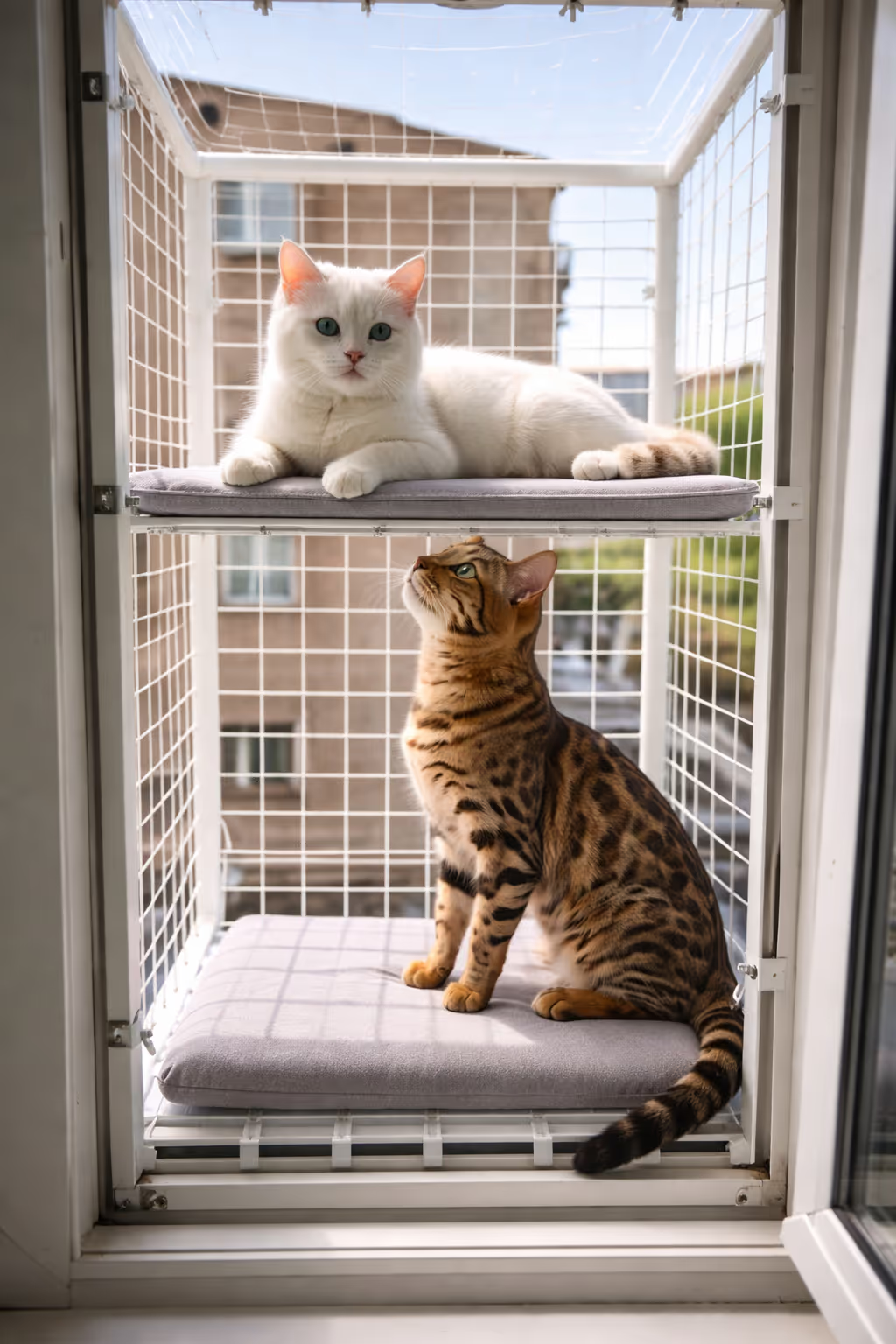
This is the option most renters don’t know exists. A custom-measured steel enclosure that mounts directly onto the window frame using steel corner brackets — no adhesive, no wall contact, no drilling into any surface. The brackets grip the outer edges of the window frame. The window frame is designed to be gripped and released — it’s what the window hinges and seals do every time the window opens and closes. A steel bracket gripping the same surface leaves no mark and exerts no permanent force.
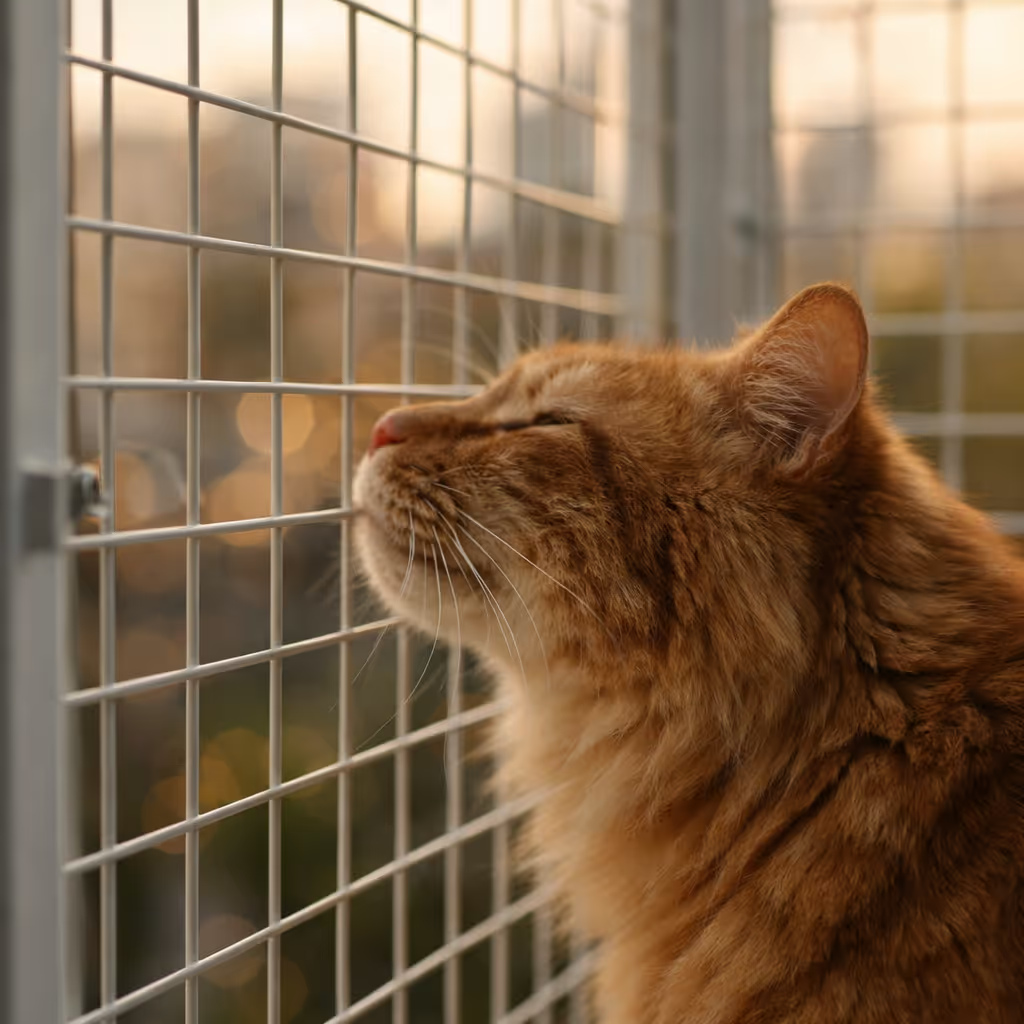
The most reliable way to give your cat that outdoor space is a custom steel window enclosure that fits your window exactly — no drilling, and no gaps to slip through.
The enclosure itself — a welded steel grid in a powder-coated frame — extends outward from the window, giving the cat a secure open-air space. Load-rated to 40 kg, dynamically tested at 70+ kg of human weight, and custom-measured to your exact window so there are no gaps. Renter checklist: no holes in walls, no adhesive residue, no marks on removal, no landlord permission needed, fully removable and portable, structurally safe for any floor height. Verdict: the only genuinely renter-safe option that is also structurally reliable for cat containment at any floor height.
The DIY Question
Many renters search for DIY catio solutions precisely because they assume that’s the only affordable path that avoids drilling. The internet has no shortage of guides — cable ties, garden mesh, wooden frames, PVC pipe.
The honest answer: DIY catios can work at ground level, in gardens, in enclosed outdoor spaces where the consequence of a failure is the cat landing on grass. For any apartment above ground floor, DIY construction has no load rating, no testing standard, and no way to know its structural limits before something fails. The time investment is also significant — most balcony DIY catio projects documented online took 2–3 weekends. A custom steel window enclosure ships flat-packed and installs in a few hours with two people.
Moving With a No-Drill Catio
One advantage of a bracket-grip steel enclosure that most owners don’t think about at purchase time: it moves with you. When you leave a rental, the enclosure comes down, packs flat, and goes in the van. At the new place, you send updated window measurements, a new frame is made, and the enclosure goes back up. The investment follows the cat, not the flat.
This is categorically different from any solution that requires drilling — a drilled cage enclosure is, in practice, a permanent fixture that either gets left behind or requires patching work on the way out.
Frequently Asked Questions
Can I install a catio in a rented flat without drilling?
Yes. A window-mounted steel enclosure with bracket grips requires no drilling and leaves no marks on walls or window frames. It is fully removable and genuinely renter-safe.
Will a no-drill catio hold my cat safely?
A bracket-grip steel window enclosure is load-rated to 40 kg and tested at 70+ kg dynamic human load. It is structurally reliable at any floor height. Adhesive and tension-based no-drill solutions are not equivalent.
What happens when I move flats?
The enclosure packs flat and moves with you. New measurements are taken at the new property, a new frame is built, and the same brackets are reused. The enclosure is not tied to a specific flat.
Is a no-drill catio safe for high floors?
A steel bracket-grip window enclosure is safe at any floor height. Adhesive and tension-based systems carry higher risk above ground level because their attachment points are not structurally rated for dynamic load.
Do I need my landlord’s permission for a bracket-grip window enclosure?
In most cases, no. Bracket grips do not modify the window frame, wall, or any fixed surface. They grip and release without leaving a trace. However, if in doubt, checking with your landlord in advance is always a sensible step.
A catio that moves with you. Custom-made, no drilling, no deposit risk.
See the BalconyCat steel enclosure →