You want your cat to have fresh air. You also want them to stay alive. These two things are not in conflict — but the solution you choose determines whether you actually achieve both. This guide covers every cat-proof balcony method available, what each one costs, how long it lasts, and which one works when it matters most.
Why Cat-Proofing a Balcony Is Not Optional
Cats are not cautious by instinct. They are curious, fast, and completely unaware of heights as a risk. An indoor cat that has never been outside will lean against a balcony railing with the same confidence as one that’s spent years in gardens. The risk is not experience — it’s physics.
The only reliable protection is a physical barrier. Not a rule. Not a habit. Not a hope. A structure that makes exit impossible regardless of what the cat decides to do.
Solution 1 — Balcony Safety Nets
The cheapest and most widely available option. Nets or mesh panels are stretched across the balcony opening and fixed using clips, adhesive anchors, or tension cord.
Cost: 30€–150€ depending on size and quality. Lifespan: 1–3 seasons. UV exposure causes netting to become brittle and lose tensile strength. Cat claw abrasion accelerates this on any edge the cat can reach.
What works: provides a visible deterrent and basic containment for calm cats on lower floors with solid, properly installed anchor points. What fails: adhesive anchors on rendered or painted walls. Plastic clip systems on PVC frames. Any installation where the attachment method is weaker than the net material — which is most of them. A net that appears intact can be anchored to a hook that’s been pulling free for months. Renter-safe: technically yes, but adhesive residue on walls is a common problem. Verdict: acceptable as a temporary or ground-floor measure. Not a long-term solution for any floor above ground level.
Solution 2 — Balcony Cage Enclosures
A freestanding or wall-mounted frame structure, typically aluminium tubing with mesh panels, that creates a cage around part or all of the balcony. Cost: 200€–600€ for standard kits. Lifespan: 3–7 years for aluminium, longer for steel. What works: more durable than netting, can be large enough for the cat to move freely. What fails: off-the-shelf systems rarely fit real balcony dimensions precisely. Gaps at corners, door frames, and wall junctions are common. A gap of 8–10 cm is enough for many cats to squeeze through. Installation typically requires drilling. Renter-safe: rarely. Most systems require drilled fixings for structural integrity. Verdict: better than netting for permanent setups on owned properties. Not suitable for renters. Precise fit requires custom manufacturing.
Solution 3 — DIY Cat-Proofing
Homemade solutions — wooden frames, cable ties, garden mesh, plastic barriers — assembled by the owner. Cost: 20€–100€ in materials, plus significant time. Lifespan: highly variable, entirely dependent on materials and construction quality. What works: can be effective for ground-floor gardens where a fall is not a serious risk. What fails: no load rating, no testing standard, no guarantee of structural integrity at height. Most DIY solutions are designed to look adequate, not to perform under dynamic load. Renter-safe: depends on method. Verdict: do not use DIY for any balcony above ground floor. The consequences of failure are too severe and there is no way to know the failure point in advance.
For open railings and balustrade gaps, our protective steel mesh closes the gaps without changing how the balcony looks.
Solution 4 — Window-Mounted Steel Enclosures
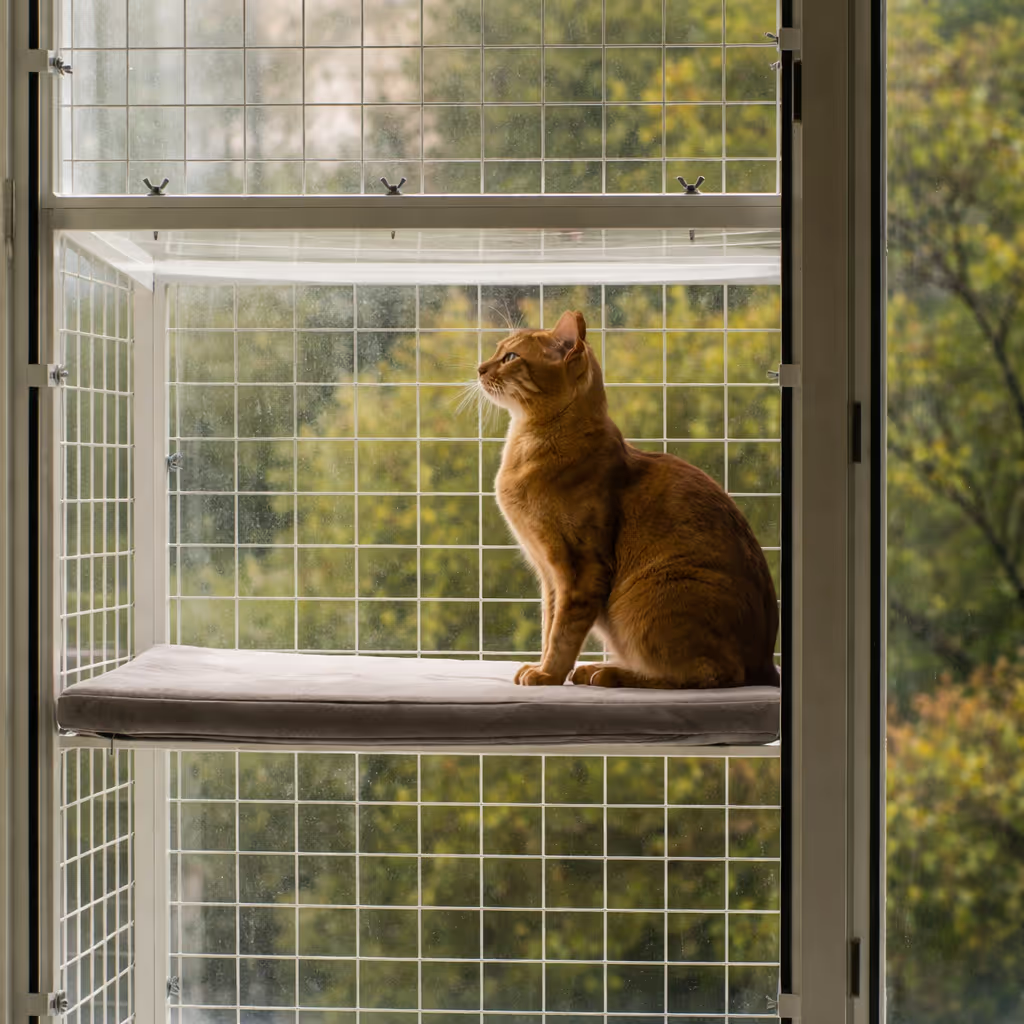
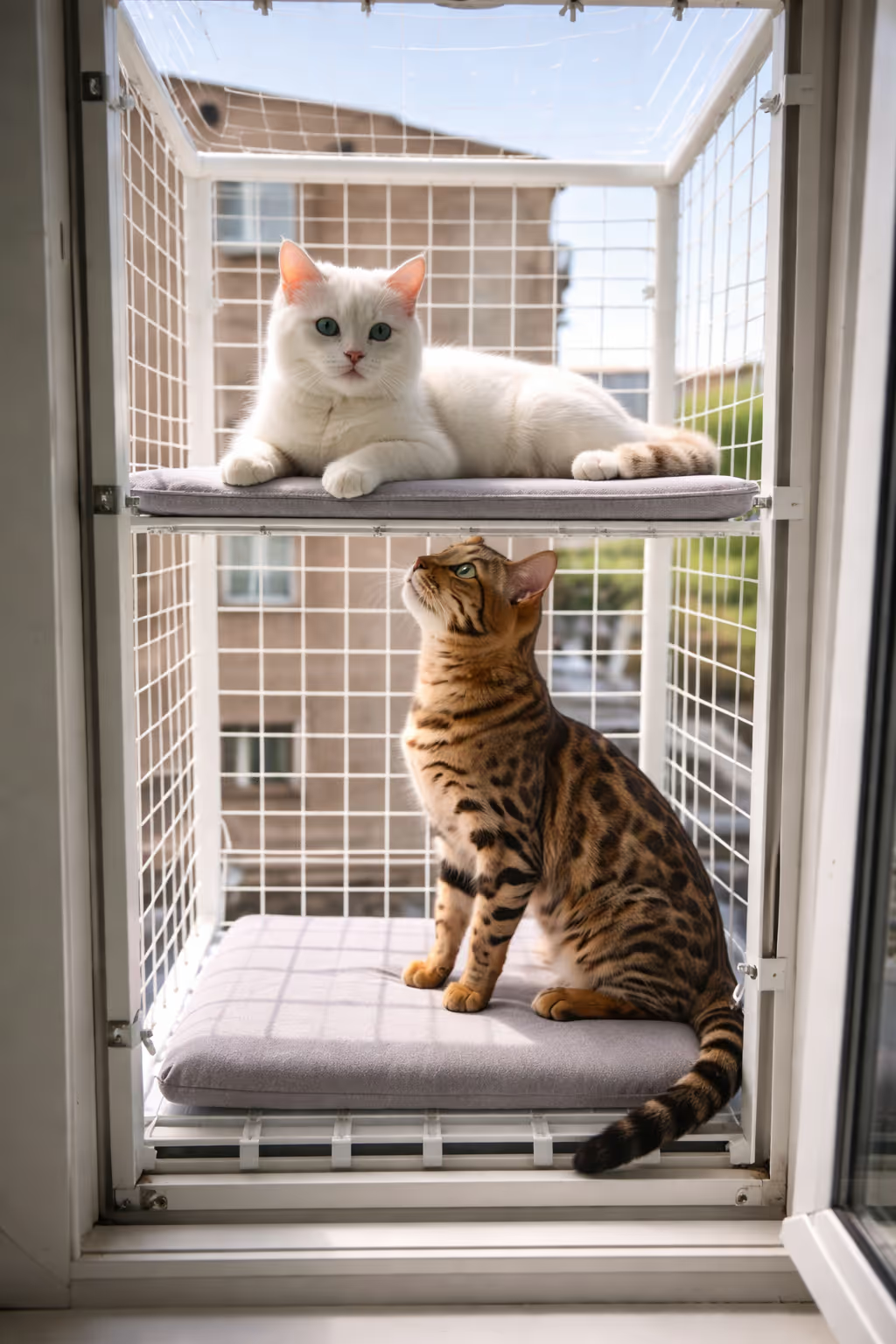
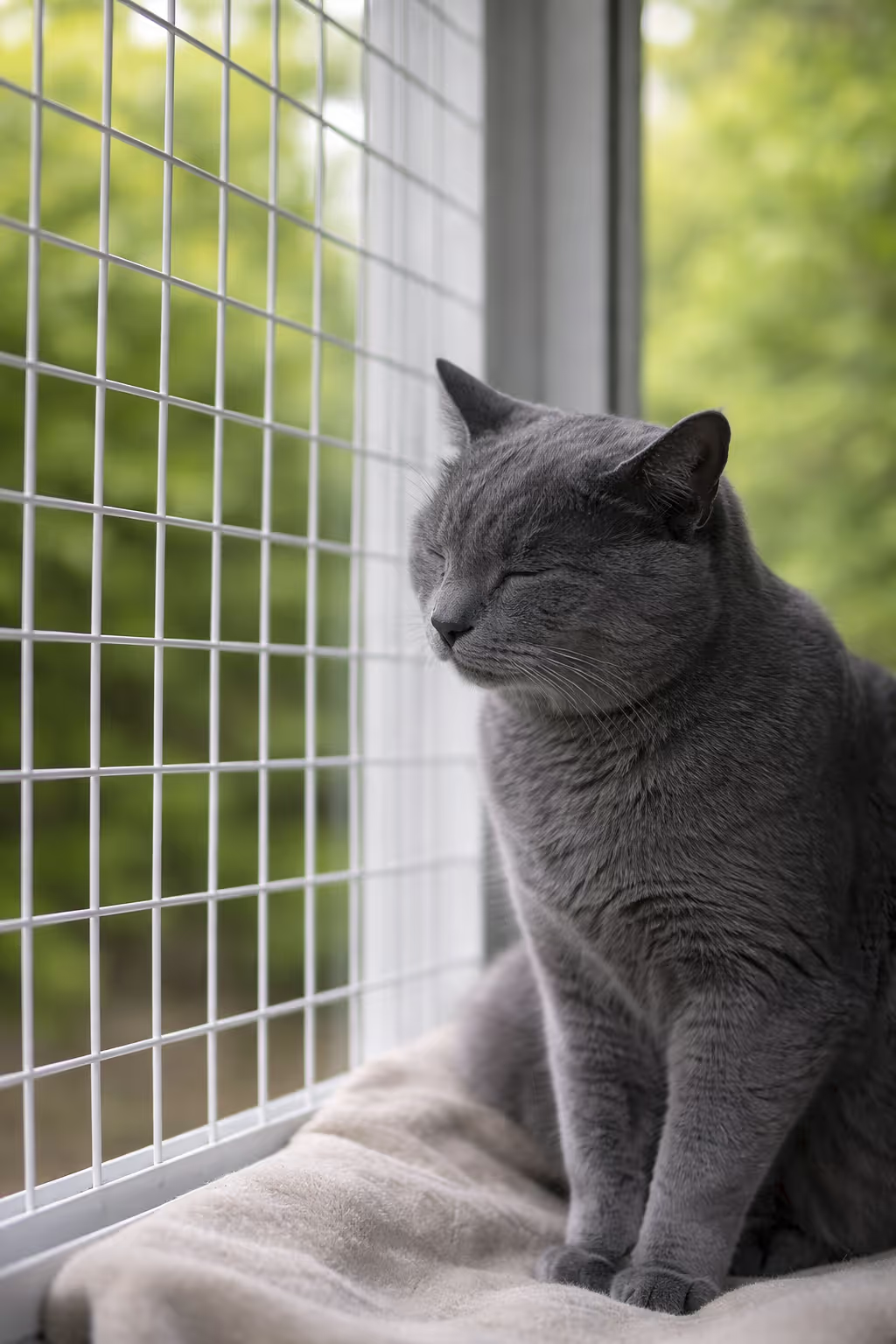
A welded steel grid in a steel frame, custom-measured to your window and mounted using steel bracket grips — no drilling, no adhesive. The enclosure extends outward from the window, giving the cat a secure outdoor space. Cost: from 899€, depending on window size. Lifespan: 10+ years. Galvanised steel with powder coating does not degrade under normal outdoor conditions.
What works: everything. The welded grid physically prevents exit. The bracket attachment is load-rated. There are no gaps, no adhesive, no plastic clips, and nothing that degrades over time. Custom measurement means the fit is exact — not approximate. After installation, you can push, pull, and put your full bodyweight on it to confirm this yourself. Renter-safe: yes. Bracket grips require no drilling and leave no marks. Fully removable. Verdict: the only solution that remains reliably safe across all floor heights, all cat personalities, and all weather conditions.
Side-by-Side Summary
Balcony netting costs the least upfront but needs replacing every 1–3 seasons and is only as safe as its weakest anchor point. Cage enclosures are more durable but rarely fit well without custom manufacturing and almost always require drilling. DIY is unpredictable in every dimension that matters. A steel window enclosure costs more upfront, lasts a decade or more, requires no drilling, and is the only option you can physically test and verify after installation.
The cost-per-year comparison is instructive. A 50€ net replaced three times over five years costs 150€ plus installation effort each time. A 899€ steel enclosure costs 899€ over five years — and is still sound at the end of it.
What Renters Need to Know
Most rental agreements prohibit permanent modification to walls, floors, or window frames. This rules out cage enclosures with drilled anchors and most DIY frame solutions.
Balcony netting with adhesive anchors is technically removable but frequently leaves marks or surface damage on painted walls, particularly on older plaster finishes.
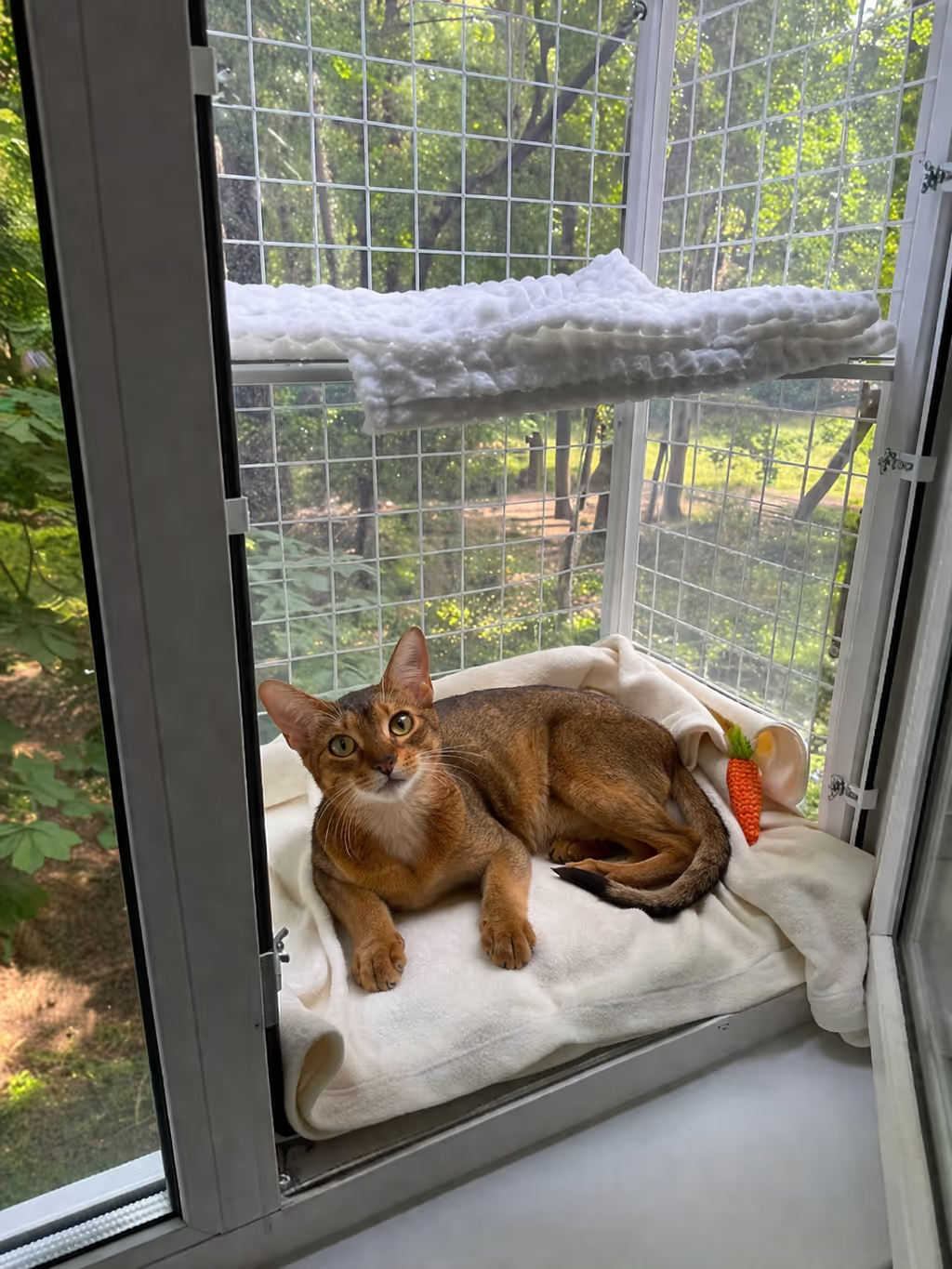
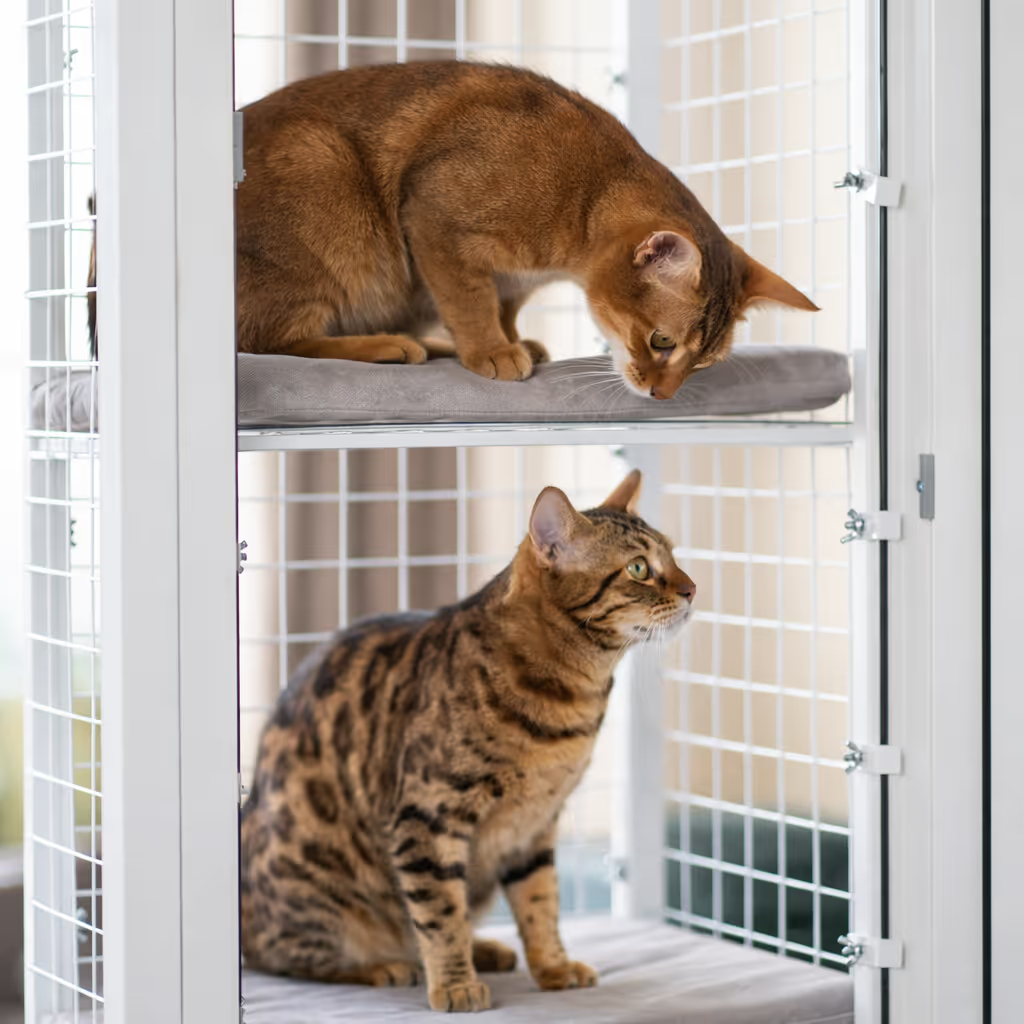
A window-mounted steel enclosure using bracket grips is the only solution specifically designed to be renter-safe. The brackets grip the window frame without contact with any wall surface. When removed, there is no trace. It can move with you to the next property.
Frequently Asked Questions
What is the best way to cat-proof a balcony?
A window-mounted steel enclosure with welded grid construction and bracket attachment offers the highest structural integrity, longest lifespan, and is the only option that requires no drilling and leaves no marks.
Can I cat-proof a balcony without drilling?
Yes. A steel window enclosure with bracket grips attaches to the window frame without any wall contact or permanent modification. It is fully removable and suitable for renters.
How much does it cost to cat-proof a balcony?
Options range from 30€ for basic netting to 899€+ for a custom steel enclosure. Over five years, the cost difference narrows significantly when netting replacement is factored in.
Is balcony netting safe for cats on high floors?
Netting carries higher risk on upper floors because attachment point failure at height has serious consequences. For any floor above ground level, a structurally rated steel enclosure is strongly recommended.
How do I cat-proof a balcony in a rented flat?
Use a window-mounted steel enclosure with bracket grips. It requires no drilling, leaves no marks, and is fully removable. It is the only genuinely renter-safe solution that is also structurally reliable.
One decision. One enclosure. Ten years of open windows without worry.
See the BalconyCat steel enclosure →