A deck is not the same problem as a balcony, and the distinction matters for how you approach cat-proofing. A balcony involves a fall risk as the primary concern. A deck — whether a garden deck, ground-floor terrace, or raised outdoor platform — usually sits at or near ground level, covers a larger perimeter, and has no fixed walls. The risk is not usually a fall. It is escape.
Understanding the Deck Problem
Before selecting a solution, be clear about which specific risks you are trying to manage.
Escape Risk
The most common concern with decks. An unsecured deck gives a cat an easy path to leave the property. On a ground-floor deck, there is nothing stopping them from simply walking off the edge. The question is: where does the deck end, and what is beyond it?
Neighbouring Animal Risk
Relevant for decks that border other gardens, public pathways, or areas where your cat could encounter dogs, foxes, or other cats. An unsecured deck can also work in reverse — other animals can enter your space.
Road Proximity
The most serious version of the escape risk. A deck separated from a road by a garden or fence carries a different risk profile from a deck with direct or near-direct road access. Identify this clearly before choosing a solution.
Fall Risk
Applies to raised decks: any deck elevated significantly above ground level on sloping ground, above a basement, or as part of a multi-level property. For raised decks, the approach is closer to a balcony solution.
Option 1: Cat-Proof Garden Fencing
If your deck connects to or is enclosed by a garden, cat-proof fencing around the entire garden perimeter is the most comprehensive approach. The principle is an inward-angled topper — a section of fence or mesh that angles toward the garden at roughly 45 degrees. A cat climbing the fence reaches the overhang and cannot continue upward without flipping onto its back, which it will not do voluntarily. It retreats.
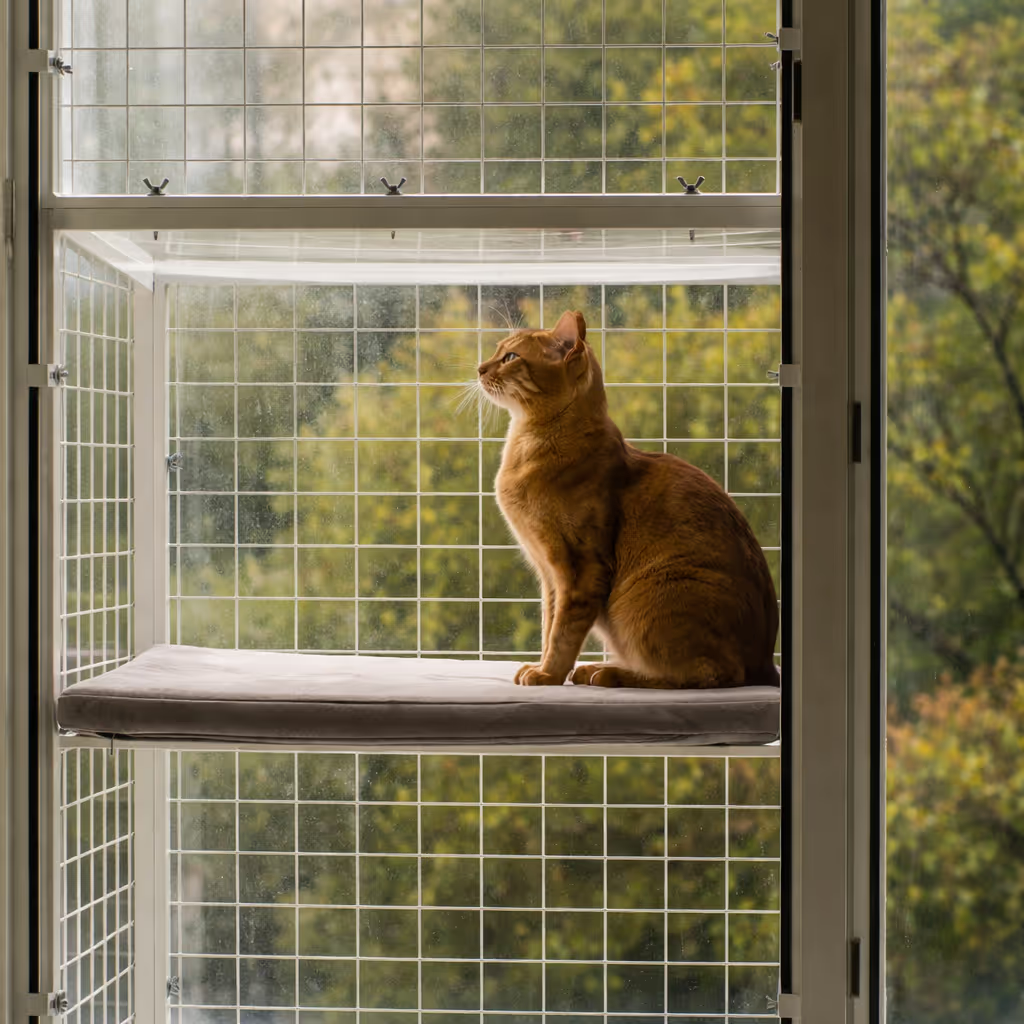
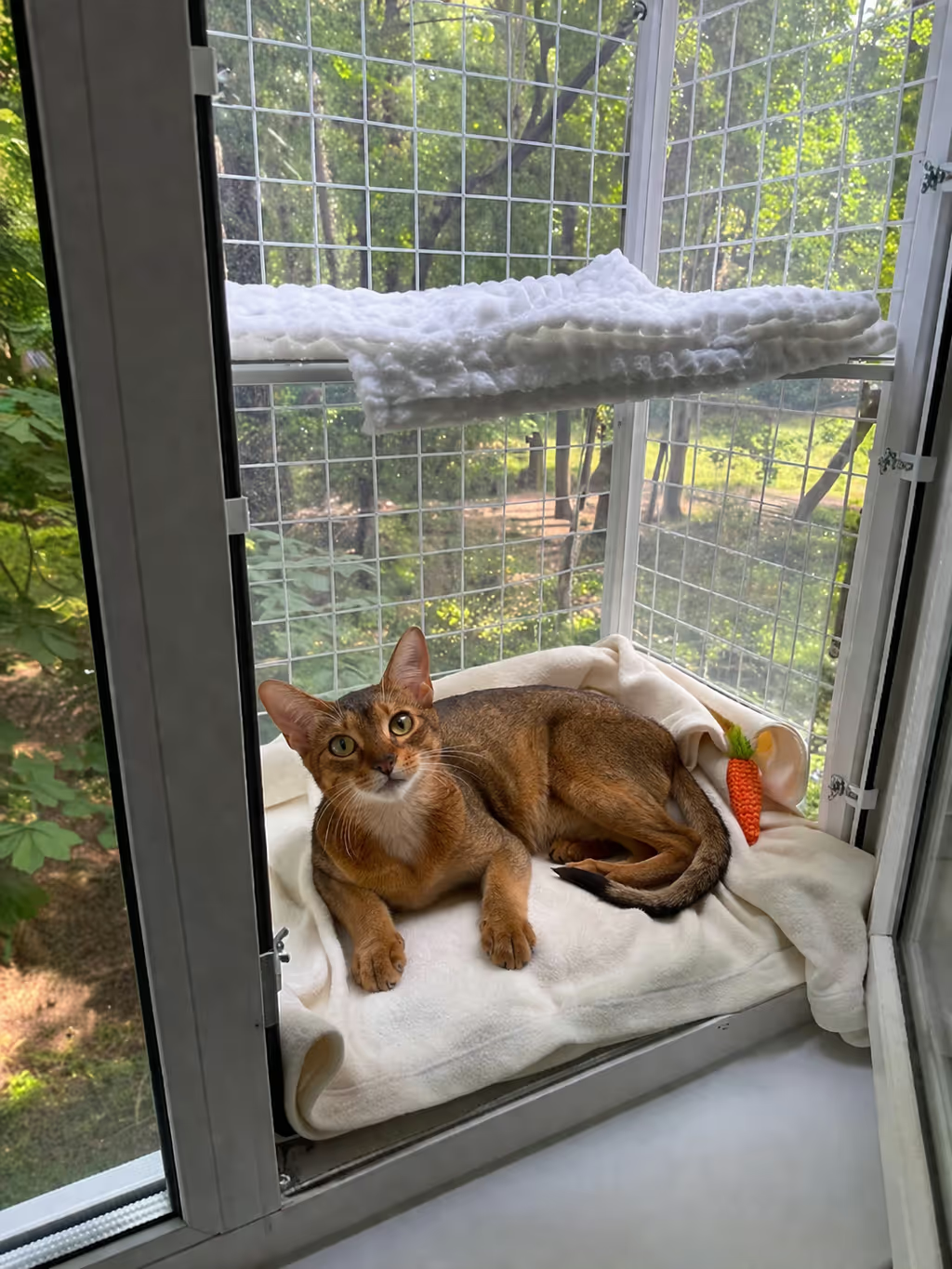
Whatever your situation, the safest starting point is a custom steel window enclosure sized to your exact window.
Bracket-Based Overhangs
Metal or plastic brackets that attach to an existing fence, onto which mesh panels are fixed at an angle. Systems like ProtectaPet are designed specifically for this purpose, retrofit onto most standard garden fences, and are fully reversible.
Roller Systems
A series of spinning cylinders mounted along the fence top. A cat that attempts to climb over reaches the rollers, which spin freely and provide no grip. Oscillot is the most widely known commercial roller system. Both approaches work on the assumption that your cat is climbing to escape — they are less effective if there is a jumping-from-furniture route to the fence.
Option 2: Deck Enclosure Netting
A deck can be enclosed with a net system: posts at the deck corners, netting around the sides and over the top, creating a contained outdoor space. This is relatively affordable compared to a full structural enclosure.
Key Considerations for Deck Netting
Anchor points: posts need to be fixed to the deck surface or to the ground. Freestanding posts driven into soil are the most stable. Net material: use UV-stabilised, high-tenacity netting rather than basic garden mesh — a cat testing the netting repeatedly will find weak points in low-quality material within a season. Tensioning: the net needs to be pulled taut at multiple points around the perimeter, not just the corners. A top panel is needed if you are concerned about a climbing cat going over the sides. Net enclosures can be taken down seasonally and are reversible.
Option 3: Modular Structural Enclosure
For a deck where the primary need is a defined, permanent safe outdoor space for the cat, a modular structural enclosure sitting on the deck is worth considering. Products like the Omlet Outdoor Cat Run can be configured in various sizes and shapes, sit on a deck surface, and create a genuinely secure contained space. They are structurally more robust than netting and can be extended or reconfigured.
The trade-off: a structural enclosure on a deck reduces the usable open deck space significantly. For a large deck, this may be acceptable. For a small deck, it may make the deck effectively unusable for anything other than the enclosure itself.
Option 4: Supervised Deck Access
Worth naming explicitly as a legitimate option: some cat owners choose not to enclose the deck at all, but instead limit deck access to supervised periods. This works when the cat is older and has shown no interest in exploring beyond the deck boundary, the deck is in a genuinely low-risk environment with no road proximity, and there is always a person present who can intervene if needed.
It is not a solution for owners who want to give their cat unsupervised outdoor time. It is also not appropriate for cats with high prey drive, strong wandering instinct, or any history of attempting to escape.
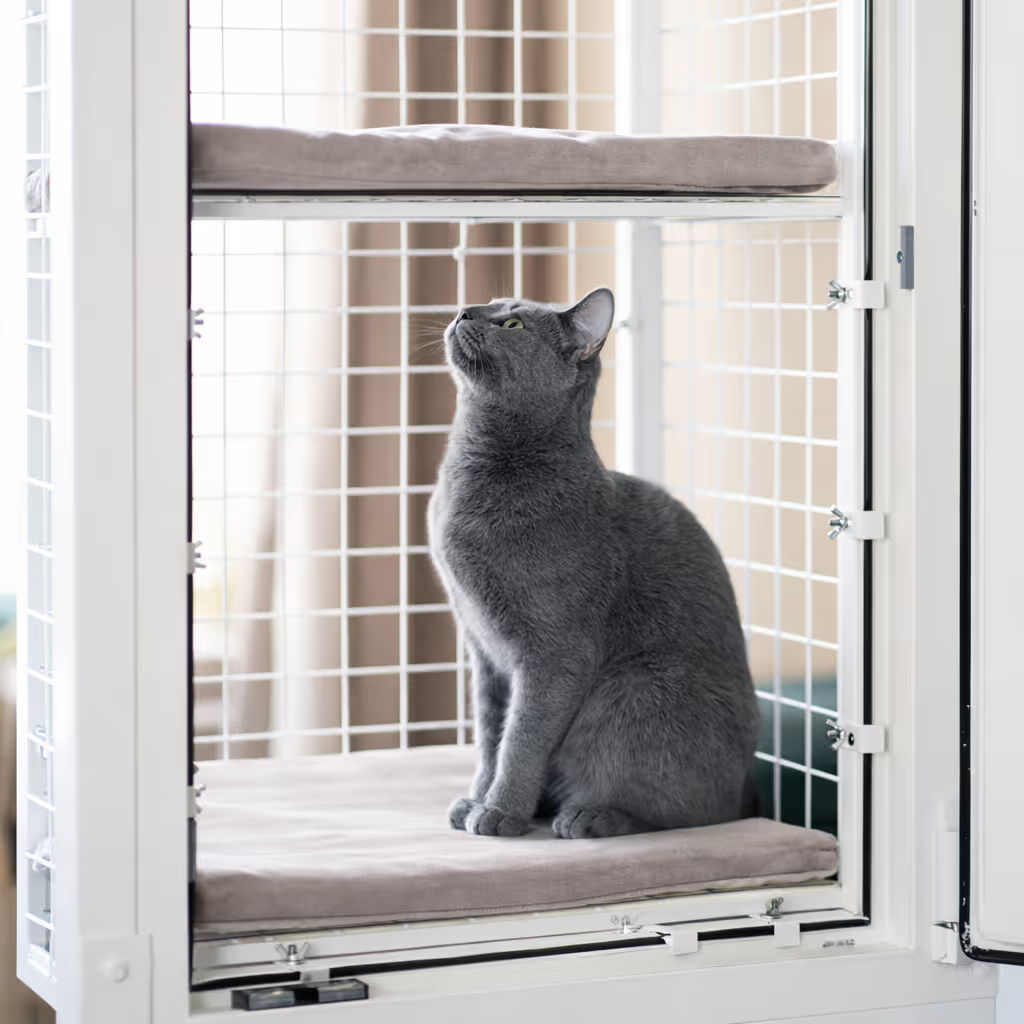
A Note on Window Enclosures for Deck-Adjacent Properties
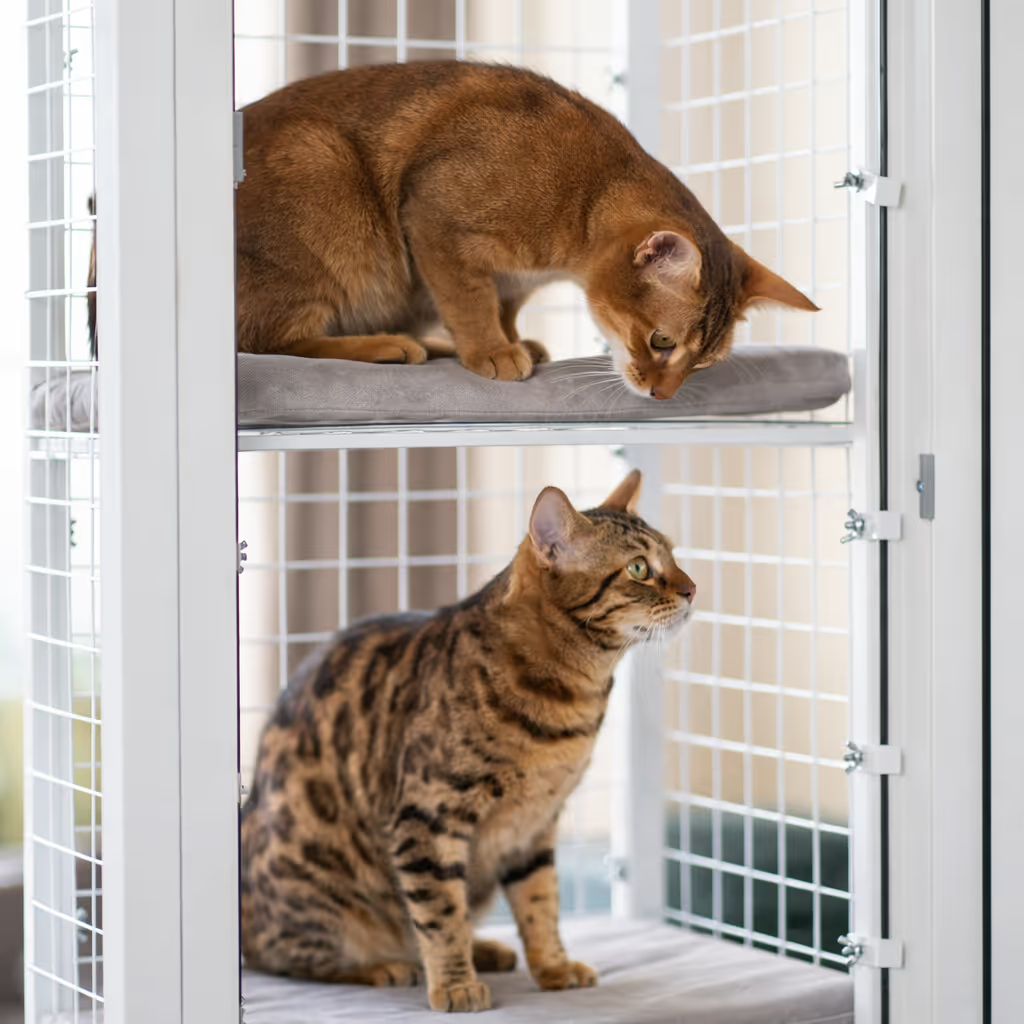
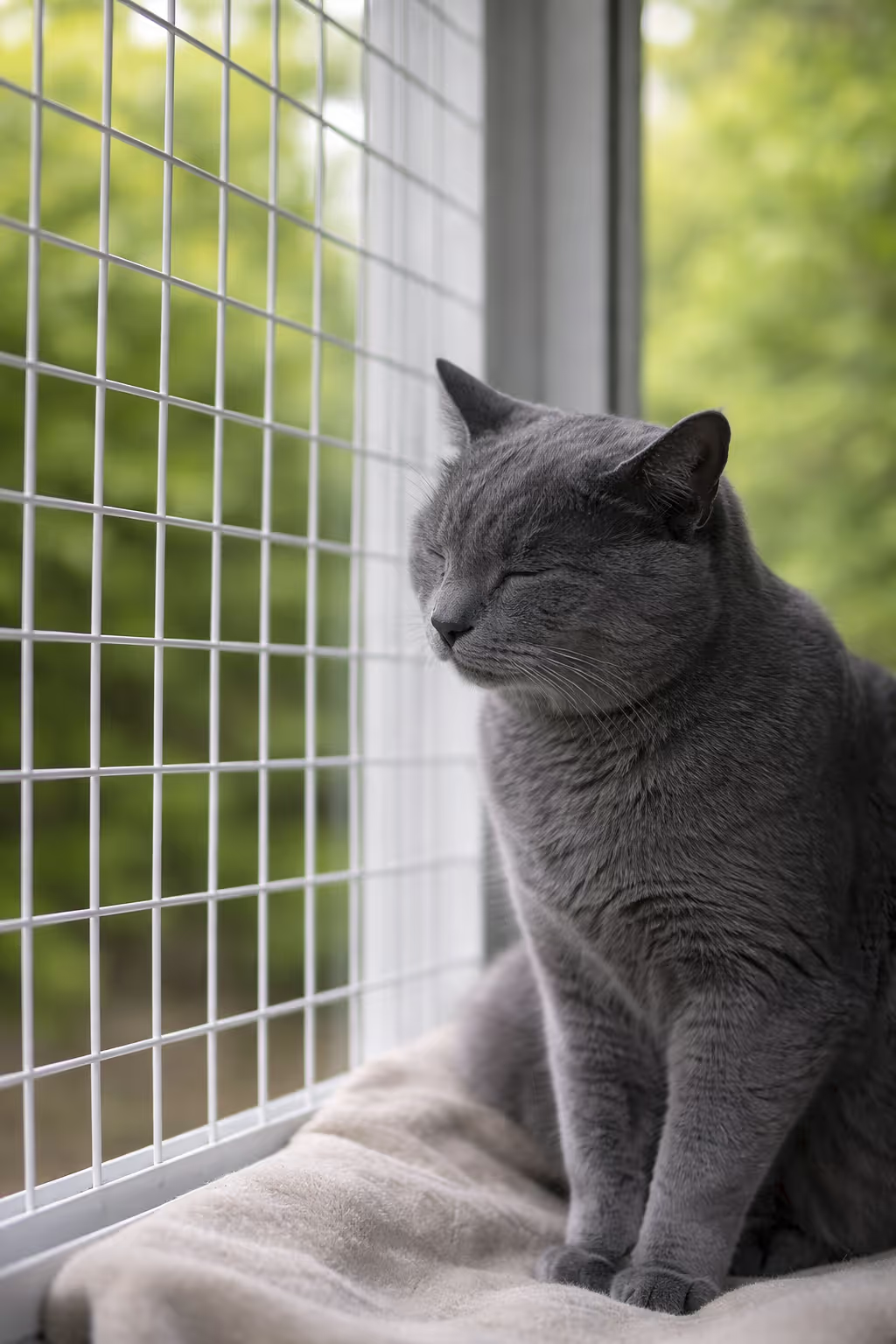
If your primary goal is giving your cat fresh air and an outdoor experience rather than full run of the deck — particularly if the deck presents significant containment challenges — a window-mounted enclosure is worth considering as a simpler alternative.
A window enclosure gives your cat safe access to the outside through a specific window without requiring any modifications to the deck or garden. For a flat or house where deck cat-proofing is expensive or impractical, it achieves the same core outcome at lower cost and without structural work. It is not the same as free deck access — for many indoor cats who simply want fresh air, birdsong, and outdoor smells, it is more than enough.
Not sure what solution fits your property and your cat? We’re happy to help — no commitment, just an honest conversation.
See the BalconyCat steel enclosure →