Most cat owners have the same instinct: cats are agile, cats always land on their feet, cats understand heights. And that instinct, more than anything else, is what puts cats at risk on balconies. The honest answer is yes — cats do fall off balconies. It happens more often than most owners know, and it happens to cats whose owners were completely confident it never would.
The "Righting Reflex" Is Real — But It Has Limits
Cats do have an extraordinary righting reflex. When falling, they rotate their body mid-air to land feet-first. This is not a myth. It is a well-documented physiological response that begins within milliseconds of a fall and is fully developed in kittens by the time they are seven weeks old.
But the righting reflex does not prevent falls. It helps cats survive them. Those are two very different things.
A cat that falls from a first or second-floor window has a reasonable chance of landing safely. A cat that falls from a fifth-floor balcony is in serious danger regardless of how well it rotates. Internal injuries, broken limbs, jaw fractures, and lung trauma are common outcomes of high-rise falls — even when the cat walks away apparently unharmed.
The righting reflex also requires time to activate. Falls from very low heights — a half-metre stumble off a railing, for example — can actually be more dangerous in some respects because the cat does not have enough airtime to complete the rotation before impact.
Why Cats Fall: The Attention Lapse Problem
Cats do not typically leap off balconies. What usually happens is more mundane: they are distracted. A bird flies past. An insect lands on the railing. A sound from below pulls their focus. A cat that is fully engaged in tracking something will lean further and further forward without registering the drop below. Then a paw slips, a railing is thinner than expected, or the cat simply misjudges the edge.
Indoor cats — cats that spend most or all of their lives inside — are at higher risk than cats with regular outdoor access, not lower. They have less experience with outdoor spatial awareness. To an indoor cat, a balcony is essentially a novel, exciting, slightly overwhelming place. Not a dangerous one. This is counterintuitive, but it is documented.
High-Rise Syndrome: What Vets Actually See
Veterinary professionals who work in urban areas have a name for what happens when cats fall from height: high-rise syndrome. It was first described in a 1987 study of cats treated at a New York animal hospital, and it remains a recognised clinical pattern today.
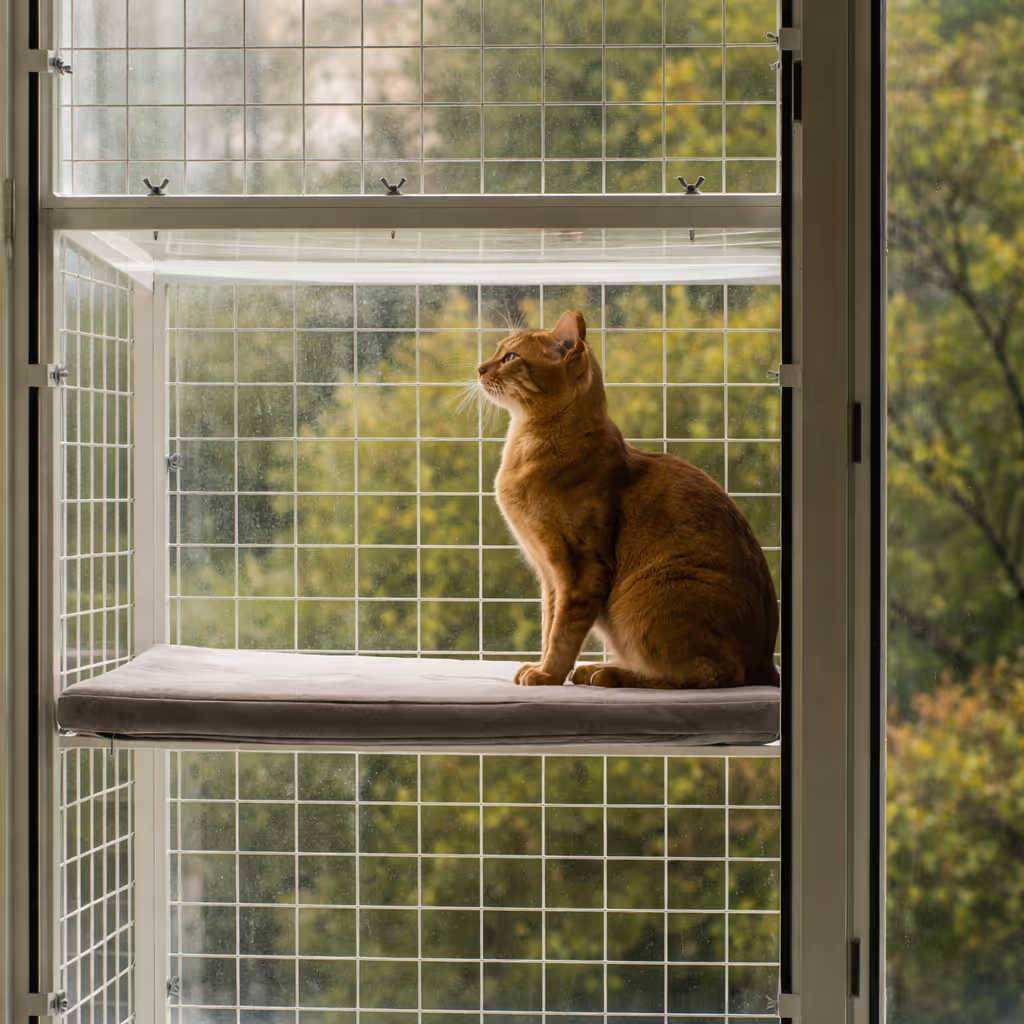
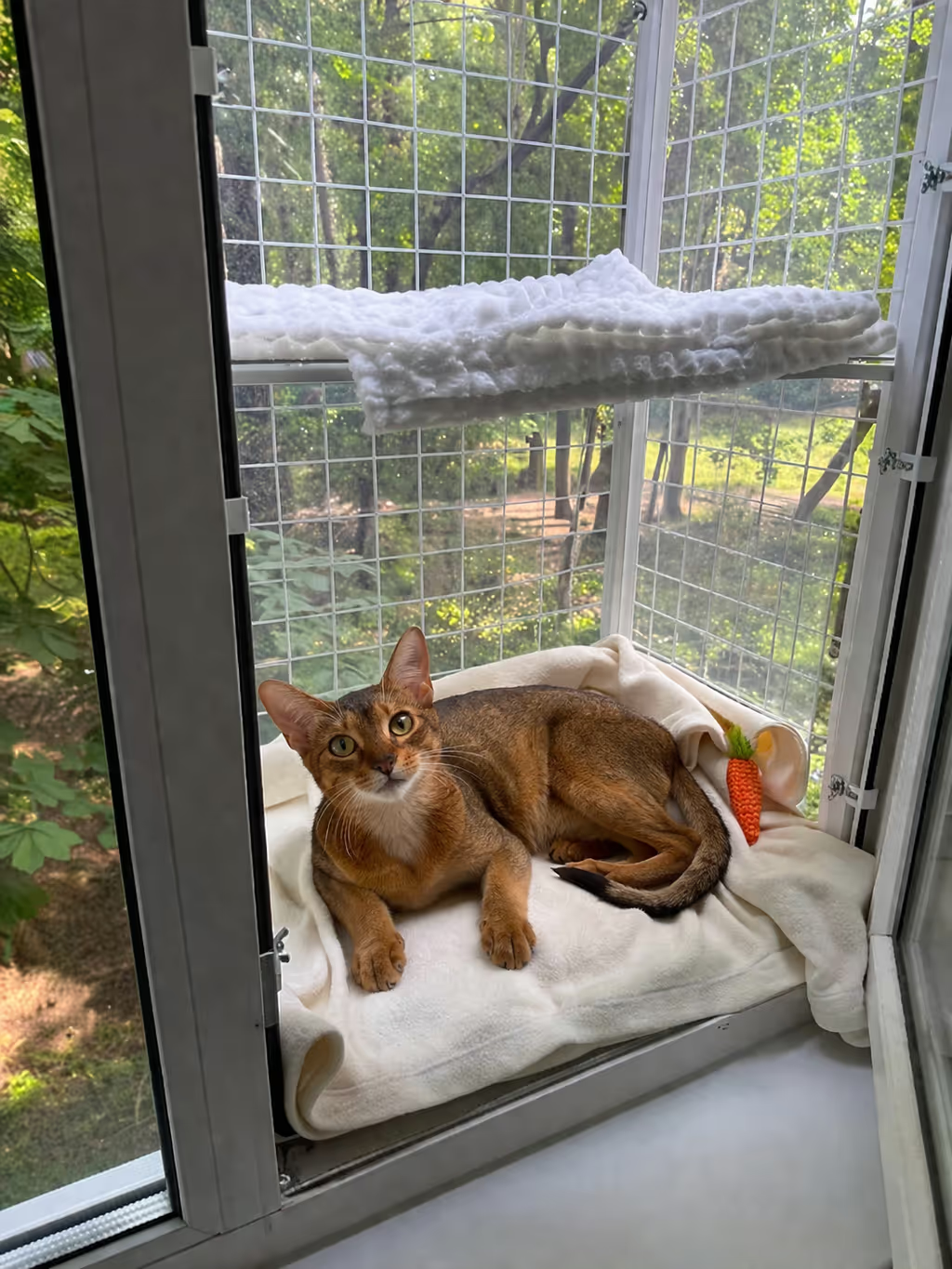
If your own check shows the current setup isn't enough, the structural fix is a welded steel window enclosure that removes every gap a cat could push through.
The study found that cats falling from higher floors (above seven storeys) sometimes had fewer severe injuries than those falling from mid-range heights. The proposed explanation: above a certain height, cats reach terminal velocity, at which point they relax their bodies and spread their limbs — reducing impact force in a way loosely similar to a flying squirrel's posture.
This finding is sometimes misread as "cats are safe from high balconies." That is not what it means. It means that if a cat survives a fall from a very high floor, the injuries may be different in character to a mid-height fall. It does not mean the fall is safe, survivable, or anything other than a veterinary emergency.
The study also found that the majority of high-rise fall cases presented with injuries to the chest, limbs, face, or some combination — and that survival, while possible, came with significant treatment, recovery time, and cost. The only outcome that is actually acceptable for a cat owner is preventing the fall entirely.
The Specific Risks of Balcony Railings
Standard apartment balcony railings are designed to prevent adult humans from falling. They are not designed with cats in mind. The gaps between railing bars are often wide enough for a cat to squeeze through, particularly younger or slimmer breeds. The top rail is typically a flat or rounded horizontal surface — exactly the kind of narrow ledge a cat will walk along, balance on, and occasionally misjudge.
Even with a solid railing, cats can and do climb over the top. A cat that is motivated — by a sound, a smell, a bird — will not treat the railing as a boundary. It will treat it as an obstacle, and a manageable one.
Nets and fabric covers are a common first response from owners who have identified the risk. They do reduce the chance of a cat walking through a gap. What they do not reliably do is hold a cat that is actively trying to get over or through, or that has become tangled and panicked. Fabric and mesh also deteriorate in UV exposure and weather — a net that was secure twelve months ago may not be secure today.
What Actually Works
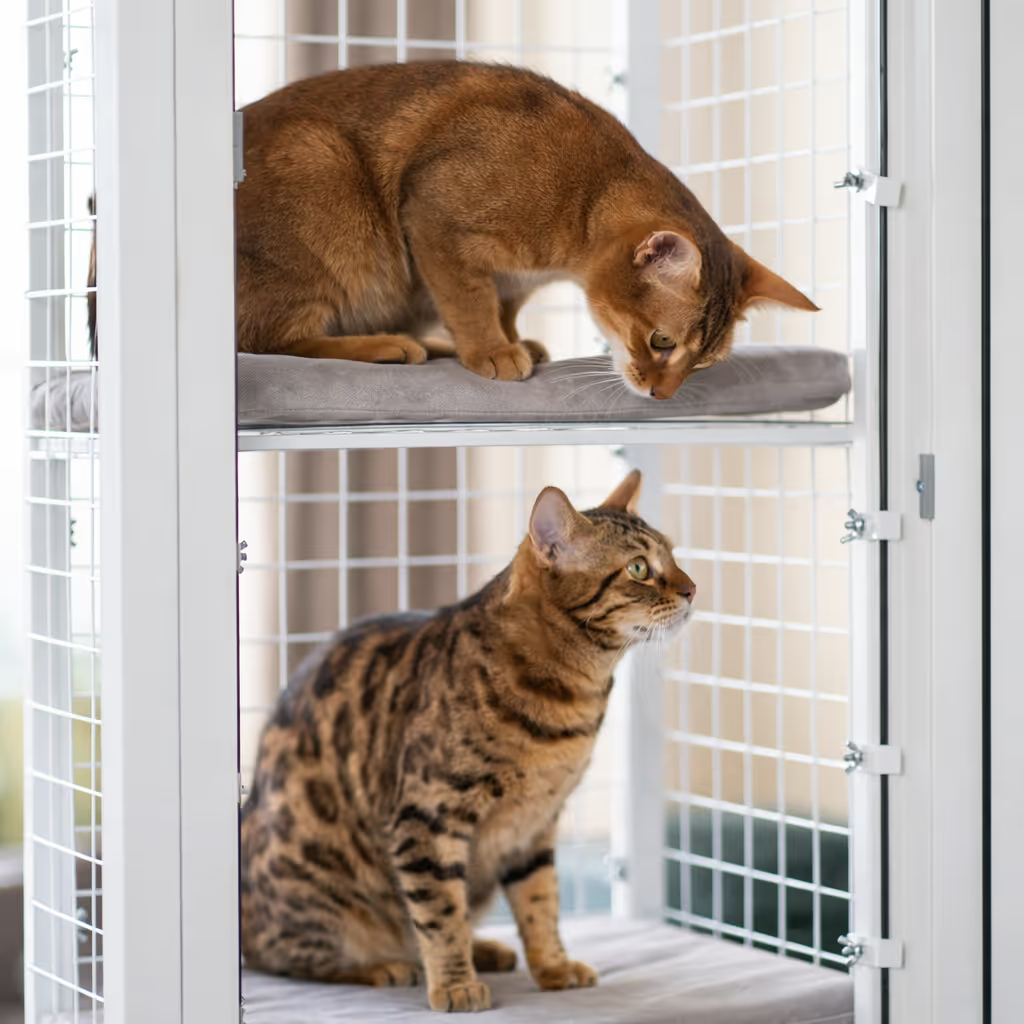
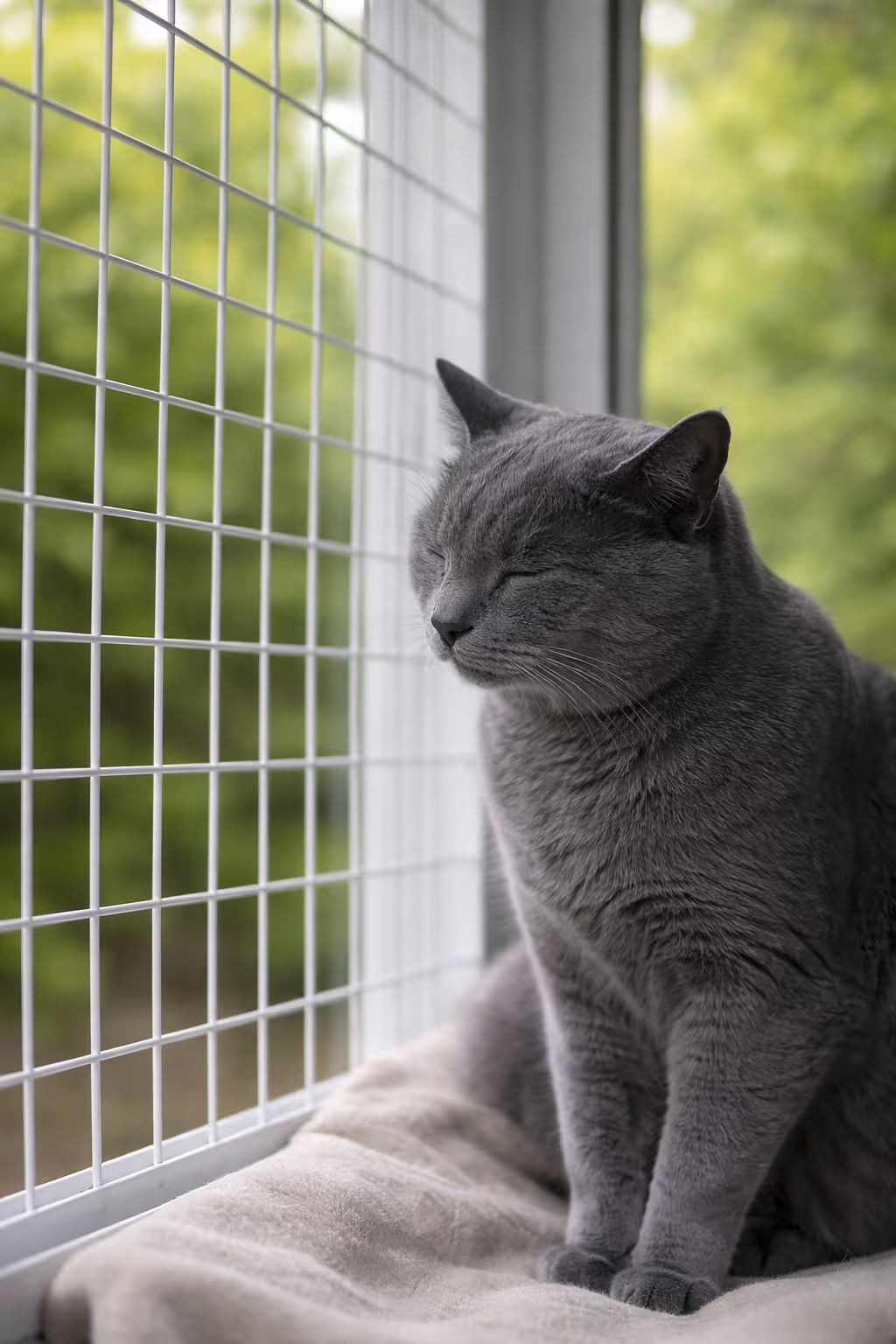
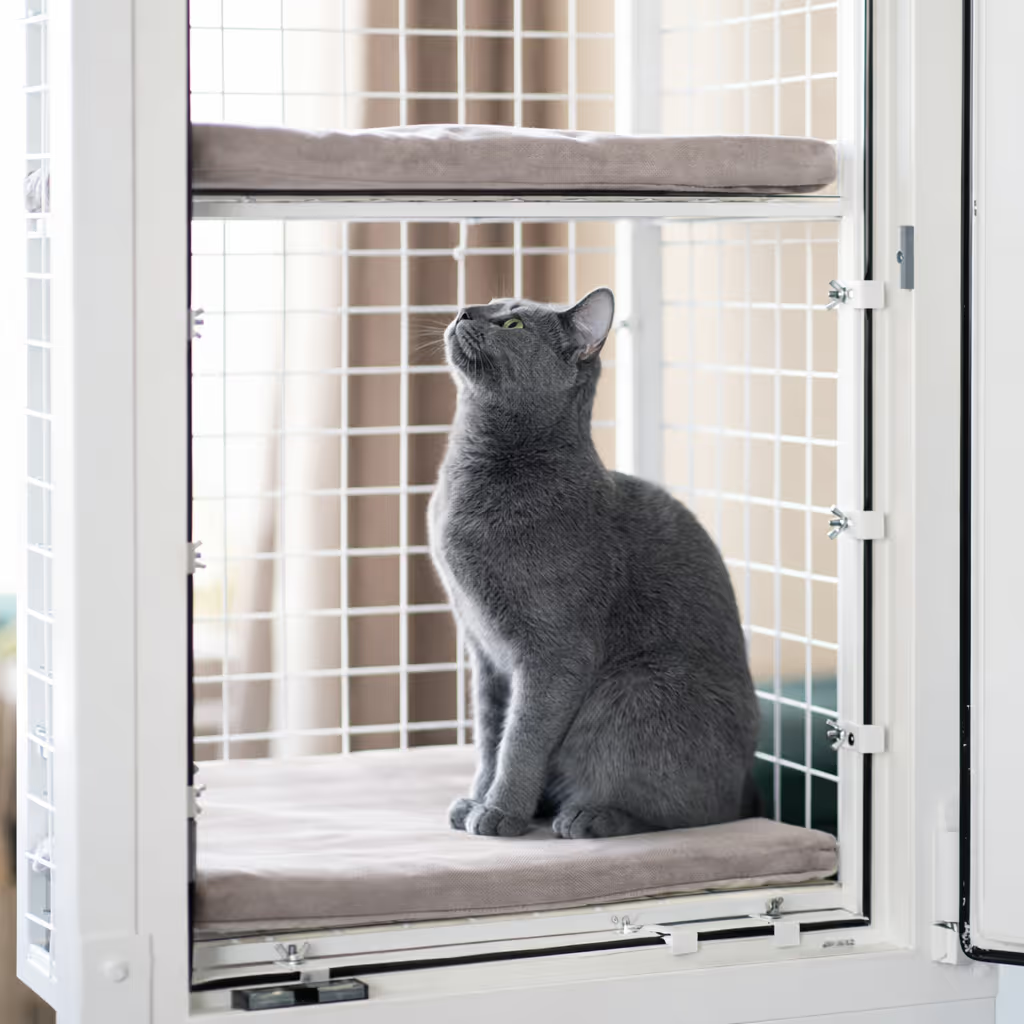
The only fully reliable solution is physical containment that a cat cannot breach, climb over, or squeeze through — and that is rated to handle the force a cat can exert when motivated. This means a welded steel structure with appropriate mesh sizing (5x5cm for adult cats, 2.5x2.5cm for kittens or smaller breeds), a solid frame that does not flex or pull free, and a design that has been load-tested against real-world use.
It also means a solution that is tested after installation. Not trusted. Tested. Push it. Pull it. Put weight on it. If it does not feel immovable, it needs reinforcement before your cat uses it.
The BalconyCat window balcony enclosure is built from galvanised, powder-coated steel — the same finish used on cars. It attaches to the window frame with steel brackets that require no drilling. After installation, we recommend testing it yourself with your full body weight before your cat goes near it. If you are worried about damaging it, it is not a BalconyCat. That is the standard a safe balcony solution has to meet.
If You Have a Balcony and a Cat
You do not need to keep your cat away from the outside entirely. Fresh air, outdoor sights and sounds, the feel of a breeze — these things matter to a cat's quality of life, especially for indoor cats who have no other outdoor access.
What you need is to separate "outdoor experience" from "fall risk." Those are not the same thing, and they do not have to come together. A secure enclosure — whether window-mounted or balcony-fitted — gives your cat everything they want from the outside without the single outcome you absolutely cannot accept.
Not sure what solution fits your window or balcony? We're happy to help you figure it out — no commitment, just a conversation.
See the BalconyCat steel enclosure →