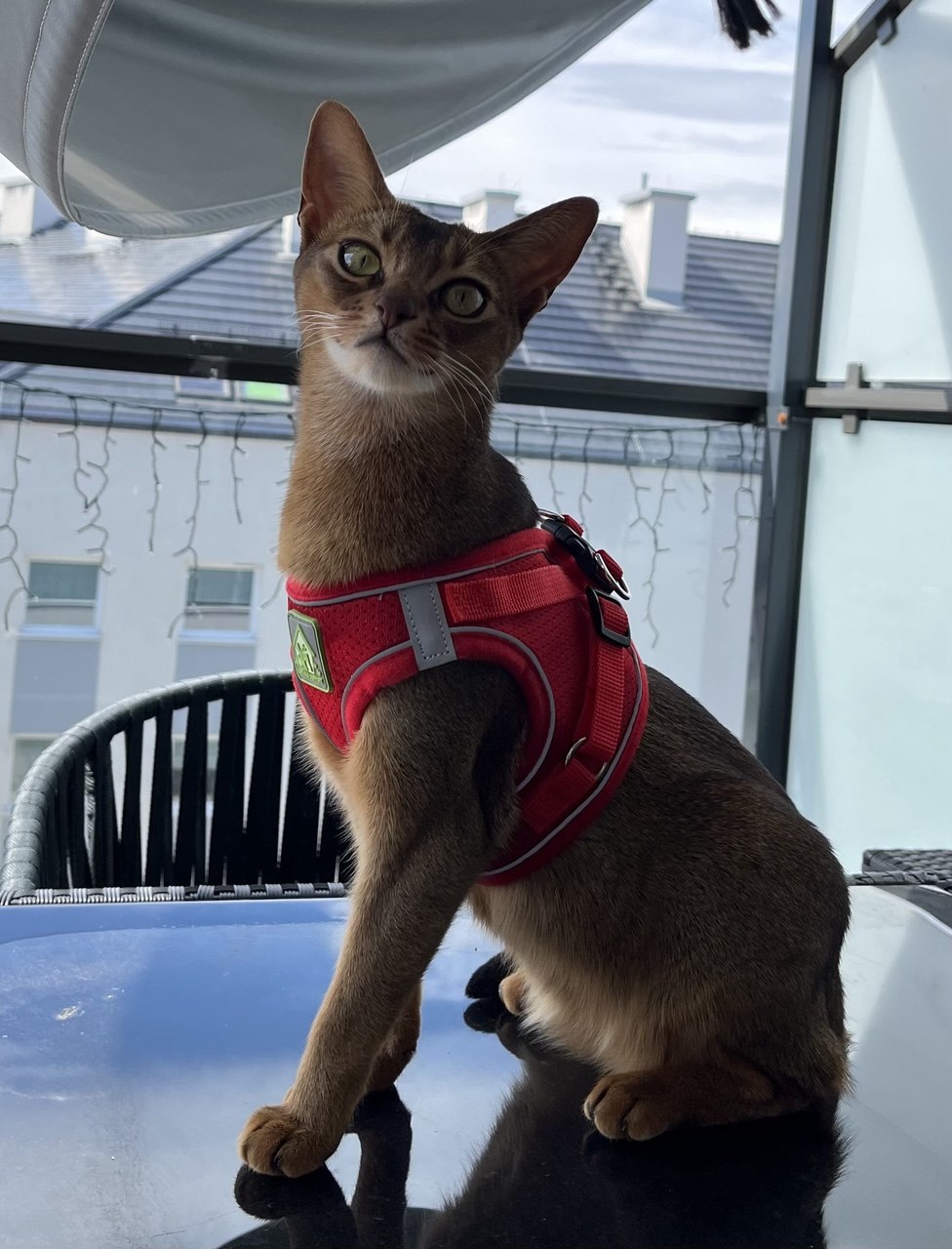
Cats and balconies are not a safe combination by default. They can be — but only when the right setup is in place. This guide covers everything apartment cat owners need to know: what the risks actually are, what the common solutions miss, and what genuinely works to keep a cat safe with access to fresh air.
Why Balconies Are Dangerous for Cats
Cats are confident at height. They jump between surfaces, balance on narrow ledges, and explore with a certainty that looks like competence. It isn't — it's instinct, and instinct has a poor track record with apartment balcony railings.
The specific risks are straightforward. Railing gaps on standard apartment balconies are typically 10–15 cm — wide enough for most cats to squeeze through. The top rail is a natural perch that cats will sit on, and from which they fall. And unlike trees, balcony railings have no branches to catch on the way down.
High-rise syndrome — the term veterinary surgeons use for cats falling from height — is well documented in urban vet practices. Indoor cats are not more cautious than outdoor cats. The risk is not attitude. The risk is physics and opportunity.
What Most Owners Try First
Keeping the balcony door closed
The most common response to a cat and a balcony is to keep the door closed. It works completely until the one time it doesn't — a warm day, a momentary distraction, a door that didn't latch. It also means the cat gets no outdoor access at all, which is its own problem.
Watching them on the balcony
Many owners supervise their cat on the balcony. This works exactly as well as permanent supervision always does — reliably, until it doesn't. Cats are faster than humans and the gap between a cat deciding to investigate the railing and reaching the other side of it is measured in seconds, not minutes.
Balcony netting
Netting is the most widely used physical solution. Stretched across the railing or balcony opening, it creates a visual and physical barrier. The failure modes are well documented: adhesive anchor points pull free, clip systems flex under dynamic load, UV degrades synthetic net material in 1–2 seasons. At height, attachment point failure is not recoverable.
If your own check shows the current setup isn't enough, the structural fix is a welded steel window enclosure that removes every gap a cat could push through.
What Actually Works
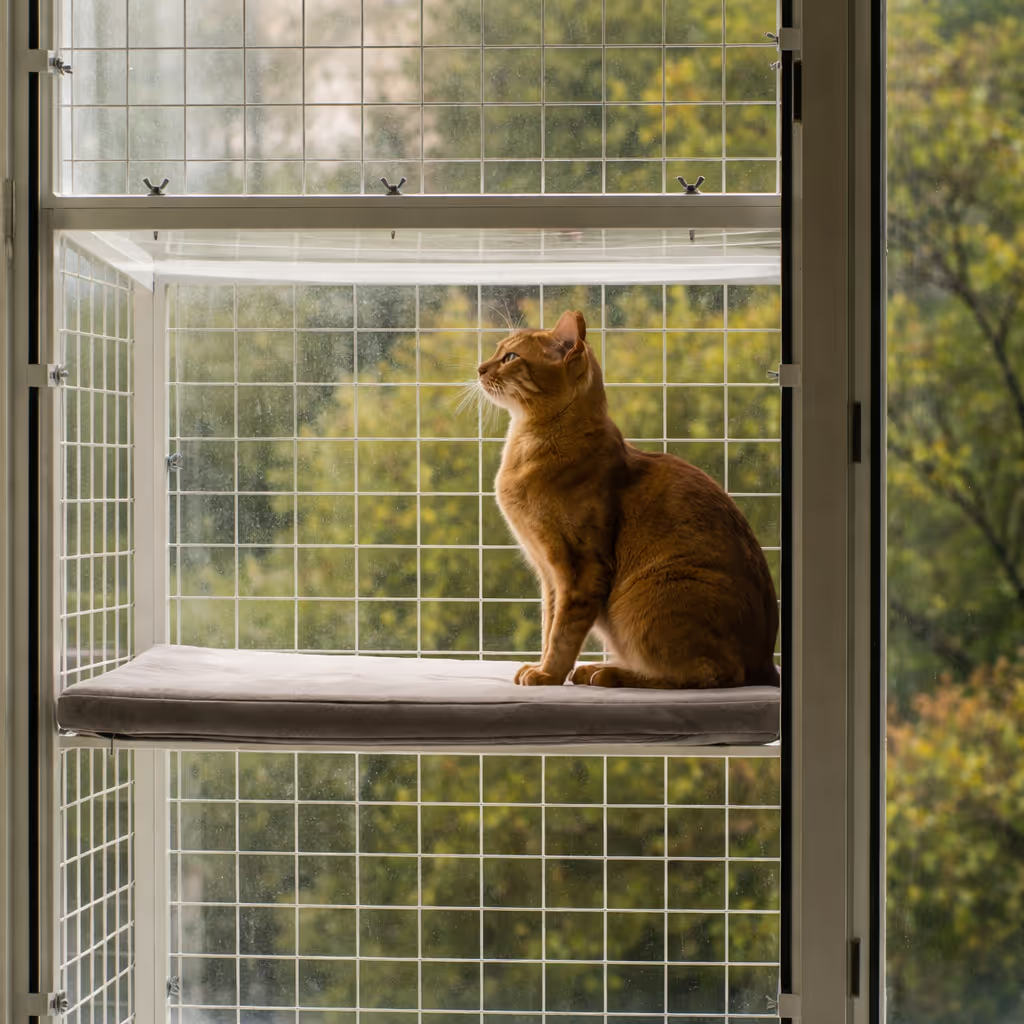
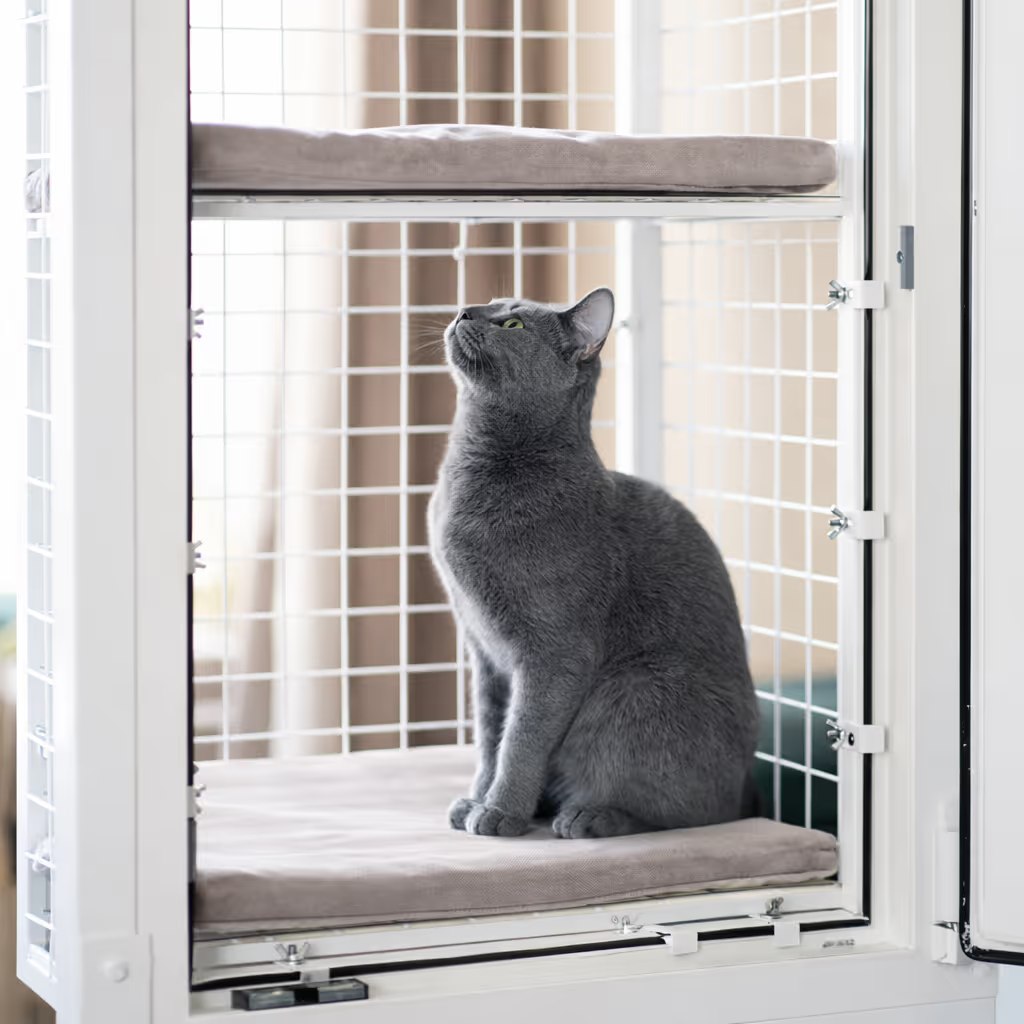
The most reliable solution changes the problem entirely. Instead of trying to contain the cat within the balcony — a space designed for humans with open railings — it gives the cat a separate, purpose-built outdoor space that the cat accesses through the window.
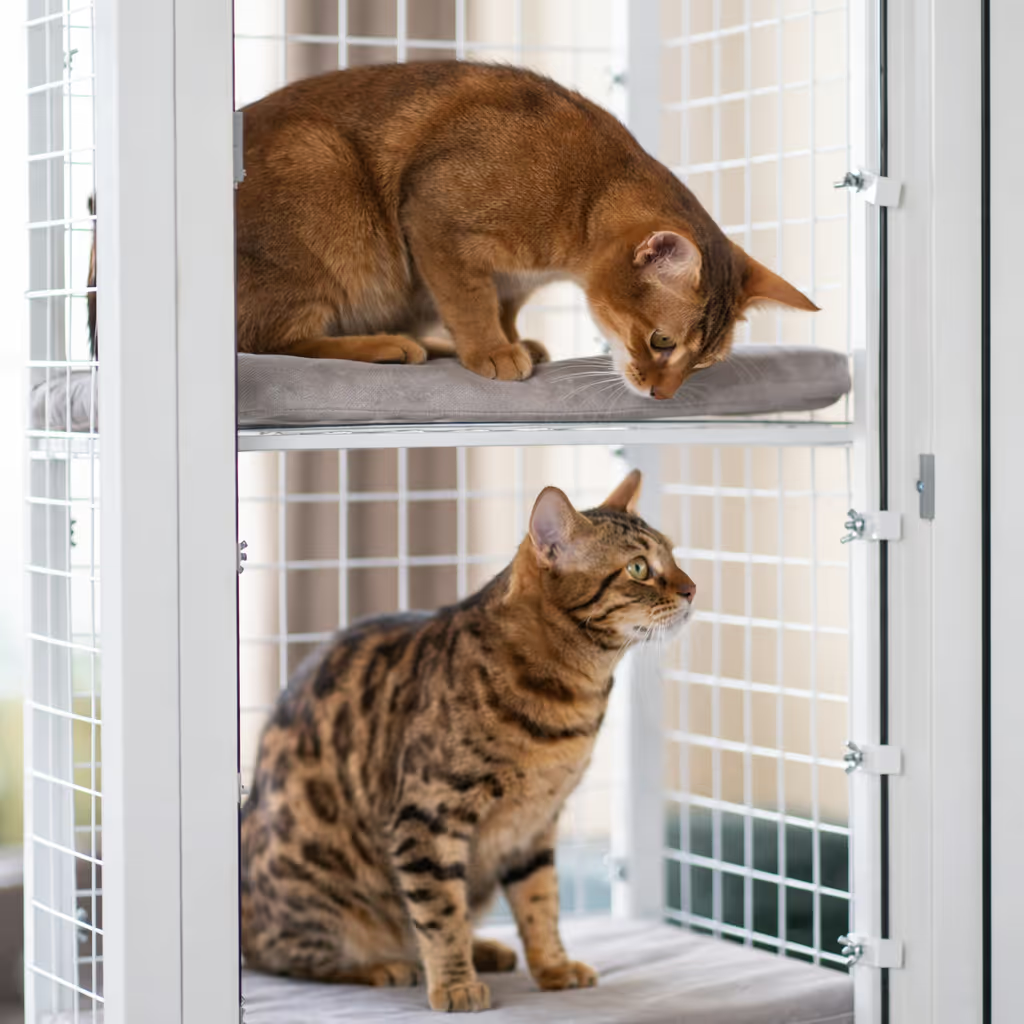
A window-mounted steel enclosure attaches to the window frame using bracket grips — no drilling, no adhesive, no wall contact. The enclosure extends outward from the window face, creating a welded steel grid space where the cat sits, smells the outside, watches the street, and gets everything it wants from outdoor access. The balcony railing is behind it. The cat never reaches it.
Custom-measured to the exact window. Load-rated to 40 kg. Tested at 70+ kg of dynamic human weight. Renter-safe. Fully removable. Available in any RAL colour.
The Fresh Air Question
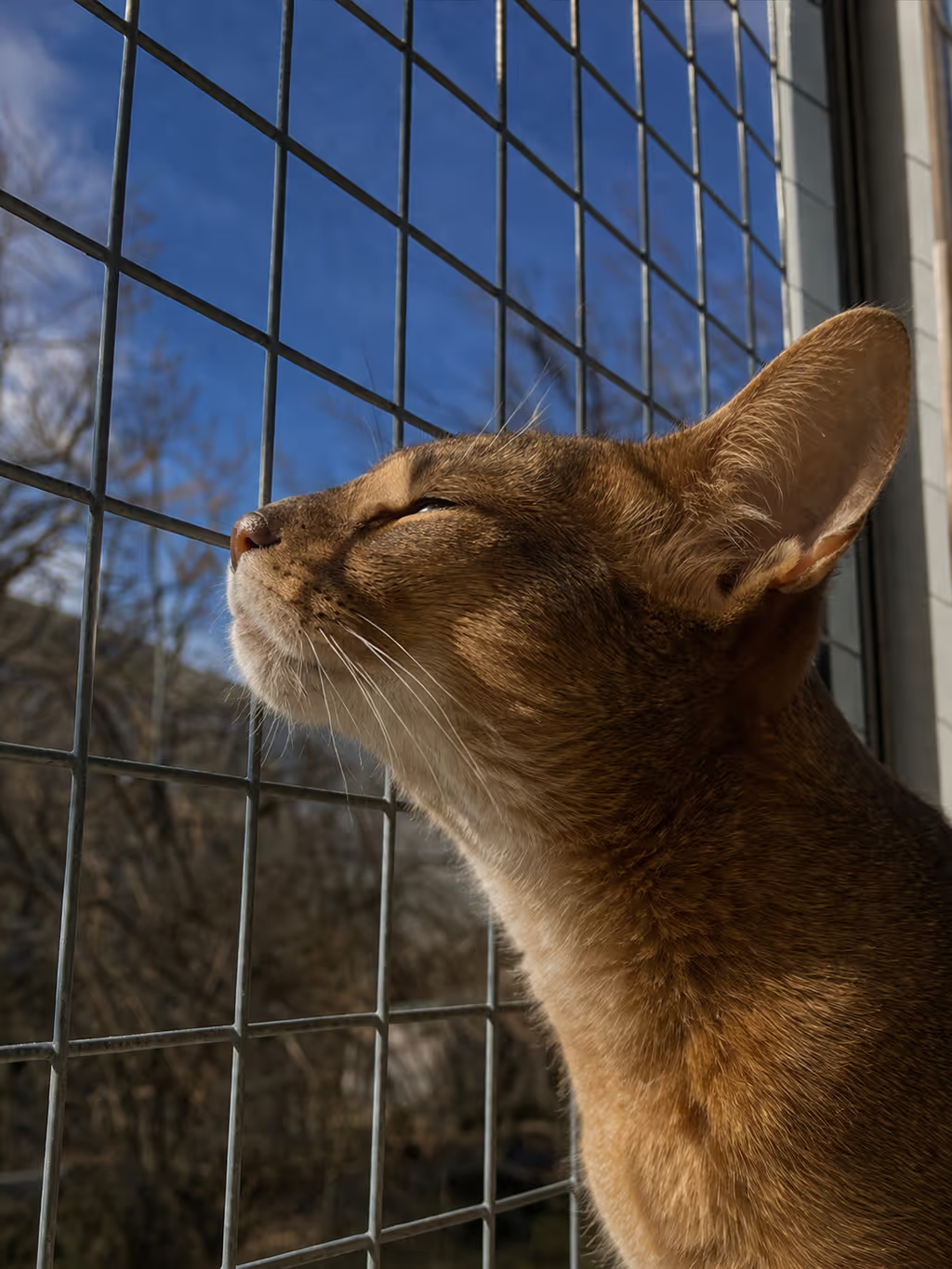
Cat owners who keep their windows closed out of safety concerns often notice the impact over time — cats that are bored, restless, or increasingly attention-seeking are frequently cats that lack environmental stimulation. Access to outdoor smells, sounds, and air movement is not a luxury for indoor cats. It addresses a genuine behavioural need.
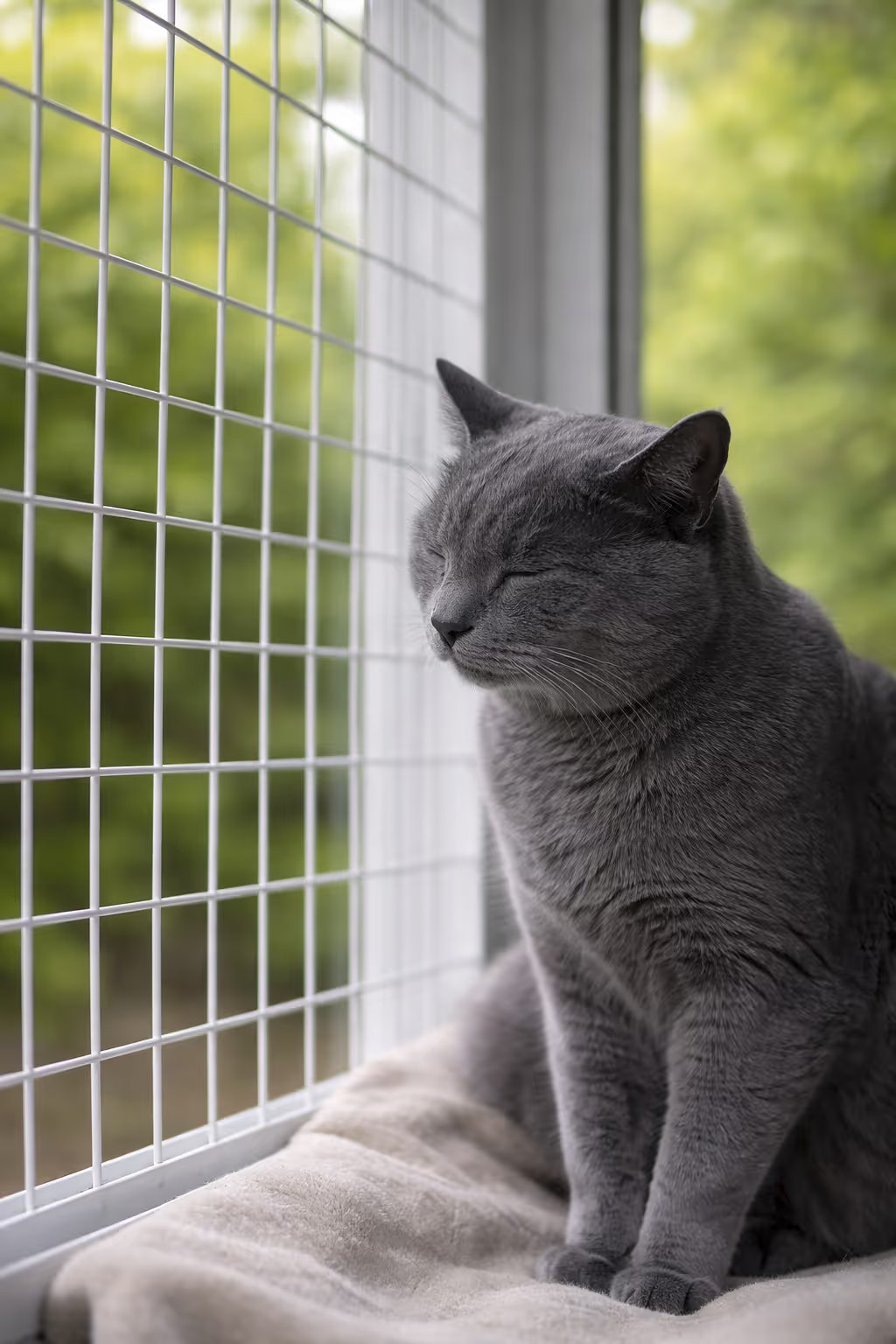
A window enclosure solves the safety problem and the enrichment problem simultaneously. The cat gets the breeze, the pigeons, the smell of rain, and the sound of the street. The owner gets peace of mind and an open window.
Frequently Asked Questions
Are balconies safe for cats?
Not without a proper safety setup. Standard balcony railings have gaps wide enough for cats to squeeze through and top rails that cats will climb and sit on. A purpose-built containment solution is required for any floor above ground level.
How do I stop my cat from jumping off the balcony?
Physical containment is the only reliable method. Supervision and closed doors fail eventually. A window-mounted steel enclosure gives the cat safe outdoor access through the window, removing the balcony railing from the equation entirely.
What is the safest way to let my cat outside in an apartment?
A custom steel window enclosure mounted to the window frame. It requires no drilling, has no gaps, is load-rated, and gives the cat full outdoor sensory access — fresh air, views, sounds — without any risk of falling.
Can indoor cats fall from balconies?
Yes. Indoor cats are not more cautious than cats with outdoor experience. They have the same instincts and the same physical confidence at height. The risk is not reduced by indoor lifestyle.
Do cat balcony nets actually work?
As a short-term solution on lower floors, netting provides some protection. The attachment points are the weakness — adhesive and clip systems are not structurally rated. For any floor above ground level, a structurally rated steel enclosure is the appropriate solution.
Fresh air for your cat. Peace of mind for you. No drilling, no deposit risk.
See the BalconyCat steel enclosure →