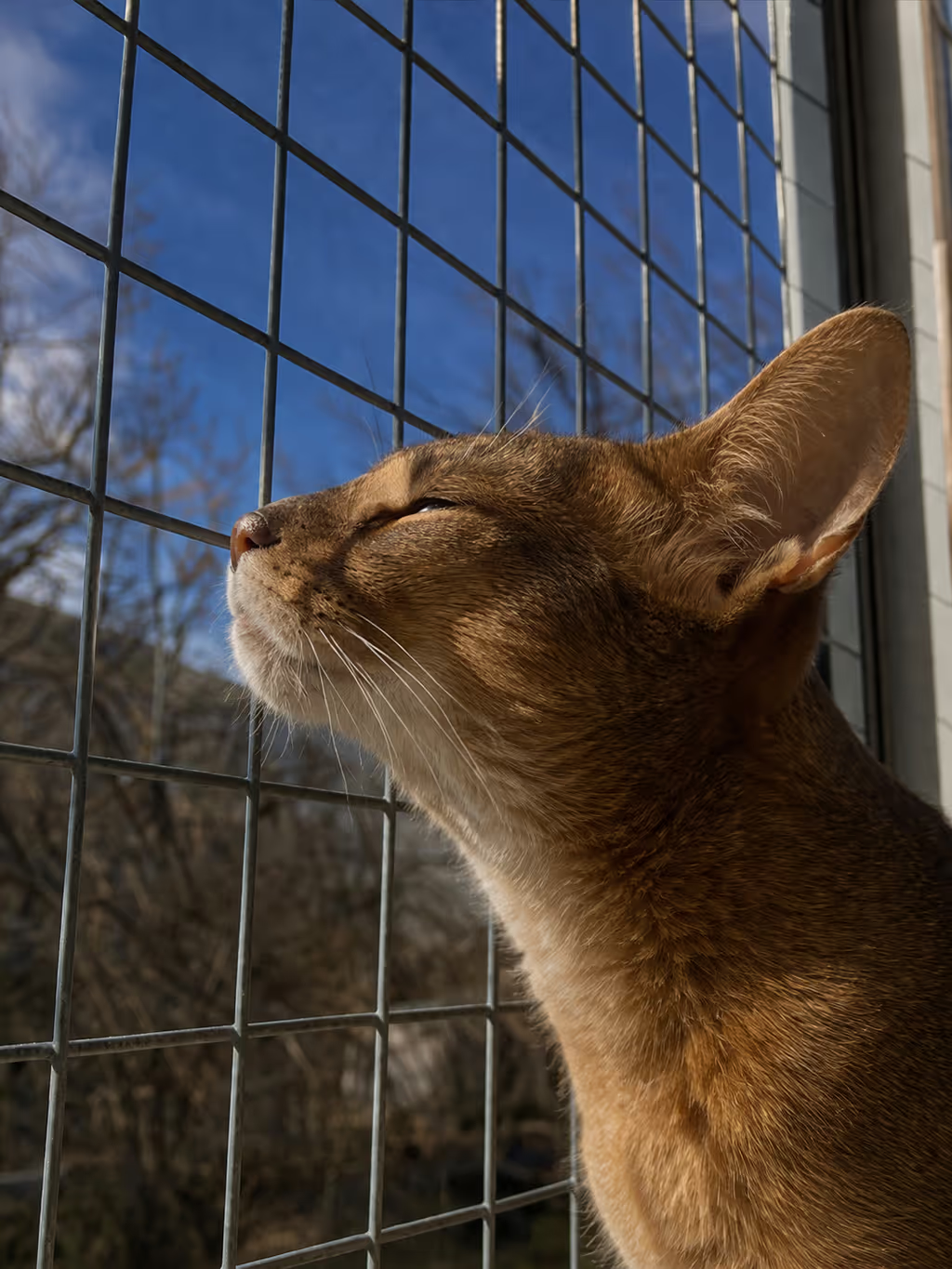
The roof panel is the thing most balcony cat enclosures don’t include by default. And it’s the thing most owners don’t think about until their cat has already found their way over the top. Here’s the honest answer to whether you need one — and what to do if you do.
When a Roof Is Not Necessary
YOUR CAT IS GENUINELY NON-CLIMBING: some cats don’t climb — particularly older cats (8+ years), overweight cats, cats with joint problems, and some individual cats without the temperament for vertical exploration. If your cat has never climbed higher than furniture height, has never attempted door frames or shelving, they may be in this category. Honest caveat: most owners believe their cat doesn’t climb. Many are wrong. A cat on a balcony is more stimulated than indoors. Prey movement, a bird on the railing, another cat visible below — these triggers activate behaviour that doesn’t happen in the controlled indoor environment. The cat you know indoors is not necessarily the cat you’ll get on the balcony.
YOUR ENCLOSURE SIDES REACH THE CEILING: if your balcony has a ceiling or soffit directly above and your enclosure sides are tall enough to meet it with no gap, there is no over-the-top exit. Check: is there truly no gap between the top of your enclosure and the ceiling? Even a 15cm gap is enough for most cats to squeeze through if they reach the top. YOUR ENCLOSURE HEIGHT IS 180CM+: at 180cm, many cats lack the vertical reach to clear the top in a single jump. This is not universal — athletic breeds like Maine Coons, Bengals, and Abyssinians can clear 180cm with effort — but for average-temperament cats at this height, an open top may be adequate.
When a Roof Is Necessary
YOUR CAT IS UNDER 3 YEARS OLD: young cats are more athletic, exploratory, and motivated to test enclosure limits. They climb. They find the top edge. They test it. A roof is strongly recommended for any cat under three. YOUR CAT IS A KNOWN CLIMBER: any cat who has reached the top of a wardrobe, climbed door frames, or accessed places “they couldn’t possibly get to” is a climber. Climbers need a roof. YOUR ENCLOSURE HEIGHT IS UNDER 150CM: under 150cm, most adult cats can clear the top in a standing jump. Any enclosure under 150cm should have a roof. YOUR BALCONY IS ABOVE THE THIRD FLOOR: at height, the cost of an open-top failure is catastrophic. On a high floor, include the roof regardless of what you know about your cat’s indoor climbing behaviour. Outdoor stimulation changes cats. YOUR CAT IS UNNEUTERED: unneutered cats — especially males — have extremely strong drive to reach mates. An unneutered male who can smell a female in season will attempt routes over, through, or around any barrier without the judgment he’d normally apply. Neuter and add the roof.
If you're unsure whether an open top is safe, a fully enclosed steel window enclosure settles it — there's simply nothing for the cat to climb over.
How to Add a Roof to an Existing Enclosure
If you already have side panels but no roof, adding one retroactively is possible for most enclosure types. For net side systems: a net top panel stretched taut across the full open top, fixed to the wall on one side and to the top edge of the perimeter netting on the other — fix at multiple points to prevent sagging. The junction between top net and side net is the weakest point and needs to be properly laced or clipped, not just tied at corners. For modular panel systems: check whether your manufacturer sells a compatible roof panel (most do). If not, a welded mesh panel cut to the internal dimensions and fixed to the inside top edge with cable ties is structurally adequate. For any system on a high floor: verify the roof-to-sides connection can resist upward force, not just downward. A panicked cat hitting the top from inside exerts upward force on the roof — it must be fixed to resist this.
The Option That Makes the Roof Question Irrelevant
A window enclosure is a closed structure. Six sides. Front, back, left, right, top, bottom — all welded steel mesh. There is no open top. There is no roof panel to add or forget. The structure is complete. If you’ve been wrestling with whether to add a roof to your existing setup — whether the cost is worth it, whether your cat specifically needs it, whether the installation is going to work properly — a window enclosure removes all of those variables. One purchase. Complete containment. No follow-up decisions.
If the window enclosure route makes sense for your situation, we’re here. No drilling, custom-built, complete on all six sides.
get BalconyCat →