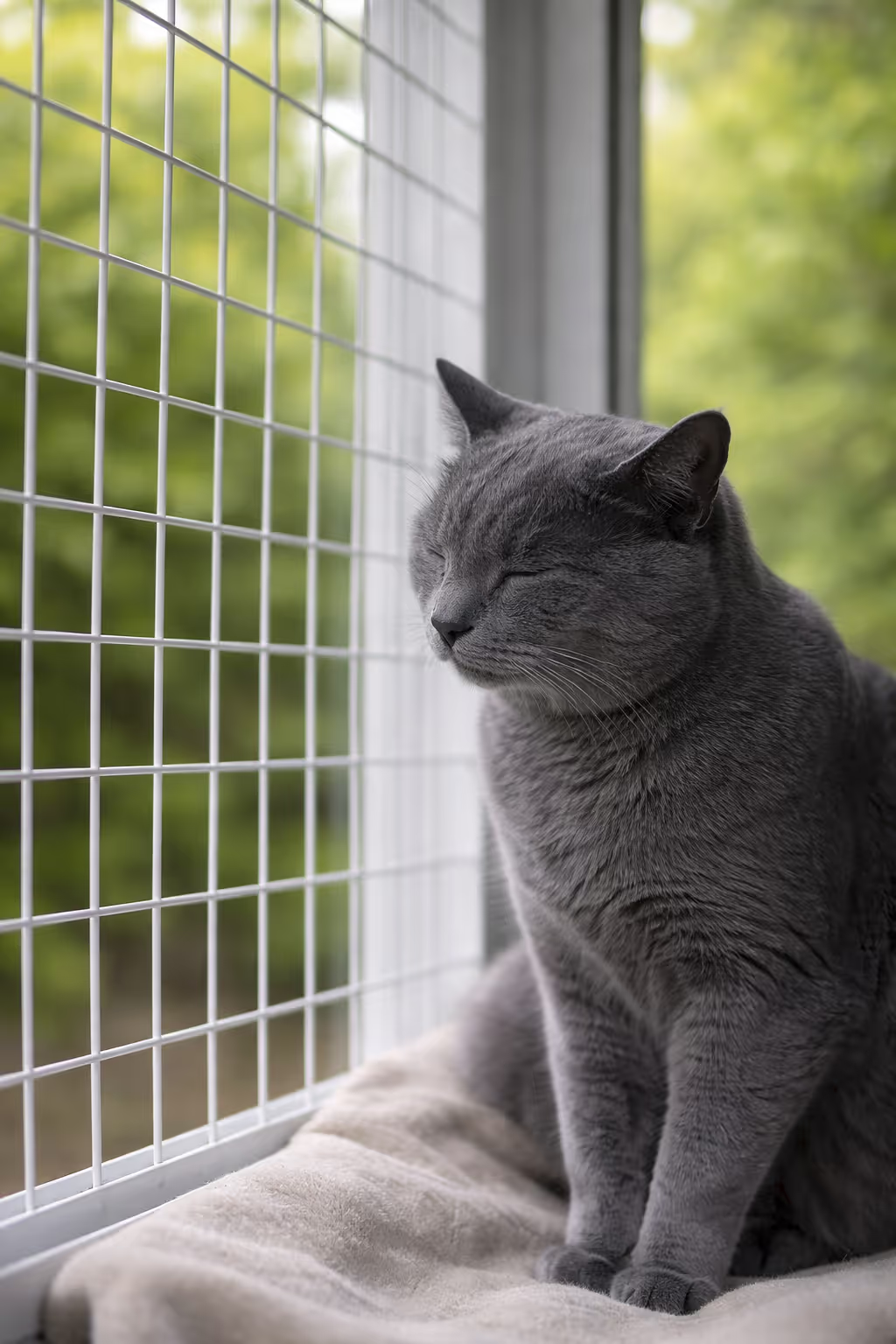
The question comes up constantly among apartment cat owners: my balcony has no roof — no ceiling, no overhang — just open sky above. Can I still cat-proof it? The short answer is yes, you can. But the approach is different from a covered balcony, and some solutions that work perfectly with a roof overhead simply do not apply when there is nothing to anchor to from above.
Why a Roofless Balcony Changes the Problem
Most balcony cat-proofing solutions fall into two categories: things that close off the sides, and things that close off the top. On a covered balcony — one with an overhang or the underside of the balcony above — you can close off both. A net system that drapes from the ceiling to the floor creates an enclosed space with no gaps above.
On an open balcony, you have nothing to attach to from above. The net has no ceiling to connect to. A full enclosure approach either requires building a roof as part of the solution — significantly more complex and expensive — or working with solutions that do not rely on overhead anchoring.
The other factor is your cat. A roofless balcony presents a cat with a clear vertical exit route that a covered balcony does not. A determined climber — motivated by a bird overhead, a smell from a neighbouring balcony, or simple exploratory instinct — has an unobstructed path upward. Your solution has to account for this.
What Does Not Work on a Roofless Balcony
Standard Balcony Nets Without Overhead Anchoring
A net draped around the sides of a balcony tied to the railing does reduce the chance of a cat falling through the sides. What it does not do is prevent a cat from climbing up and over the top. Cats that are motivated to leave will treat a net as a ladder — the mesh gives them grip and the lack of a ceiling gives them a clear exit point. For any cat with normal feline curiosity and physical ability, a side-only net is a deterrent, not a containment solution.
Tension Poles and Freestanding Frames Without a Top Panel
Freestanding frame systems that use floor-to-ceiling tension poles only work if there is a ceiling to tension against. On an open balcony, there is no ceiling — these systems simply cannot be installed in the way they are designed. Some owners attempt to use the balcony railing as the lower anchor and the underside of an upper-floor balcony as the upper anchor. If your balcony is on the top floor or genuinely open above, this cannot work.
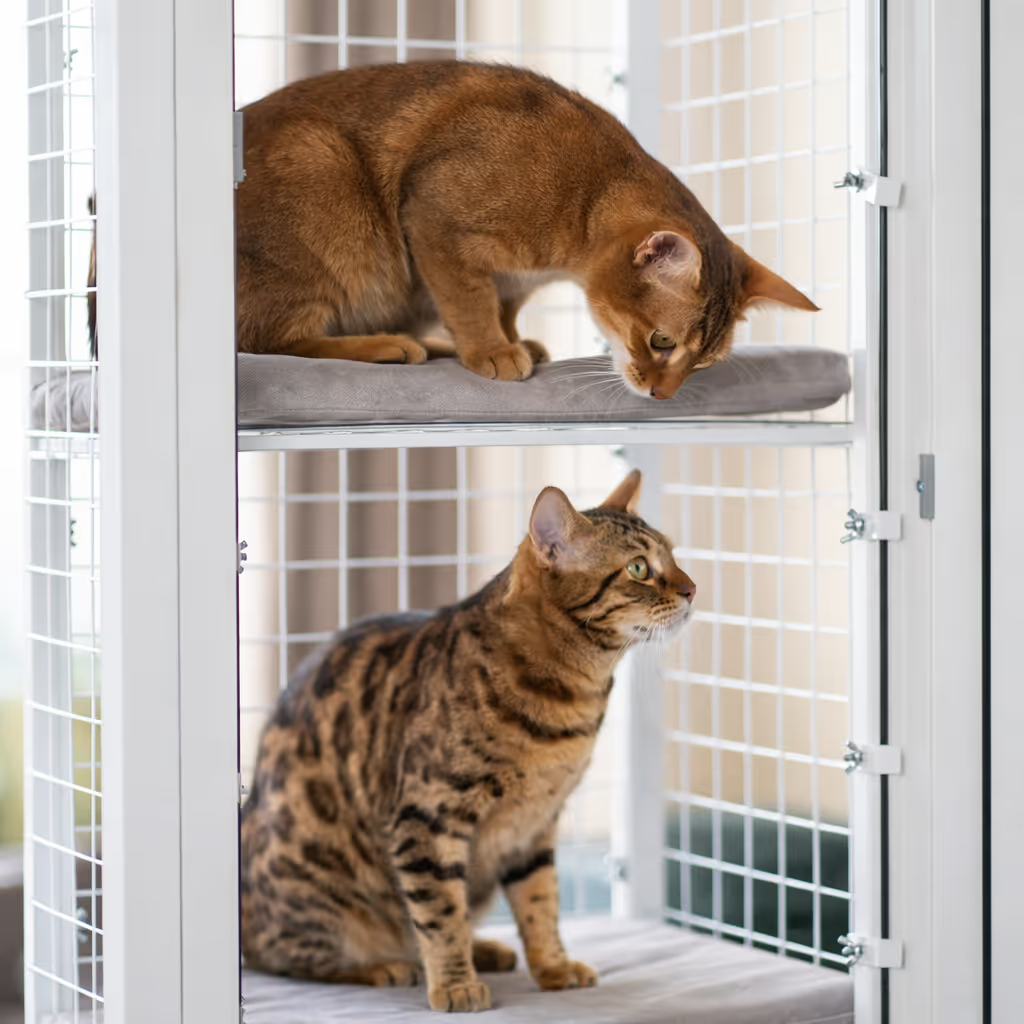
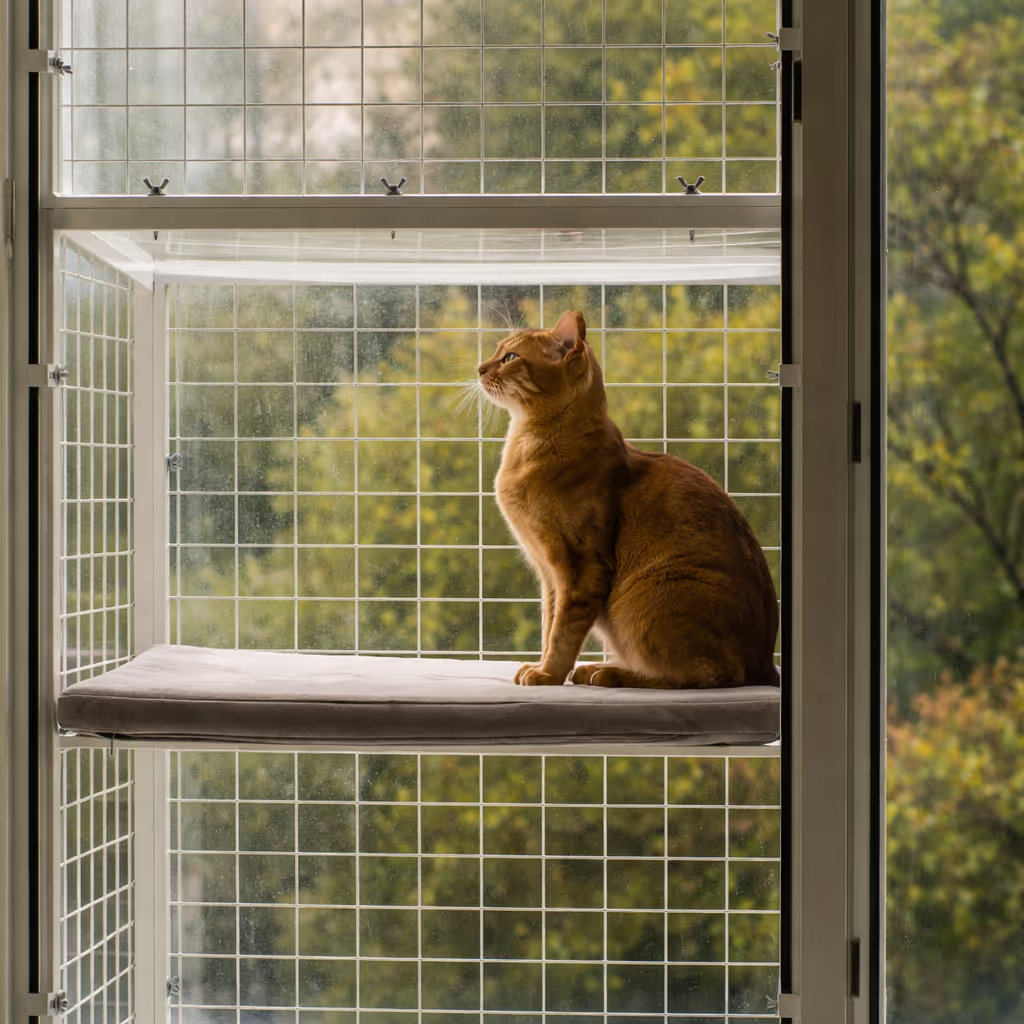
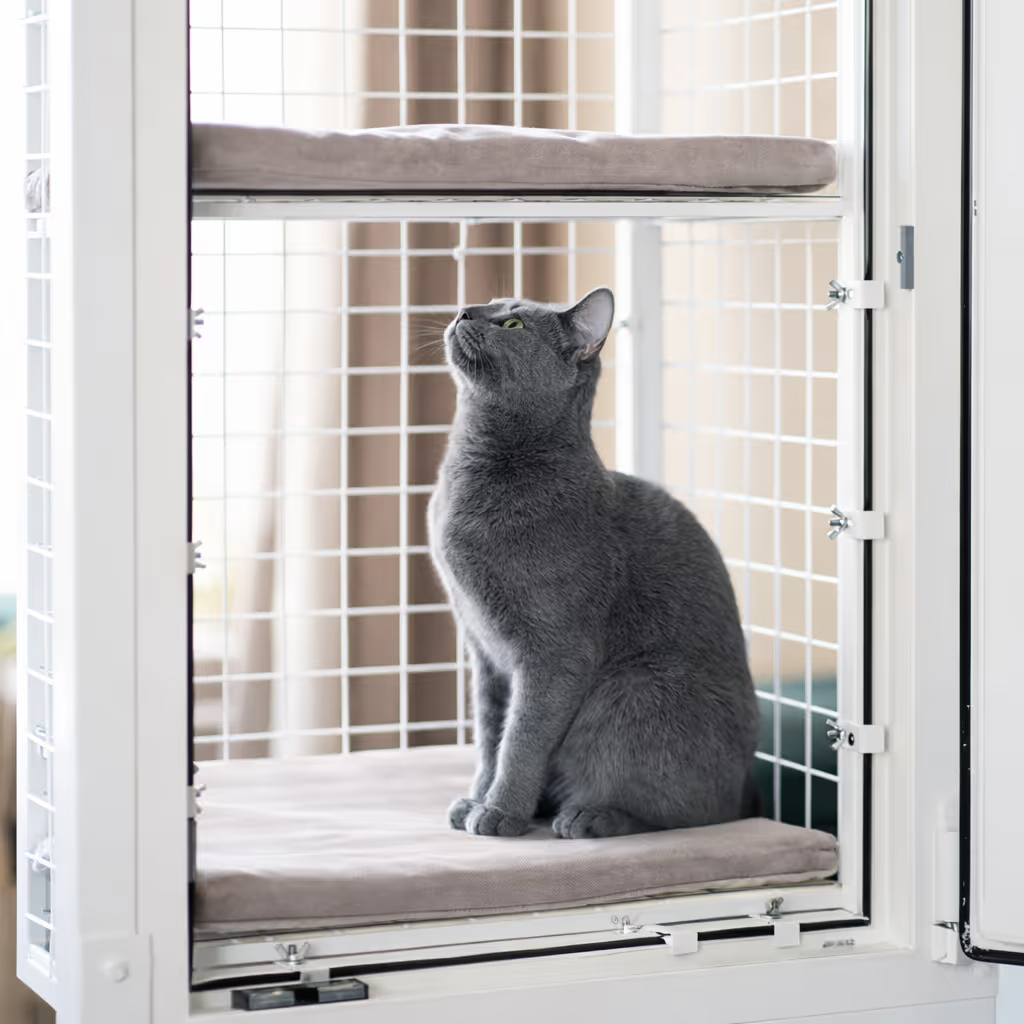
If you're unsure whether an open top is safe, a fully enclosed steel window enclosure settles it — there's simply nothing for the cat to climb over.
What Does Work on a Roofless Balcony
1. Complete Enclosures Including a Top
The most reliable approach for a roofless balcony is to treat the entire space — sides and top — as a single enclosure problem. This means a freestanding cage structure that is self-supporting and includes a roof panel. These exist commercially (Omlet's modular run systems can be configured with a roof panel) and can also be built as a DIY project using welded mesh panels and a steel or treated timber frame. The advantage is complete containment with no dependency on overhead anchoring. The disadvantage is floor space requirement, cost at scale, and a somewhat cage-like appearance.
2. Window-Mounted Enclosures
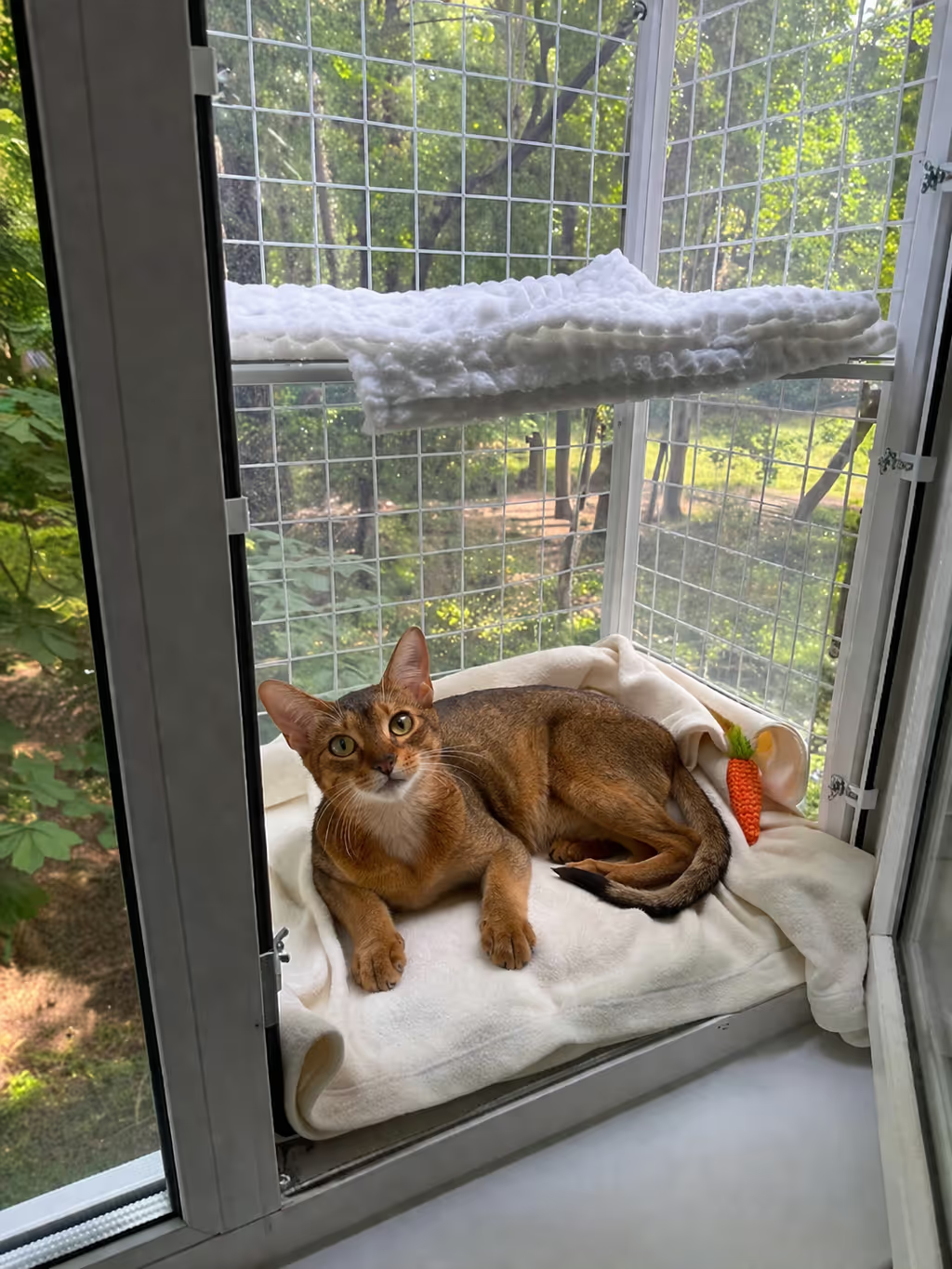
If you have casement windows opening onto or adjacent to the balcony, a window-mounted enclosure bypasses the roofless balcony problem entirely. The enclosure attaches to the window frame and extends outside, giving your cat a secure space to sit, feel the air, and watch the world — without using the balcony at all. It has its own welded steel frame and mesh on all sides including the top, so there is no open exit above. For cats in flats where the balcony cannot be fully enclosed without significant structural work, a window enclosure is often the cleaner solution: lower cost, no dependence on balcony structure, and achieves the same outcome.
3. Roller Bar / Coyote Roller Systems
If your goal is primarily to stop your cat from climbing over the railing and escaping, a roller bar system can work. Roller systems attach to the top of the balcony railing and use spinning cylinders that cats cannot grip as they attempt to climb over. They are commonly used on garden walls and fences. On a balcony, they prevent outward escape over the railing without requiring a roof. The limitation: they do not prevent a fall through railing gaps, and they do not stop a cat from jumping directly off a low railing without climbing.
4. Full-Height Mesh Panels on All Sides
On balconies with solid walls — where the fall risk is over the top rather than through railing gaps — full-height mesh panels fixed to the wall face can extend the effective height of the perimeter. A 60cm welded mesh extension fixed along the inner face of a solid wall raises the point at which a cat would need to clear. Combined with a slight inward angle at the top, this becomes significantly harder for a cat to negotiate. This approach is site-specific and depends on wall type, fixing options, and tenancy permissions.
The Honest Assessment
A roofless balcony can be made safe for a cat. It requires either building a complete enclosed structure with sides and top, redirecting your cat's outdoor access to a window-mounted solution, or using a roller-bar system if your primary concern is escape rather than falls.
The right answer for your situation depends on three things: your cat's temperament and climbing tendency, your balcony structure (railing vs. solid wall, floor space available), and your tenancy situation (drilling permissions, modification restrictions).
Not sure which approach fits your setup? We make window enclosures — often the simplest answer to a roofless balcony — and we'll tell you honestly if that's not the right fit for your home.
See the BalconyCat steel enclosure →