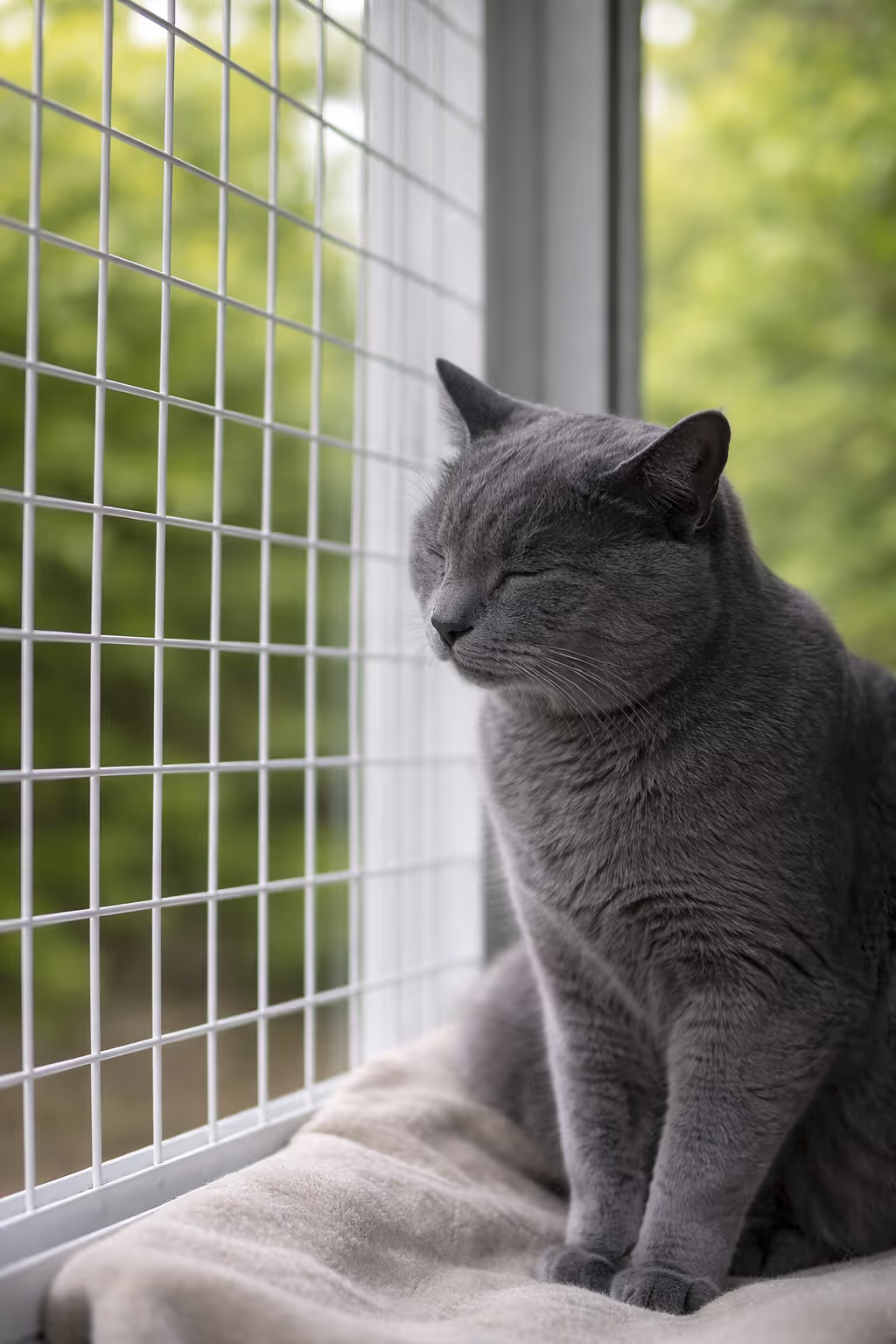
You want to make your cat’s balcony space something they’ll actually use — not just access. The difference between a cat who glances at the balcony occasionally and one who chooses it every day is largely in what’s there for them. This post covers outdoor-specific cat furniture: what survives outdoor conditions, what your cat will genuinely use, and how to set up the space properly. One note first: this guide assumes you already have safe containment in place. No amount of enrichment furniture makes an uncontained balcony safe.
The Critical Distinction: Containment vs Enrichment
A cat condo, cat tree, or perch is enrichment — something that makes the space more enjoyable and stimulating for your cat. It is not containment. A cat tree on an open balcony does not stop your cat from jumping off. If you’re searching for a cat condo for your balcony because you want to make the space safe: what you actually need is a containment product (a net, a panel system, or a window enclosure). If you’re searching because your balcony is already safe and you want to furnish it: you’re in the right place.
Why Most Indoor Cat Furniture Fails Outdoors
Standard cat condos, scratching posts, and cat trees are designed for indoor use. Put them on a balcony and they deteriorate in ways that happen fast enough to surprise most owners. CARPET AND FABRIC COVERINGS: outdoor moisture — even morning dew and ambient humidity — saturates carpet. Saturated carpet doesn’t dry fully in sheltered outdoor conditions. Mould develops within weeks. The smell drives most cats away before the structure fails physically. Outdoor verdict: not appropriate unless fully covered from rain. SISAL WRAPPING: handles outdoor conditions significantly better. Dries well after wetting, doesn’t mould as readily. Degrades in UV exposure after 2–3 seasons. Outdoor verdict: fine, expect 2–3 years. MDF AND CHIPBOARD CORES: absorb moisture catastrophically. Swell, crack, and collapse within one wet season. Outdoor verdict: not appropriate at all — any product with MDF or chipboard will fail outdoors. SOLID TIMBER OR TREATED PLYWOOD: handles outdoor conditions well with treatment. Outdoor verdict: 5–10 years. POWDER-COATED STEEL FRAMES: excellent outdoors, don’t absorb moisture, don’t warp, rust-protected. Outdoor verdict: best available for structural frames.
Whatever your situation, the safest starting point is a custom steel window enclosure sized to your exact window.
What Your Cat Will Actually Use
ELEVATED PERCHES: the most used element on any cat balcony. Cats seek height. A perch at railing level or above, positioned to face the main view direction (street, trees, rooftops), will be occupied daily. Look for: stable base that doesn’t tip in wind, weather-resistant surface that isn’t slippery when wet, positioned at a height the cat can reach comfortably. SCRATCHING SURFACES: outdoor scratching feels different from indoor scratching. Rough sisal on a balcony post, a section of natural log, or a textured timber surface gives cats a target they’ll actively prefer for outdoor sessions. Use natural materials (sisal, rope, rough timber) rather than carpet, fixed securely to something that doesn’t move. SHELTERED RESTING SPOT: a covered or semi-enclosed resting box gives less confident cats a way to be outside without feeling exposed. A waterproof outdoor cat house in the corner serves this purpose well. WATER: always available, heavy ceramic (doesn’t tip in wind). A small solar-powered fountain with a ceramic base works outdoors if your cat prefers running water.
The Space Setup: What Works
Small balcony (under 4m²): one elevated perch facing the main view, one sisal scratching surface, a water bowl. Don’t overcrowd — cats want room to turn around. Medium balcony (4–8m²): elevated perch, scratching post, a covered resting box, a water point. Optionally: a patch of cat grass in a heavy pot. Large balcony (8m²+): multiple perch levels, full scratching post or natural log section, covered rest area, water and optionally food point, cat grass or catnip planting.
Plants on the Balcony: What’s Safe
Add: catnip (fresh, grown in a heavy pot), cat grass (wheatgrass or oat grass), rosemary, thyme, or basil — all safe for cats and useful for humans. Remove: lilies (all species — toxic), tulip bulbs, oleander, sago palm, hydrangea. These are common balcony plants that cause serious harm to cats.
Safe access before furniture — always. If you need to start at the beginning, we build custom steel window enclosures from 899€. No drilling. Ships across Europe.
get BalconyCat →