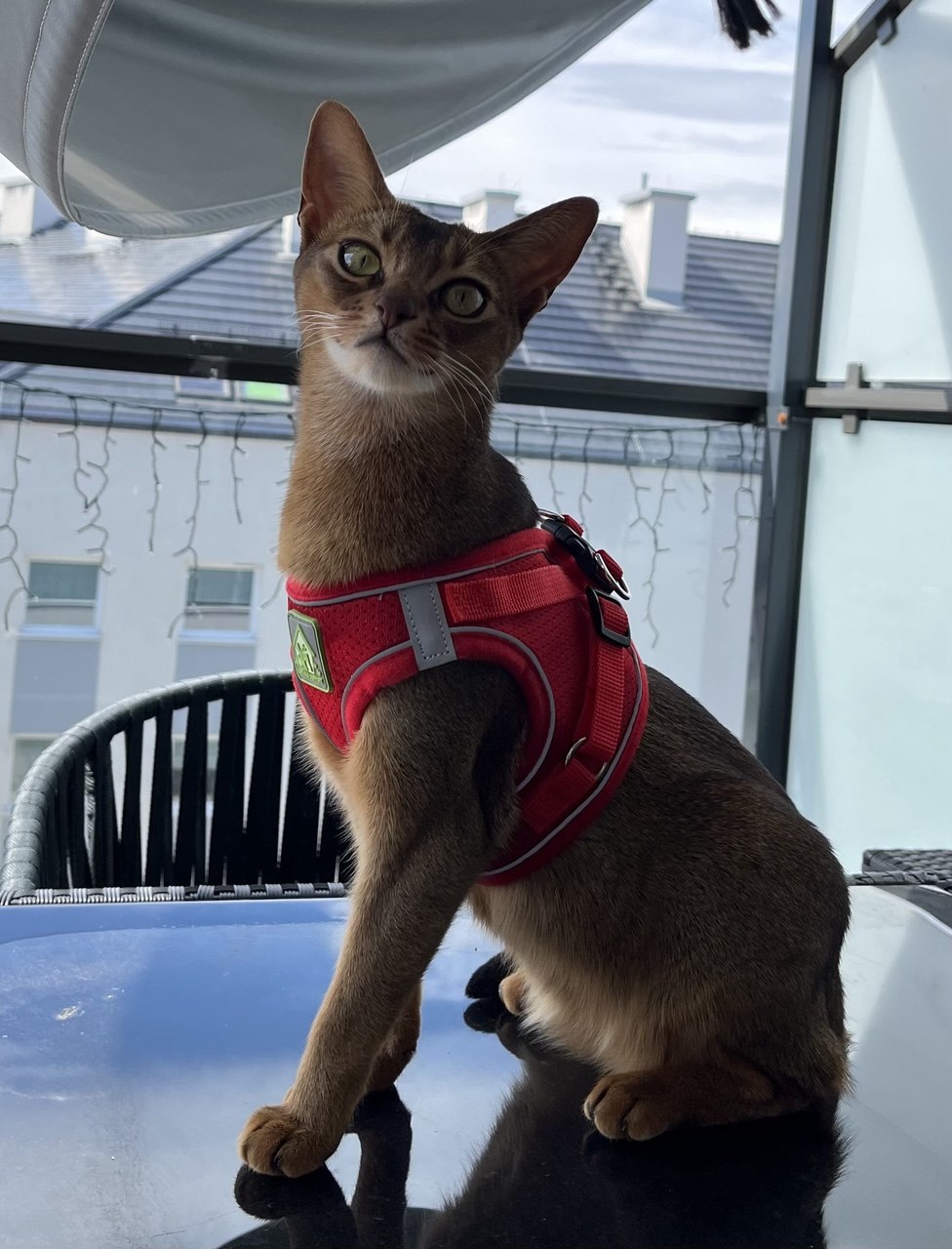
Winter maintenance of a cat enclosure gets most of the attention. Summer gets less, which is a mistake — hot weather creates its own specific risks for cats on balconies, and UV exposure does more sustained damage to enclosure materials than cold does.
The Heat Risk: What Summer Does to a Cat on a Balcony
Cats are desert animals by evolutionary origin. They tolerate heat better than cold, and they are reasonably good at finding shade and regulating their body temperature through behaviour. But there is a limit, and an enclosed outdoor space in direct summer sun can push past it faster than owners expect.
Heat Build-Up in Enclosed Spaces
A window enclosure or small balcony catio facing south or west in summer sun can reach significantly higher temperatures than the ambient air. Dark surfaces — dark powder-coated steel, dark mesh — absorb and radiate heat. Concrete and tile floors absorb heat during the day and release it slowly. A cat in an enclosed space with limited ability to move to a cooler area has limited options for self-regulation. If the entire enclosure is in direct sun and there is no shade, the cat is exposed to the full heat without escape.
How to Manage It
Provide shade. Even a simple shade cover — a cloth draped over the top third of the enclosure, a shade sail on the balcony, or strategic positioning of potted plants — creates a shaded zone that the cat can move to when the sun is direct. Provide water. A bowl of fresh, cool water inside the enclosure or immediately inside the window access point means the cat does not have to choose between outdoor time and hydration. Refresh it at least twice per day in hot weather. Limit midday access on very hot days. During heatwave conditions or sustained periods above 30°C, reduce balcony access to morning and evening.
Heatstroke Signs to Know
Cats can develop heatstroke, and it can escalate quickly. Signs include: excessive panting (unusual in cats, unlike dogs), drooling, lethargy or unresponsiveness, vomiting, and bright red or pale gums. If you observe any of these signs after balcony time in hot weather, move the cat to a cool indoor space immediately and contact a vet. Do not apply ice — cool (not cold) water on the paws and underside is appropriate while you arrange veterinary care.
The UV Risk: What Summer Does to Enclosure Materials
UV exposure is the primary degradation mechanism for most enclosure materials that are not galvanised steel. Summer — particularly at altitude, facing south — concentrates years of UV damage into months.
Whatever the season, a custom steel window enclosure keeps the balcony safe year-round.
Synthetic Mesh and Fabric
Polyester, nylon, and other synthetic mesh materials lose tensile strength with UV exposure. The degradation is not always visible — the mesh may look intact while its load-bearing capacity has dropped substantially. By the end of a summer, fabric mesh installed the previous spring may retain only a fraction of its original strength. This is the primary reason fabric mesh and pop-up enclosures are not appropriate as long-term solutions. Welded galvanised steel mesh does not degrade under UV exposure — the coating may fade slightly over years, but the structural integrity of the mesh itself is unaffected.
Plastic Components and Zip Ties
UV causes hardening and embrittlement in most plastics. A plastic connector that is flexible in spring becomes progressively more brittle through summer. By autumn, it may crack rather than flex under load. If your enclosure has plastic connectors, clips, or cable ties — inspect them at the end of summer. Brittle plastic feels rigid and may already show hairline cracking. Replace before winter, when cold further accelerates brittleness.
PVC Framing
PVC framing in DIY catios is particularly vulnerable to summer UV. White PVC yellows with UV exposure (a cosmetic issue), but more importantly the material becomes stiffer and more prone to cracking at joints over successive summers. If you have a PVC-framed DIY catio, inspect all joints at the end of summer. The joints — where two lengths of PVC are connected — are the failure points. If any joint shows cracking or has noticeably more play than when installed, replace or reinforce it before winter.
Powder-Coated Steel
Powder coating handles UV well, but colour may fade slightly over several summers in direct sun exposure. This is cosmetic. More relevant is the integrity of the coating at impact or abrasion points. At the end of summer, inspect the coating for chips or wear particularly at bracket contact points and corners. Touch up any exposed metal with compatible touch-up paint before autumn rain can introduce moisture to the exposed steel.
The End-of-Summer Inspection Checklist
Before the seasons change, work through this checklist: synthetic mesh or fabric (apply lateral pressure to each section, check for deformation, tearing, or separation — if strength feels reduced, replace before winter); plastic connectors and clips (flex each one, look for hairline cracking — replace any that feel rigid or show surface cracking); zip ties (replace all, regardless of appearance); PVC joints if applicable (inspect for cracking, reinforce or replace any joint with visible damage); powder coating (check for chips at corners, bracket points, and impact areas, touch up with appropriate paint); frame and bracket connections (re-tighten any that have developed play through the summer’s thermal cycling); shade provision (assess whether your summer shade solution is adequate, plan improvements for next year if cats were reluctant during peak heat).
This inspection takes fifteen to twenty minutes and is the correct complement to the spring inspection covered in our winter balcony safety guide. Together, spring and autumn inspections cover both the winter and summer degradation cycles and keep the enclosure in reliable condition throughout its lifespan.
The Summer Balcony Your Cat Will Actually Use
A well-managed summer balcony — with shade, water, a cool surface option, and morning/evening access during peak heat — is a space most cats will use enthusiastically and consistently. Cats are smart about heat management. Given the right setup, they regulate their own use of the outdoor space effectively: out in the cool early morning, indoors during the hottest part of the day, back out as the sun drops. You do not need to micromanage this once the setup is right. The outdoor space in summer is at its most enriching: the longest days, the most bird and insect activity, the warmest sun patches. A properly set up, well-maintained enclosure in summer is the best version of what you built it for.
If you have questions about heat management for your specific enclosure, or about shade solutions that work with a window enclosure design — we are happy to help.
get BalconyCat →