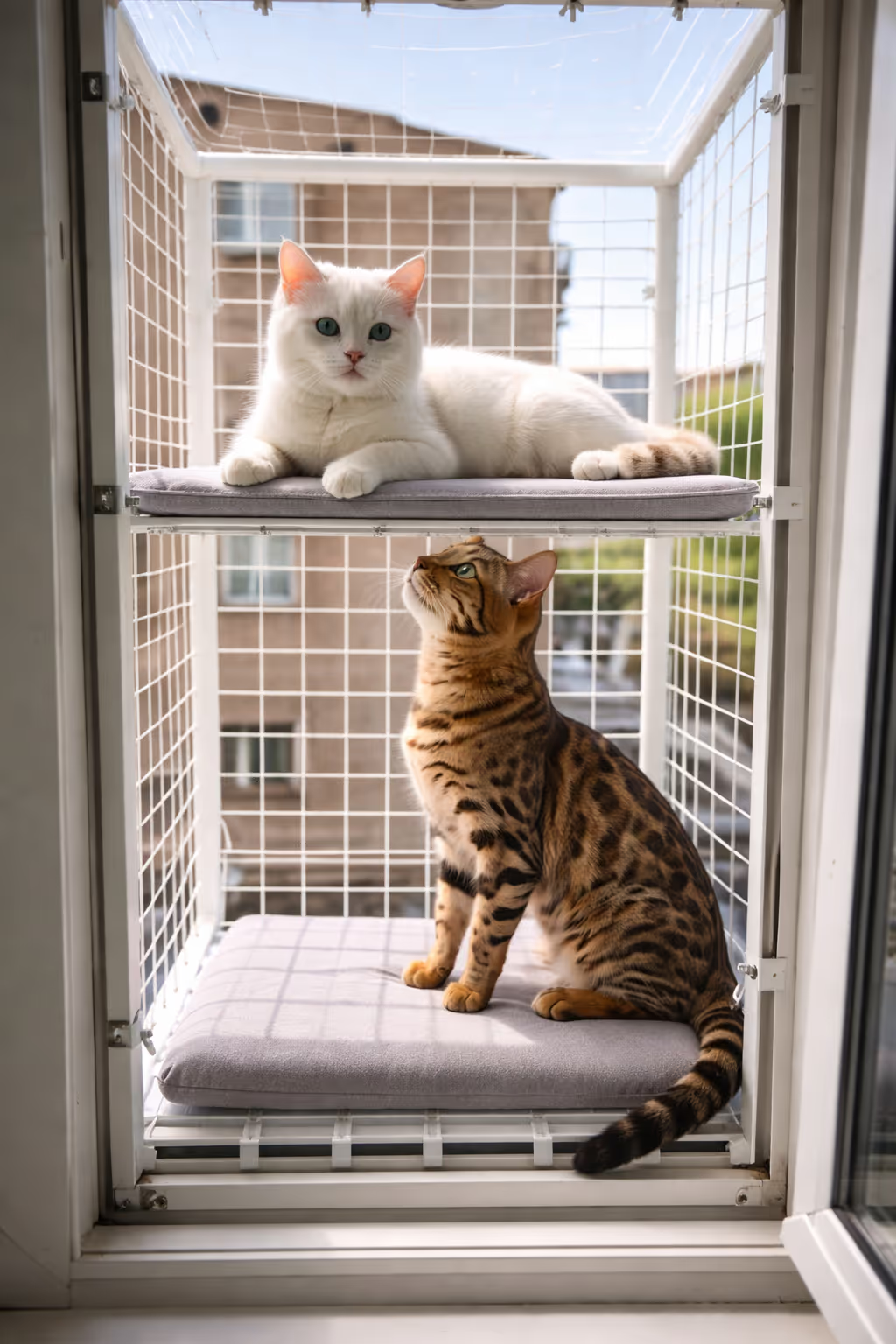
If you’ve been researching cat balcony enclosures, you’ve almost certainly come across Omlet. We’re BalconyCat — smaller, based in Poland, and we make things differently. This post lays out the comparison honestly: where Omlet wins, where we win, and how to decide which is the right product for your situation. We’re not going to disparage Omlet’s products. We’re going to compare on facts.
What Omlet Makes
Omlet produces several cat enclosure and balcony-adjacent products, most notably their Catio range and modular Freestyle cat furniture systems. Their balcony-specific enclosures are modular, designed to be assembled from standardised components that clip together. Key characteristics: modular standardised components with panels in fixed sizes connected using Omlet’s proprietary connector system; aluminium framing with wire mesh panels; available in set configurations that you adapt to your needs; sold direct to consumer online with stock shipping; well-documented installation guides and customer support infrastructure. Omlet is a legitimate, quality product with a large user base.
What BalconyCat Makes
BalconyCat makes a single product category: custom steel window enclosures, built to your exact window measurements, welded by hand in Poland. Key characteristics: custom measurement only — we build to your window, not to a standard module size; galvanised steel frame with welded steel mesh (not aluminium, not clip-together panels); no standard sizes — every enclosure is unique; bracket-mounted to the window frame without drilling; ships flat-packed with a video installation guide and direct support via WhatsApp and email throughout.
The Honest Comparison
Material: Aluminium (Omlet) vs Galvanised Steel (BalconyCat)
Both materials are suitable for outdoor use. Neither rusts in normal conditions (aluminium naturally, steel via galvanisation and powder coating). The difference is in load performance. Aluminium bends under sustained or dynamic load — the type of load generated by a cat jumping hard against a panel from the inside. Steel does not bend. For a structural containment application, steel is the more appropriate material. Practical implication: an aluminium-framed modular panel that takes repeated dynamic impact over months and years will eventually develop movement at the connector joints. A welded steel frame does not have connector joints to loosen.
If you've decided a solid enclosure is what you need, the BalconyCat window enclosure is custom-made to your window and tested to 40 kg.
Fit: Modular (Omlet) vs Custom (BalconyCat)
This is the most significant practical difference. Omlet’s modular system means you’re combining standard-sized panels to approximate your window or balcony configuration. For a standard window, this works well. For any window that doesn’t align cleanly with the available module sizes, you’re improvising — shimming gaps, adding extra fixings, accepting that the enclosure doesn’t fully match the opening. BalconyCat builds to your measurements, within ±5 mm tolerance. There are no gaps by design. For renter safety applications — where the consequence of a gap is a cat falling from height — the custom fit is not a luxury. It’s a safety requirement.
Price: Omlet Typically Lower, BalconyCat Typically Higher
Omlet’s cat balcony products range from approximately 150€ to 600€ depending on configuration. BalconyCat starts from 899€. This is a real difference and we’re not going to pretend it isn’t. What you’re paying more for with BalconyCat: custom measurement, welded steel construction, hand assembly, and a product that doesn’t have any of the fit or joint-integrity compromises that modular systems carry. Whether that premium is worth it depends on your situation. If your window is standard-sized and you’re happy with an approximate fit, Omlet may serve you very well. If you need an exact fit, or you want the most structurally sound option available, the premium has a clear justification.
Availability and Lead Time
Omlet ships from stock, typically within a few days. BalconyCat builds to order. Lead time is typically 2–4 weeks depending on current production volume. If you need something this week, Omlet can serve you. If you’re willing to wait for something custom, that’s what we offer. On geographic availability: Omlet operates across Europe and the UK with established shipping routes. BalconyCat ships across Europe (typically free), to the UK, and to the US.
What About Trixie?
Trixie is a German pet products company whose “Balcony Cat Home” is another common search result in this category. It’s a plastic-framed, fabric-mesh window box — significantly cheaper (50€–100€) and significantly less structural than either Omlet or BalconyCat. The Trixie product is appropriate for very calm cats, smaller breeds, and lower floors. It is not a structural containment product. We’d rate it as a starter option, not a long-term solution — and particularly not appropriate for high floors or athletic cats.
How to Decide
Choose Omlet if: your window or balcony configuration matches their standard module sizes; your budget is between 150€ and 600€; you need the product quickly (stock shipping); or you want a well-supported product from an established retailer.
Choose BalconyCat if: you need a custom fit to a non-standard window; you want welded steel construction rather than modular aluminium; you’re above the third floor and want the most structurally confident option available; or you’re a renter who needs no-drill installation guaranteed to fit your specific frame.
Don’t dismiss either without checking fit first. If your window happens to suit Omlet’s modular sizes, that’s a genuine advantage for them. If it doesn’t, we’re the conversation to have.
We’re happy to look at your window before you commit to anything — whether that ends up being us or a competitor. Send us a photo or your measurements and we’ll give you an honest assessment.
get BalconyCat →