The railing is the single most common structural gap in balcony cat safety. Most balcony railings were designed to stop humans from walking off the edge — not to contain a cat who can squeeze through a 7cm gap, jump to the top rail, or find the one point where two sections don’t meet cleanly. If your railing is the problem, this post tells you exactly how to fix it.
First: Identify Your Railing Type
There are five main railing configurations. Type 1: Vertical bar railing (most common) — metal bars running vertically, fixed to a top and bottom rail. The problem: standard balcony railings have 10–15cm between vertical bars, wide enough for any adult cat to walk through. Type 2: Horizontal rail railing — rails running horizontally, cable-style or solid tube. The problem: cats use horizontal rails as a ladder, and horizontal cable rails can have 20–30cm gaps. Type 3: Glass balustrade — floor-to-ceiling or floor-to-top-rail glass panels. The problem: the glass is fine, but the top edge (typically 100–110cm height) is a launchpad a cat can jump onto. Type 4: Solid concrete or masonry parapet — a solid wall up to waist height. The problem: the top edge. A cat who jumps to the top is standing on a narrow ledge above a drop. Type 5: Mixed railing (bottom solid + upper open section) — common in 1970s–90s European construction. The problem: the upper 50–70cm of open bar or cable railing above the solid base.
The Fix for Each Railing Type
Type 1 (Vertical Bar): Panel Infill or Netting
The gap between vertical bars is the problem. Netting attached to the inside face (stretched tightly, fixed to top and bottom rail with cable ties or hook clips): works as long as netting is under consistent tension, but round bars mean ties can rotate and lose tension. Rigid mesh panel attached to the inside face: more structural, stays fixed regardless of wind or cat pressure, this is the clean fix for a bar gap problem. Limitation: neither solution addresses the top of the railing — if your cat can jump to the top rail, these fixes alone are not complete protection.
Type 2 (Horizontal Rail): Full Panel Enclosure Required
Horizontal rails are a climbing ladder. Any fix that only addresses gaps between rails will fail because the cat uses the rails themselves to climb up and over. The only reliable solution for horizontal rail balconies is a full enclosure with a roof panel — sides sealed AND top sealed. Alternatively, a window enclosure bypasses the railing problem entirely: the cat accesses the enclosure from the window and the balcony railing becomes irrelevant to containment.
Type 3 (Glass Balustrade): Top Edge Barrier
The glass panels don’t need fixing. The top edge does. Options: a horizontal netting canopy fixed above the top rail, extending inward at an angle (same principle used in zoo enclosures for climbing animals); or a full over-the-top rigid panel extending from the wall above to the top of the glass. For glass balustrades on high floors, the overhead seal is non-negotiable — a cat sitting on top of a glass balustrade at the tenth floor is in the highest-risk position possible.
For open railings and balustrade gaps, our protective steel mesh closes the gaps without changing how the balcony looks.
Type 4 (Solid Parapet): Top Edge Barrier
Similar problem to the glass balustrade. The wall itself is fine — the top is not. Options: a netting skirt fixed to the wall interior just below the top, angled inward (creates an overhang the cat can’t get over, effective for most cats who are not extreme climbers); a roller deterrent fixed to the top of the parapet (commercial products exist for garden walls — more deterrent than containment, doesn’t work for cats that clear the top cleanly); or a full roof enclosure as the definitive solution for high-floor parapet balconies.
Type 5 (Mixed Railing): Target the Upper Open Section Only
The solid lower section is fine. Fix only the upper open section — this is a smaller problem than enclosing a full open railing. A rigid mesh panel fitted to the exact height of the open section and attached to the existing railing structure turns the mixed railing into an effectively solid perimeter. This is one of the simpler fixes in this list, because the solid base does half the work.
The Option That Sidesteps the Railing Completely
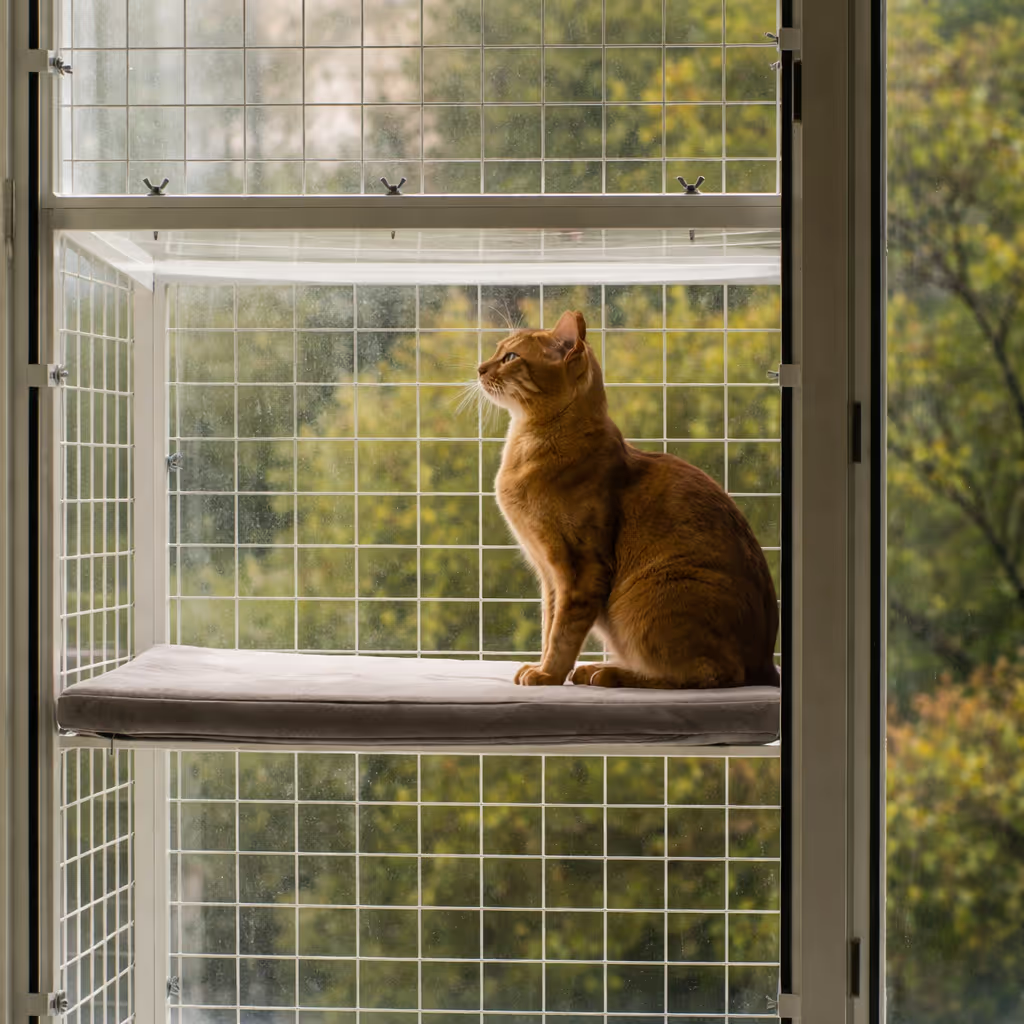
Whatever railing type you have, there’s an option that makes the railing irrelevant: a window catio. A window enclosure mounts to the window frame. The cat accesses the outdoor space through the open window into a structurally complete steel enclosure. They never reach the balcony railing. The railing problem doesn’t need to be solved. This is often the simplest and most structurally confident answer for railing problems on high floors — because it removes the balcony perimeter from the safety equation entirely.
Frequently Asked Questions
How do I stop my cat getting through balcony railing gaps?
The most reliable method is to move containment to the window rather than the railing. A window-mounted steel enclosure gives the cat safe outdoor access without reaching the railing at all.
Can I cat-proof a balcony railing without drilling?
Netting and clip systems avoid drilling but are not structurally reliable at height. A window-mounted steel enclosure with bracket grips requires no drilling and is load-rated — the only no-drill option with genuine structural integrity.
What is the safest way to cat-proof a balcony?
A custom steel window enclosure. It removes the railing constraint entirely, has no gaps, is tested to 40 kg, and mounts to the window frame without drilling or adhesive.
How do I cat-proof a rented balcony?
Use a window-mounted steel enclosure with bracket grips. It requires no drilling, leaves no marks, and is fully removable — the only solution that is simultaneously safe and renter-compatible.
Do balcony railing extenders work for cats?
Only when structurally fixed to a compatible railing. Most off-the-shelf extender systems require drilling and still leave gap risks at non-standard junctions. A window enclosure is more reliable and requires no railing modification.
Send us a description or photo of your railing and window type. We’ll tell you whether a window enclosure solves your problem — or what else we’d recommend.
get BalconyCat →